
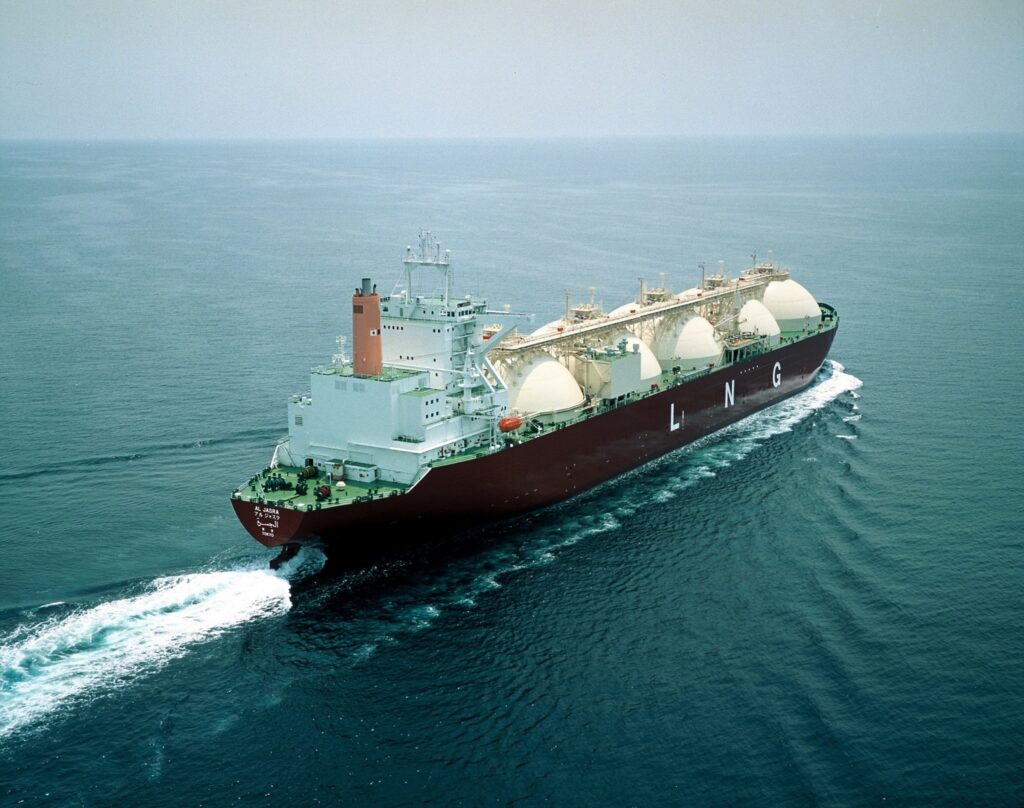
Liquefied natural gas (LNG) is natural gas that has been cooled to a liquid state, chiefly made up of methane with a smaller amount of ethane. This conversion shrinks the gas to roughly one‑six hundredth of its volume at standard temperature and pressure, making it far easier to store and move.
The resulting liquid is odorless, colorless, non‑toxic and non‑corrosive, although it can become flammable after it vaporizes, pose freezing risks and cause asphyxiation if it displaces breathable air.
How LNG Is Produced
The liquefaction chain begins by stripping out substances that could interfere later, such as dust, carbon dioxide, helium, water and heavy hydrocarbons. Once purified, the gas is cooled to about –162 °C (–260 °F) while being kept at a pressure close to atmospheric.
The maximum pressure allowed for transporting LNG is set near 127 kPa, which is roughly 1.25 times sea‑level atmospheric pressure, or about 18 psi.
Fraction Separation and Composition
During processing the gas stream is divided into fractions. Heavier components like butane and propane form the liquefied petroleum gas stream, while the lighter fraction—mainly methane and ethane—constitutes the bulk of the LNG that is ultimately liquefied and stored.
This separation is essential to achieve the purity required for safe, efficient transport and end‑use.
LNG in the Global Energy Picture
Before the late twentieth century, natural gas played a limited role in worldwide energy markets. Technological and infrastructural advances have since enabled the safe, efficient production, movement and utilization of LNG on a large scale.
As worldwide energy demand continues to rise, LNG’s role as a dependable and efficient energy source is expected to grow. Its low‑volume, odorless, colorless, non‑toxic and non‑corrosive nature reduces handling hazards, while the drastic volume reduction simplifies long‑distance shipment.
Safety and Operational Considerations
Despite its advantages, LNG must be managed with care because of its flammability after vaporization, potential for cryogenic burns, and asphyxiation risk. Robust safety protocols, regulatory oversight and proper equipment are necessary to mitigate these dangers throughout the supply chain, from liquefaction plants to storage terminals and receiving facilities.
Future Prospects
The outlook for LNG remains prominent. Ongoing improvements in liquefaction technology, transportation infrastructure and safety systems are projected to make the fuel even more efficient and secure. Industry observers will need to follow advances in liquefaction methods, shipping and storage solutions, and evolving safety standards.
Additionally, the influence of LNG on international energy markets and its environmental footprint will be key topics as the world pursues reliable, efficient and increasingly sustainable energy options. Tracking new projects and initiatives will be vital to understanding how they may shape the next phase of the LNG sector.




