
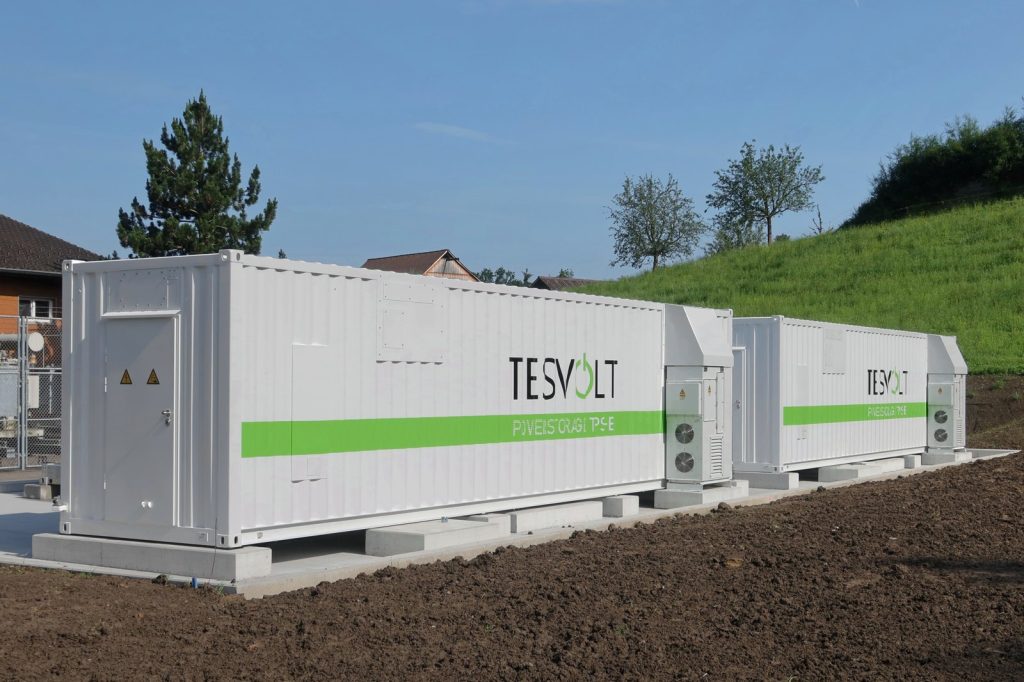
WASHINGTON, July 13 — The United States power grid, a sprawling network of more than 7,300 power plants and 600,000 miles of transmission lines, is undergoing a strategic recalibration. The calculus for grid operators has shifted from simply managing baseload generation to integrating a rapidly expanding fleet of battery storage assets, a transformation driven by the economics of lithium-ion technology. The modern grid is divided into three largely independent interconnections: the Eastern, the Western, and the Texas Interconnection, known as ERCOT.
Each must maintain a constant 60 Hz frequency, balancing supply and demand in real time to prevent blackouts. This operational reality has historically relied on baseload plants — coal, nuclear, and natural gas — running continuously, with peaker plants firing up during demand spikes.
What this signals is a structural change in how that balance is achieved. As of 2023, the United States had deployed approximately 24 gigawatts of grid-scale battery storage, a dramatic increase from just 1.5 GW in 2020. The driver is unmistakable: the cost of lithium-ion battery packs has fallen from $1,200 per kilowatt-hour in 2010 to roughly $150 per kilowatt-hour in 2023.
That price trajectory has made batteries a viable tool for integrating variable renewable sources like solar and wind. While lithium-ion dominates headlines, the broader storage landscape remains dominated by pumped hydro, which accounts for about 93 percent of global storage capacity.
The United States currently has 23 GW of pumped hydro capacity. Other technologies in the mix include compressed air systems and flywheels, but the most strategically interesting developments are on the horizon. Emerging technologies aim to solve the duration problem.
Form Energy is developing iron-air batteries targeting 100-hour storage durations. Flow batteries, such as vanadium redox designs, offer another pathway. The U.S. Department of Energy has set a clear target through its Long Duration Storage Shot: reducing the cost of storage systems capable of discharging for 10 hours or more to $50 per kilowatt-hour by 2030.
The broader stakes here are about grid resilience rather than climate ideology. The existing infrastructure is aging — approximately 70 percent of transmission lines are over 25 years old.
Extreme weather events have exposed vulnerabilities, most notably during Winter Storm Uri in Texas in February 2021, which triggered widespread blackouts across ERCOT. The grid now faces a convergence of challenges. Growing electricity demand from data centers and the electric vehicle fleet is adding new load profiles.
Aging transmission infrastructure — 5.5 million miles of local distribution lines in addition to the long-haul network — requires sustained investment. The calculus for policymakers involves deciding which technologies to back for long-duration storage and how to incentivize deployment at scale.
The strategic question is whether the rapid deployment of battery storage, driven by falling costs, can keep pace with both rising demand and the retirement of older baseload plants. The answer will determine the reliability of the three interconnections in the years ahead. What to watch next is the pace at which emerging storage technologies move from pilot projects to commercial deployment, and whether the Department of Energy’s cost targets prove achievable.




