
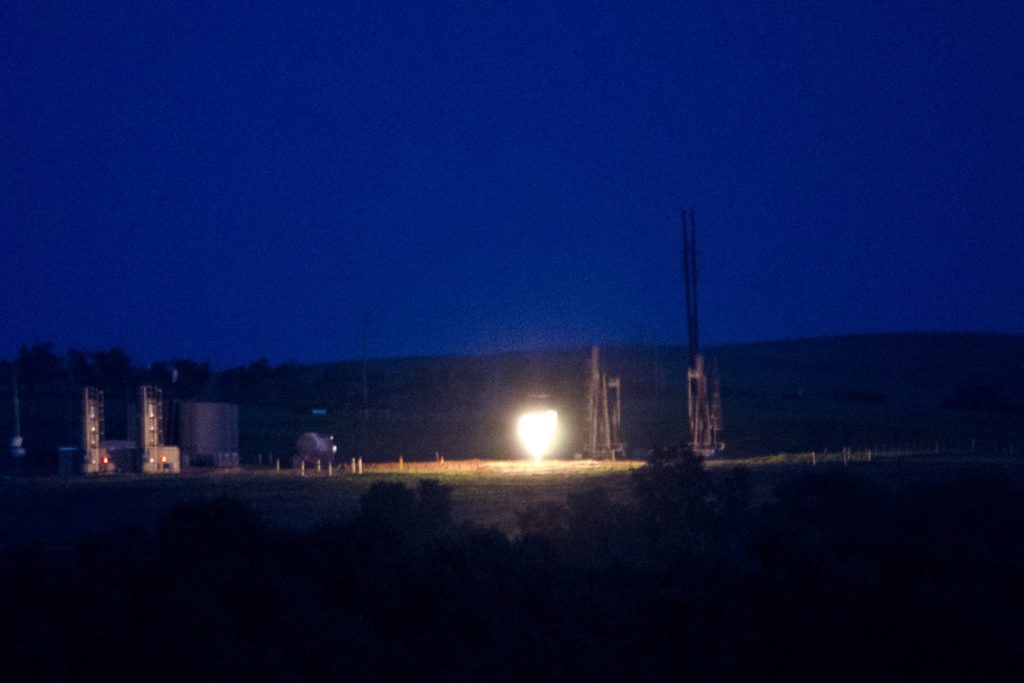
Natural gas, a fossil fuel primarily made of methane, occurs naturally within geological formations. Its composition consists of a blend of gaseous hydrocarbons. Methane accounts for about 95% of the mixture. Smaller quantities of higher alkanes and trace amounts of other gases—including carbon dioxide, nitrogen, hydrogen sulfide, and helium—are also present.
After carbon dioxide, natural gas ranks as the second-largest greenhouse gas contributor to global climate change. This highlights its significant role in the world’s energy system. The formation of natural gas stems from the thermal breakdown of organic matter, predominantly marine microorganisms, in environments lacking oxygen.
Over millions of years, intense heat and pressure convert this material. The process stores solar energy originally captured through photosynthesis as chemical energy within methane and other hydrocarbon molecules. This links the energy in natural gas to the decayed organisms’ original energy source, creating a complex resource. Most natural gas is extracted from underground geological formations, frequently alongside other fossil fuels such as coal and oil.
This coexistence arises from shared formation processes involving the thermal decomposition of organic material over extended periods. Extraction requires careful methods to ensure safe and efficient retrieval.
In its natural state, natural gas is odorless. To aid leak detection, a commercial odorizer—commonly methanethiol, which emits a smell similar to hydrogen sulfide or rotten eggs—is added. This safety measure is vital during production, transportation, and distribution, helping to prevent accidents and reduce environmental harm.
The high methane content of natural gas gives it distinct properties. These make it a valuable energy source but also demand cautious handling and management for safe use. Natural gas holds an undeniable place in the global energy system due to its widespread use as fuel.
Yet its status as the second-greatest greenhouse gas poses a pressing environmental challenge. As reliance on fossil fuels, including natural gas, persists, strategies to mitigate impacts become essential. These may include adopting more efficient extraction and production techniques and developing alternative energy sources to lessen dependence on fossil fuels. The future of natural gas will likely be shaped by technological advances, shifts in global energy demand, and evolving environmental regulations.
As the world moves toward a more sustainable energy mix, the role of natural gas requires reassessment. Ongoing monitoring of sector developments—such as innovations in extraction, transportation, and storage, along with changes in global energy markets—will be crucial.
Staying informed about these trends helps clarify the complex picture of natural gas and its position in the energy future.




