
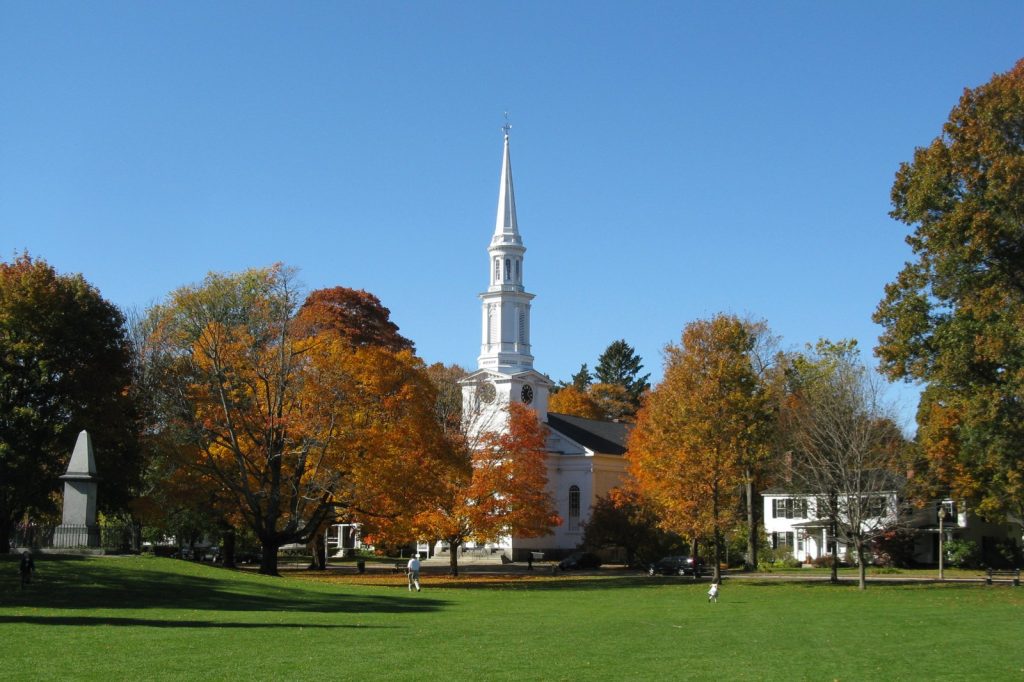
WASHINGTON — The minutemen who stood on Lexington Green in April 1775 were farmers, tradesmen, and laborers. They grabbed their own muskets and faced British regulars. That single image, Richard C.
Lyons argues in a new analysis for InfoPulse Today, is not a quaint origin story. It is the blueprint for what America has always asked of its people.
Lyons draws a straight line from those citizen-soldiers to every generation that followed. “Everybody must and will be a soldier,” he writes, presenting the phrase not as a slogan but as a founding principle. The republic, in his telling, was built on the expectation that its citizens would bear arms in its defense.
That expectation shaped who served, who sacrificed, and who bore the cost of liberty. For the people most directly affected, the implications land hard.
The analysis arrives in an era when the U.S. military runs on an all-volunteer force — a model now more than five decades old. No draft. No universal obligation.
Service is a choice, not a duty. Lyons does not call for conscription. He does not endorse any current legislative proposal or administration policy.
His focus is the philosophical foundation beneath those choices. The calculus, he suggests, has never changed.
A republic that expects its citizens to fight is a republic that understands what liberty costs. When that expectation fades, the burden shifts. It falls on a smaller group — the volunteers, the career soldiers, the families who carry the weight for everyone else.
Lyons does not name those families directly. But the logic of his argument places them at the center.
They are the ones living the tradition he describes, often without the broader public sharing the load. The analysis reframes the debate over national service. It is not, in Lyons’s view, a political proposal to be argued over in committee rooms.
It is a continuity. The tradition of service and sacrifice, he writes, is not an interruption of American life. It is the baseline.
That framing matters for communities that have long shouldered the military’s demands — rural towns, military base cities, regions where enlistment rates run high. For them, the baseline never disappeared.
For much of the country, it has become invisible. Lyons traces the lineage from the minutemen through subsequent generations who answered the call. He does not offer easy answers for the current moment.
The piece presses the question of what the United States asks of its people when the chessboard shifts. It does not resolve that question.
It simply insists that the question itself is as old as the nation. The timing is deliberate. The analysis arrives amid a long-running all-volunteer force, a model that has endured for more than five decades.
Lyons writes as a historian of the American experiment, not as an advocate. His argument is that the tradition of universal service and sacrifice began in 1776 — not in a modern crisis, not as a wartime aberration. It is woven into the nation’s strategic DNA.
For the people most affected, that history is not abstract. It is the story of their families, their towns, their own choices.
Lyons gives them a framework. He does not tell them what to do with it.




