
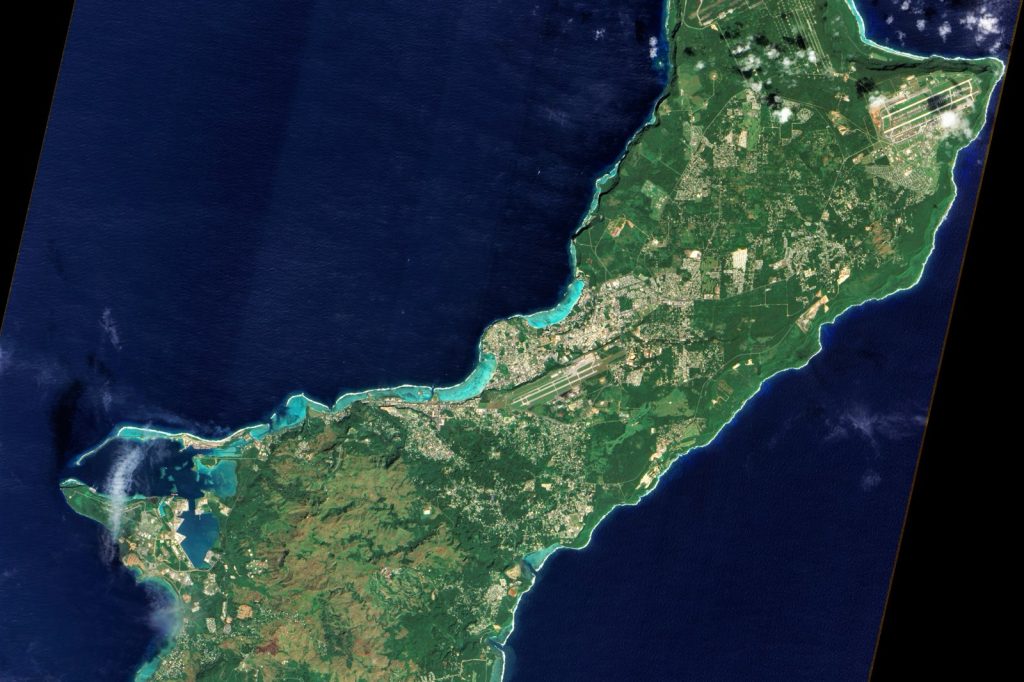
MERIZO VILLAGE, Guam, July 21 — For the two people who reported feeling the ground shake, a magnitude 5 earthquake striking 58 kilometers south-southwest of Merizo Village on Tuesday morning was a sharp reminder of the seismic forces that shape life on this Pacific island. The U.S. Geological Survey recorded the event at 11:09 UTC at a depth of 12.164 kilometers, classifying it as a shallow earthquake. No tsunami warning was issued.
The Earthquake
The quake’s shallow depth — less than 70 kilometers below the surface — means it likely produced stronger shaking at the surface than a deeper event of the same magnitude would have. For those who felt it, that difference can be the line between a momentary jolt and something that rattles dishes and nerves. The USGS detected the tremor through its real-time global seismic monitoring network, which keeps a constant watch on the region’s restless geology.
Earthquakes in the magnitude 5 range are considered moderate. They can cause minor to moderate damage near the epicenter, but in a sparsely populated ocean area southwest of Guam, the risk to structures and people was limited.
Still, for the two individuals who filed felt reports, the event was personal — a direct encounter with the earth’s movement that seismologists say is far from unusual in this part of the world.
Seismic History
Guam sits in a seismically active zone. Over the past two decades, at least 302 earthquakes of magnitude 5.0 or greater have been recorded within about 300 kilometers of Tuesday’s epicenter. The strongest of those was a magnitude 6.8 quake in 2008, a reminder that larger events are possible.
This region’s tectonic setting — where the Pacific Plate dives beneath the Philippine Sea Plate — generates frequent tremors, from barely perceptible rumbles to events that can reshape the landscape. For residents, the history is woven into daily life.
The two people who reported feeling Tuesday’s quake join a long line of islanders who have experienced the ground shifting beneath them. The USGS data offers a measure of reassurance: the network’s constant monitoring means that every quake, large or small, is quickly located and characterized, providing the public with reliable information.
What to Expect
Seismologists note that aftershocks are common following an earthquake of this size and may continue for days or weeks. People in the affected area are generally advised to be prepared for further shaking. Tuesday’s tremor, while moderate, fits a pattern that has repeated dozens of times in the past 20 years.
The two felt reports, though few, represent real human experiences in a region that has learned to live with the earth’s restlessness. As the aftershock window opens, those who felt the initial jolt — and those who didn’t — will watch for what comes next.




