
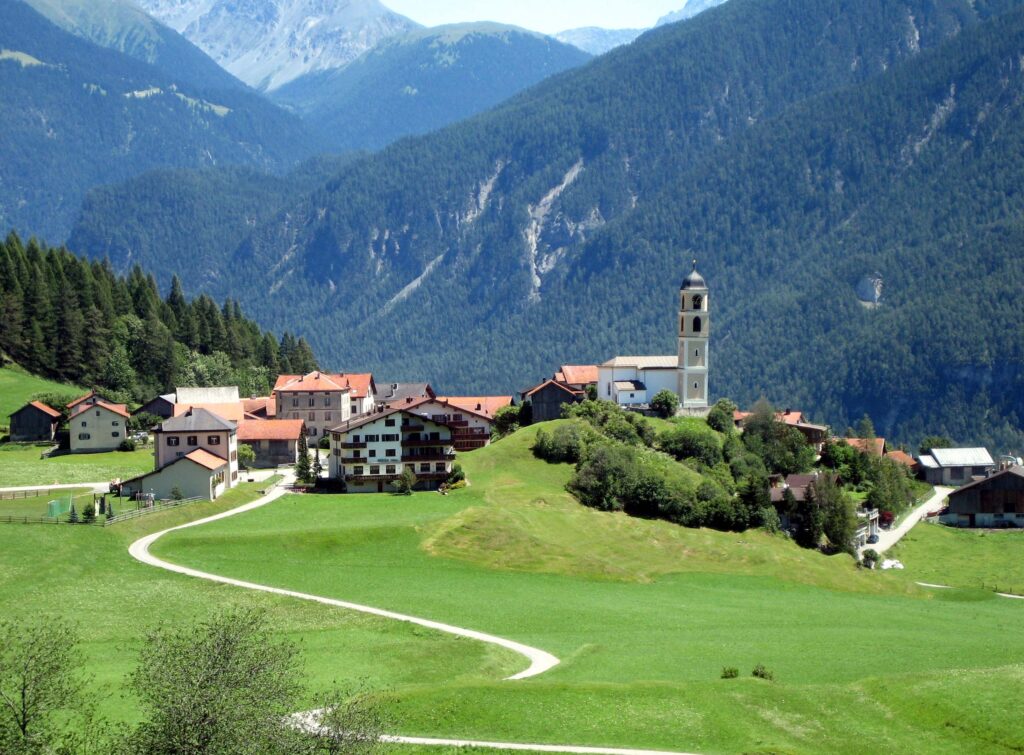
An enormous rockslide overnight has narrowly missed the evacuated village of Brienz/Brinzauls in the Swiss canton of Grisons, sparing the community from what could have been a catastrophic disaster. The slide, measuring approximately 2 million cubic meters, came down in the early hours of Friday, June 16, 2023, but did not reach the village itself. All 128 residents of Brienz/Brinzauls had been ordered to leave their homes back in May, after scientific monitoring indicated that a major rockslide was imminent.
The evacuation, which local authorities described as a precautionary measure, proved prescient as the massive volume of rock and debris cascaded down the mountainside overnight. No injuries or damage to buildings have been reported from the event.
The village, perched in the Albula district of Graubünden, has a long history of geological instability. Scientists had been tracking increasing movement in the rock face above the settlement for weeks, with sensors showing accelerating shifts that pointed to an inevitable collapse. The 2-million-cubic-meter slide—a volume equivalent to roughly 800 Olympic-sized swimming pools—came close to the village limits but stopped short of the inhabited area.
Brienz/Brinzauls is a community of two languages, with most residents speaking Swiss German and a significant minority using Romansh. The village was once its own municipality before merging with six other communities in 2015 to form the new municipality of Albula/Alvra.
The region is known for its steep Alpine terrain, which has long posed challenges for settlement and infrastructure. The evacuation in May was not the first for the village. Authorities have periodically cleared the area in response to heightened rockfall and landslide risks, and some experts have warned that the threat may eventually force a permanent relocation of the community.
Friday’s narrow escape underscores the persistent danger facing mountain villages in the Swiss Alps, where warming permafrost and natural geological processes are contributing to increased slope instability. For now, residents remain displaced, with no immediate timeline for their return. Geologists are assessing the aftermath of the slide to determine whether the remaining rock face has stabilized or if further collapses are possible.
The Swiss federal and cantonal governments have been working with local leaders on long-term solutions, including potential resettlement plans, though no final decisions have been made. The rockslide at Brienz/Brinzauls is a stark reminder of the power of nature in the Alps.
As monitoring technology improves, scientists hope to provide earlier warnings for vulnerable communities, giving them more time to evacuate and protect lives. The clean mountain environment that draws tourists and sustains local traditions also carries inherent risks, and balancing human habitation with natural forces remains an ongoing challenge for the region.




