
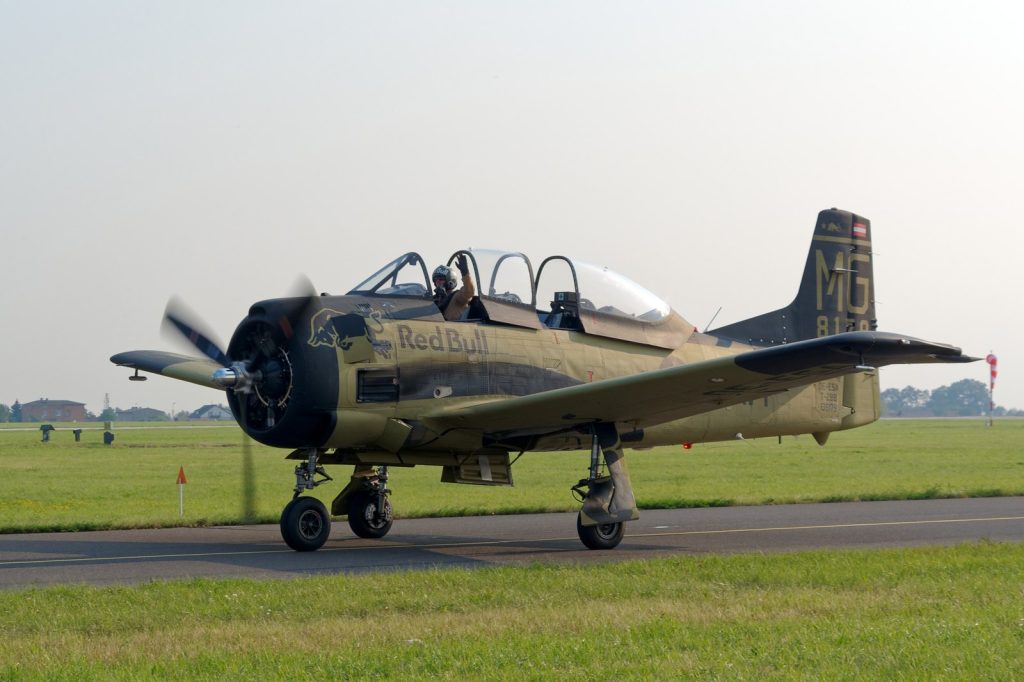
Investigators in Limburgerhof, Rhineland-Palatinate, have confirmed that the North American T-28 Trojan which struck a residential neighborhood on May 16, 2026, experienced an explosion while still airborne, according to German Interior Minister Nancy Faeser. This finding has become the central focus of the ongoing probe into the incident that claimed two lives and left one individual injured.
The aircraft, a vintage trainer originally deployed by the U.S. Air Force and Navy during the 1950s and later used in Vietnam, remains in service with civilian operators who fly these warbirds at air shows and for aerobatic performances. While mechanical failures, fuel system malfunctions, or pilot errors frequently account for crashes involving older planes, the mid-air detonation suggests a more forceful event—such as a fuel leak or engine explosion—may have occurred. The crash site, situated in a populated area of Limburgerhof, has drawn international attention. U.S. Ambassador Amy Gutmann has conveyed condolences and pledged support to German authorities.
Defense Secretary Lloyd Austin confirmed that the Department of Defense stands ready to assist, while NATO Secretary General Jens Stoltenberg offered aid, emphasizing the alliance’s cooperative framework among member states. The aircraft’s American origins and its historical use by U.S. military branches for pilot training underscore the direct ties between the two nations in this investigation.
Notably, the AUKUS defense pact—comprising the United States, Australia, and the United Kingdom—has been monitoring the situation. This involvement is unusual, as AUKUS primarily focuses on Indo-Pacific security rather than European aviation incidents. The reasons for its attention remain undisclosed, potentially indicating broader implications beyond a routine accident.
German authorities are leading the inquiry, examining maintenance logs, the pilot’s background, weather conditions at the time, and physical evidence from the wreckage. The point of the mid-air explosion is expected to provide critical clues, though whether it will yield a complete explanation remains uncertain.
The T-28 Trojan, a piece of aviation history preserved by private collectors, has become the center of a public tragedy that crosses national boundaries—from German civilian airfields to U.S. military channels and NATO briefings. Residents of Limburgerhof are left with debris and unanswered questions as the investigation continues. The neighborhood faces the task of rebuilding, while the injured individual’s recovery prospects remain unclear.
The aircraft, built in the 1950s, met its end on a German street in 2026, and the cause of the explosion that preceded its fatal descent has yet to be determined.




