
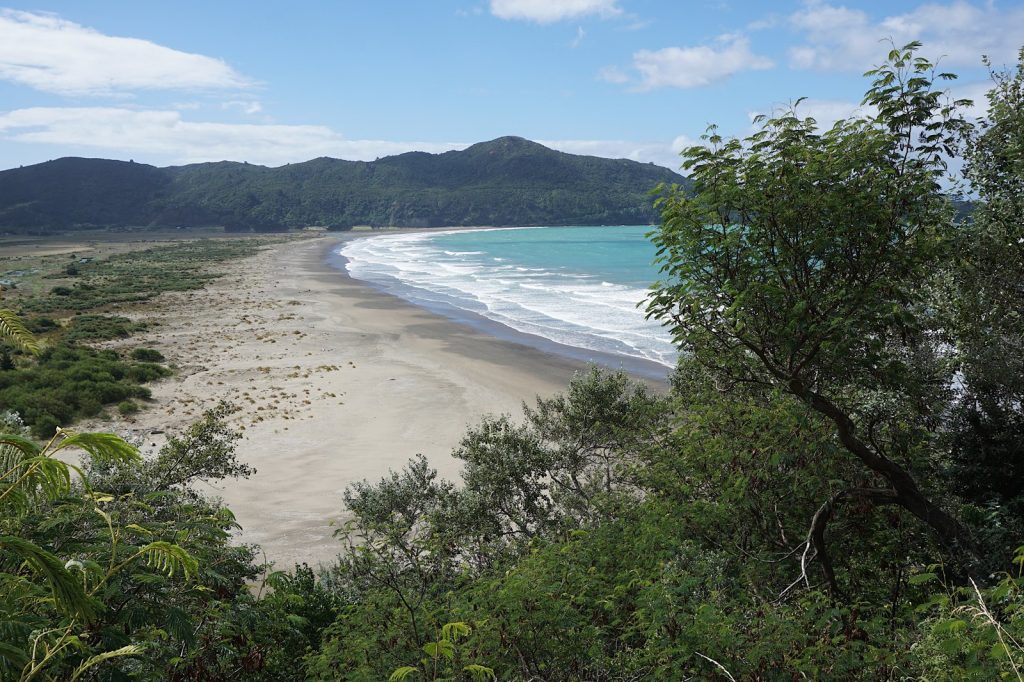
HICKS BAY, August 2 — A moderate magnitude 5.6 earthquake struck 14 km south of Hicks Bay, New Zealand, today at 08:35 UTC, according to the U.S. Geological Survey (USGS). The event, detected at a depth of 52.806 km, did not trigger a tsunami warning. The earthquake’s relatively shallow depth is a key factor in its potential impact.
Seismological data indicates that at 52.806 km, this was a shallow earthquake. Shallow events, defined as those occurring less than 70 km deep, are generally understood by analysts to produce stronger shaking at the surface compared to deeper tremors of the same magnitude.
This characteristic is often critical in assessing the immediate felt experience and potential for ground motion.
Seismic Activity and Historical Context
The region off Hicks Bay is a known locus of considerable seismic activity. The USGS, through its real-time global seismic monitoring network, detected this latest event, adding to a significant historical record for the area. Over the past two decades, within approximately 300 km of the recent epicenter, at least 203 earthquakes of magnitude 5.0 or greater have been recorded.
This sustained activity highlights the dynamic geological environment. The historical data further reveals that the strongest recorded event in this vicinity over the past twenty years was a magnitude 7.3 earthquake, which occurred in 2021.
Such precedents underscore the ongoing tectonic stresses and seismic potential inherent to the New Zealand plate boundary region, a context that informs global understanding of earthquake phenomena.
Magnitude and Aftershock Considerations
Earthquakes falling within the magnitude 5 range, such as this 5.6 event, are classified as moderate. According to seismologists, tremors of this intensity are capable of causing minor to moderate damage, particularly in areas situated near the epicenter. While no widespread damage reports were immediately available, the classification provides a framework for understanding potential localized effects.
Following an earthquake of this size, the occurrence of aftershocks is a common phenomenon, as analysts note. These subsequent tremors may continue for days or even weeks.
Given this established seismic pattern, people in the affected area are generally advised to maintain preparedness for further shaking, a standard protocol in seismically active zones globally.




