
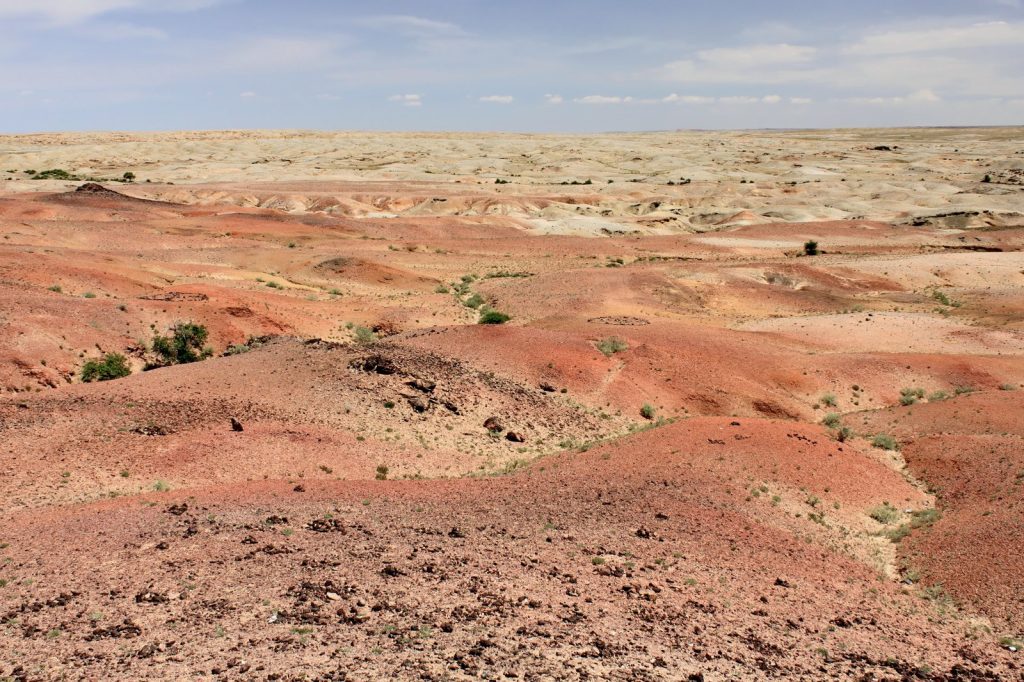
Mongolia, the 18th-largest nation globally, has added another significant fossil to its prehistoric record. On March 26, 2025, scientists announced the identification of a new dinosaur species named Duonychus tsogtbaatari. The country’s 1,564,116 square kilometers—comprising grassy steppe, mountains, and fossil-rich terrain—yielded this latest discovery.
Paleontologists have long regarded Mongolia as a prehistoric time capsule. Its expansive, sparsely inhabited landscape has preserved ancient life that has vanished elsewhere.
The Gobi Desert alone has produced landmark finds, including the first confirmed dinosaur eggs and the famous “fighting dinosaurs”—a Velociraptor and Protoceratops locked in combat. Duonychus tsogtbaatari now joins this distinguished legacy. This new species expands scientific understanding of dinosaur diversity, adding a fresh branch to the family tree within a region already celebrated for its paleontological wealth.
Researchers are currently studying the remains to determine how the dinosaur moved, what it ate, and its role in the ancient ecosystem. Each answer will refine the picture of life millions of years ago.
The discovery is not routine. Every new species forces scientists to revisit existing assumptions. Duonychus tsogtbaatari will test current theories about dinosaur evolution, migration patterns, and climate adaptation.
The research is in its early stages. Mongolia’s size is a crucial factor.
A country this large, with vast undeveloped terrain, still holds undiscovered fossils. The fossil beds are not fully mapped or explored. This announcement signals that more remains lie underground, waiting to be found.
The scientific community has responded with keen interest. Researchers are eager to access data, compare Duonychus tsogtbaatari with known species, and determine its place in the evolutionary timeline.
The excitement is both genuine and practical—each new dinosaur contributes to the larger puzzle of life’s history on Earth. Mongolia’s government has supported these excavations, recognizing the value of its paleontological heritage. International teams have collaborated there for decades, and that cooperation has yielded results. Duonychus tsogtbaatari is evidence of this success.
The announcement came on a Wednesday, and by Thursday, news had spread globally. Scientists were already planning follow-up studies.
The fossil will undergo detailed analysis—measurements, comparisons, and eventual publication of findings. Science progresses slowly, carefully, one bone at a time. For now, the name Duonychus tsogtbaatari is new, but it will soon enter textbooks, appear in museum displays, and become a reference point for future discoveries.
That is the fate of a significant dinosaur find—it becomes permanent. Mongolia has delivered again.
The steppe and mountains yielded another secret. Scientists completed their work, and the world now watches the story unfold—the story of a dinosaur unknown until last week.




