
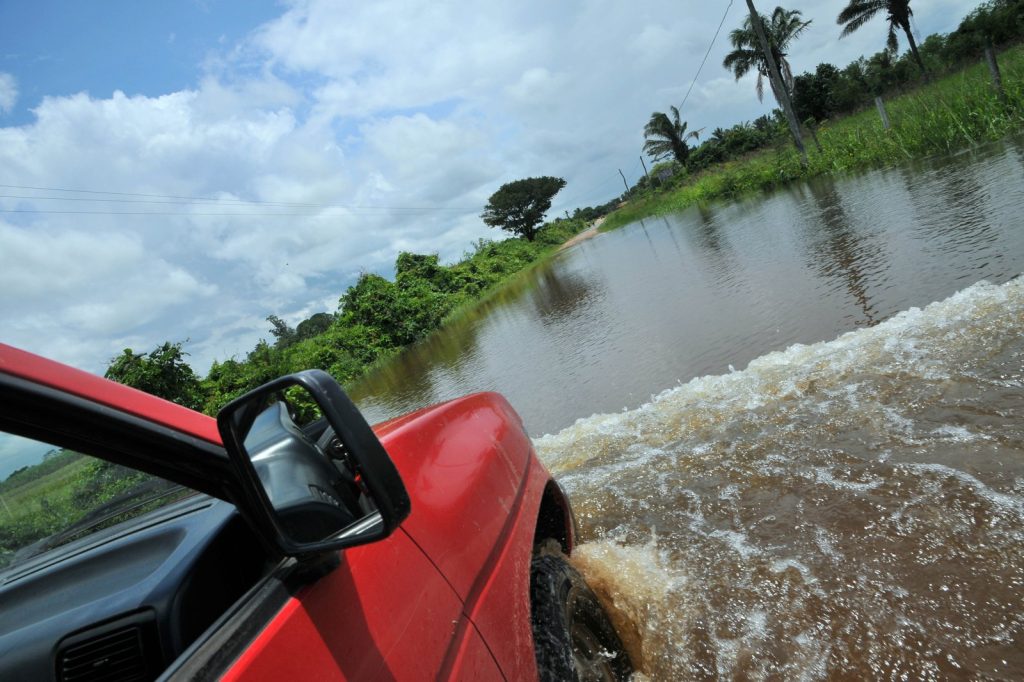
The Pantanal stretches across Bolivia’s eastern border, a vast tropical wetland that holds more plant and animal life than most places on Earth. Right now, much of it is underwater. Floods that hit on March 26, 2025, have killed over fifty people and driven more than 100,000 from their homes.
The government has declared a national emergency. But the dead and displaced are not the whole story.
The Pantanal itself took a direct hit. This is the largest tropical wetland in the world, a slow-moving mosaic of rivers, lakes, and flooded grasslands. It does not rebound quickly.
When the waters finally recede, the assessment and restoration work will take years, not months. The report on the disaster made this clear: the floods raised concerns about long-term damage to a fragile environment.
Bolivia’s geography sets it up for this kind of catastrophe. The country runs from the high, cold Altiplano plateau down through the Gran Chaco and into the Amazonian plain. That range of climates and biomes means extreme weather is not an anomaly; it is a recurring threat.
The Pantanal sits on the low end of that spectrum, and when heavy rains come, the water has nowhere to go but out across the floodplain. This time, it went further than anyone expected. The scale of the response has been massive.
Emergency services are stretched. The government is scrambling.
But the report noted something else: the floods have highlighted the need for effective emergency planning and response mechanisms. That is a polite way of saying the system was not ready. A disaster of this size exposes gaps.
Roads wash out. Supplies do not arrive.
Communities get cut off. The Pantanal’s isolation — its very wildness — makes rescue and relief slow. There is also the question of what happens to the ecosystem.
The Pantanal is home to jaguars, capybaras, giant river otters, and hundreds of bird species. Floods are natural here. They are part of the cycle.
But this was not a normal flood. The loss of life among humans is fifty and counting.
The loss among animals is not counted at all. The long-term damage to plant communities, to nesting grounds, to the delicate balance of a wetland that depends on seasonal rhythms — that damage will only become clear as the water pulls back. Rebuilding will take time.
The report said the people of Bolivia are beginning that process. But recovery is not just about homes and roads.
It is about the land itself. The Pantanal does not rebuild in a year. It does not rebuild in five years.
The floodwaters carried sediment, pollutants, debris. They scoured some areas and drowned others. Restoration work means replanting, monitoring, letting nature take its course without further human interference.
That is a hard thing to do when a country is also trying to house 100,000 people. The geography that makes Bolivia rich — the Amazon, the Chaco, the Altiplano — also makes it vulnerable.
The same landscape that draws scientists and tourists can turn deadly in a matter of days. The Pantanal took the worst of it this time. The question now is whether the country can protect both its people and its most vital ecosystem at once.




