
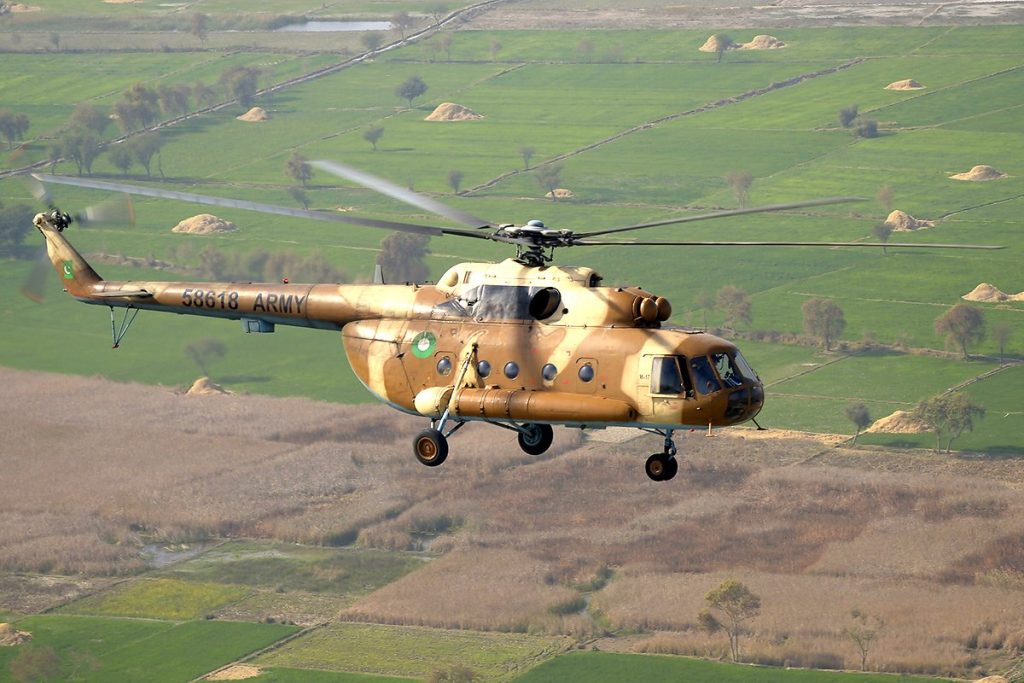
A Khyber Pakhtunkhwa government Mil Mi‑17 helicopter went down on Friday in the remote, mountainous area of Bajaur District near the Afghan border, killing all five people on board. The aircraft was on a relief mission, transporting food, tents and medical supplies to communities devastated by heavy monsoon rains and flooding. According to officials, adverse weather conditions were the primary cause of the crash.
The region was experiencing low visibility, strong winds and ongoing rain, a combination that frequently hampers aviation during the monsoon season. Rescue teams were dispatched, but the rugged terrain and persistent bad weather limited their ability to reach the crash site quickly.
The Mi‑17, a Russian‑designed twin‑engine transport helicopter, is widely employed in Pakistan for both military and civilian tasks. While praised for its versatility, the type is known to be vulnerable in conditions of reduced visibility and high winds, especially in the steep, forested valleys that dominate Khyber Pakhtunkhwa. Bajaur, one of the seven tribal districts merged into the province in 2018, is particularly hard‑hit by the monsoon.
The district’s limited road network, scarce bridges and frequent landslides have isolated many villages, making aerial drops the most viable method of delivering aid. With 32 districts across the province reporting flood damage, thousands of families remain without shelter, food or medical care.
The loss of the helicopter not only adds five deaths to the tally of monsoon‑related casualties but also reduces an already strained fleet. The province now faces a reduced capacity to conduct further air drops, raising questions about whether additional flights will be attempted under similarly hazardous conditions. Authorities have confirmed that the crash investigation will focus on the specific circumstances surrounding the flight, including weather data and aircraft performance.
However, the broader pattern remains evident: each monsoon season brings a predictable cycle of severe weather, infrastructure failure and heightened risk for relief operations. Experts note that the northern districts of Pakistan rank among the most challenging environments for logistics worldwide.
The convergence of difficult geography, inadequate road infrastructure and unpredictable monsoon weather creates a “perfect storm” for aviation accidents. Aging helicopters, such as the Mi‑17s in service, are often the only practical means to reach isolated communities, yet they are forced to operate at the edge of their safety envelope. With the monsoon’s weeks‑long onslaught of rain, fog and gusts continuing, the need for aerial assistance is unlikely to diminish before the season ends.
Communities in Bajaur and other flood‑affected districts remain cut off, awaiting the next delivery of essential supplies. The recent tragedy underscores the high human cost of delivering aid in these conditions, a cost measured not only in financial terms but in lives lost.
As the province grapples with rebuilding roads and bridges, the immediate reliance on air drops persists. The crash serves as a stark reminder of the perilous balance between the urgent demand for relief and the dangers inherent in meeting that demand by air in Pakistan’s most inaccessible regions.




