
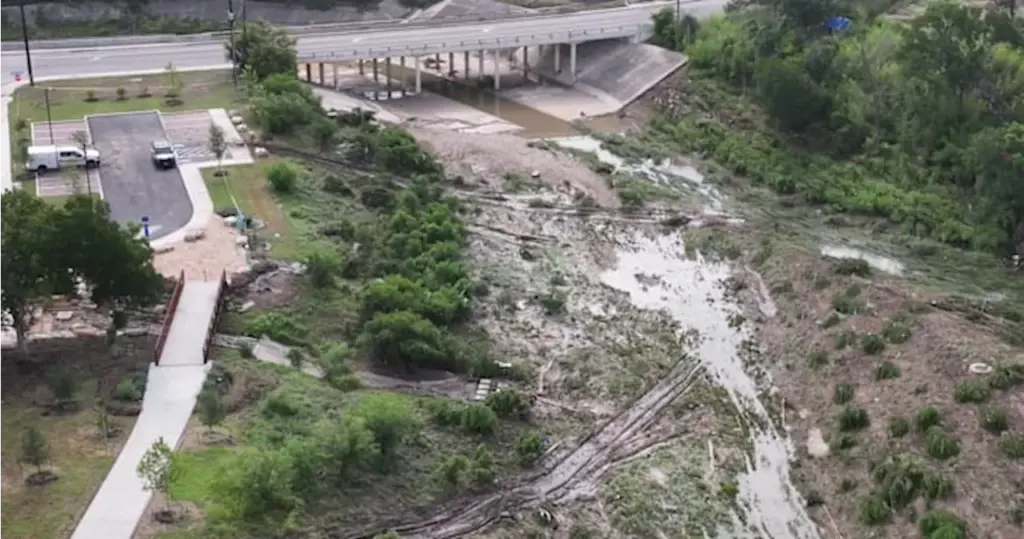
Flash Flood Devastates San Antonio
At least eleven people lost their lives when a sudden flash flood swept through San Antonio, Texas, on Friday. The San Antonio River, normally a calm three‑foot stream, rose to a terrifying twenty‑five feet in roughly two hours, turning streets into rivers and trapping motorists in submerged vehicles.
Neighborhoods across the city were inundated, prompting emergency crews to launch water rescues throughout the day. The National Weather Service reported that an intense band of thunderstorms stalled over Bexar County, dumping more than six inches of rain in a short period. By mid‑morning the river had surged from its usual depth to twenty‑five feet, flooding low‑lying areas and forcing the closure of major roadways, including sections of Interstate 35 and U.S. Highway 90. Officials warned that the fast‑moving water carried debris and posed an extreme danger.
San Antonio, the seventh‑largest city in the United States with a 2020 census population of 1.43 million, lies in a region prone to rapid runoff from heavy rains. Its network of creeks and rivers can swell quickly, but Friday’s event was described by local authorities as one of the deadliest in recent memory.
The Bexar County medical examiner’s office confirmed that the eleven fatalities included people found inside submerged cars and flooded homes. Search‑and‑rescue teams continued to check stranded vehicles and damaged structures into the evening, and the death toll was expected to rise. The flood also knocked out electricity for thousands of residents as water inundated electrical substations and toppled utility poles.
CPS Energy, the city’s municipal utility, said more than forty thousand customers were without power at the storm’s peak, and crews worked to restore service while some areas remained inaccessible because of high water. The San Antonio River Authority activated its flood‑control dams and gates, but the sheer volume of rainfall overwhelmed the system in several spots.
Local leaders urged residents to stay off the roads and to heed evacuation orders, especially in the river’s floodplain. Emergency shelters were opened at several high schools and community centers, housing hundreds of displaced families. The city’s emergency management director noted that the speed of the river’s rise caught many off guard, as the water went from a gentle flow to a torrent in less than two hours.
Meteorologists attributed the disaster to the storm’s slow movement over the urban core, with rainfall rates exceeding three inches per hour at the peak. As the waters began to recede late Friday, attention shifted to recovery and assessing damage to homes, businesses, and infrastructure.
The economic toll is projected to run into the hundreds of millions of dollars, with many structures in the hardest‑hit zones likely to be total losses. City officials said they would seek a federal disaster declaration to unlock aid for affected residents and to fund repairs to roads, bridges, and drainage systems. The tragedy has renewed calls for investment in flood‑control infrastructure and more resilient urban planning.
San Antonio has long faced the challenge of managing stormwater in a sprawling, fast‑growing metropolitan area of 2.76 million people. Some engineers suggest that expanding green spaces, improving drainage channels, and upgrading early‑warning systems could help reduce the risk of similar deadly flash floods in the future.
For now, the city mourns its dead and braces for the long work of rebuilding, aware that the river that gave San Antonio its name can shift from a blessing to a killer in a single afternoon.




