
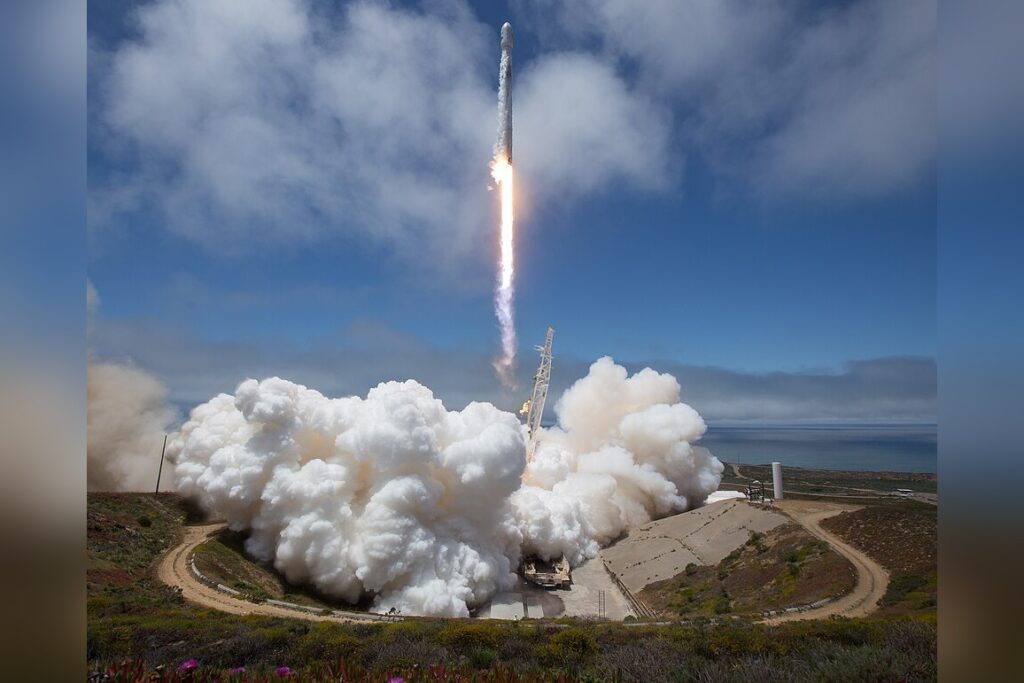
Four astronauts are due to swing around the Moon on Artemis II, the first crewed flight past low-Earth orbit in more than 50 years. It is the second rung of a ladder NASA has been building since 2019, and the top rung is a base at the lunar south pole, with Mars beyond it.
Fifty years of waiting
The last people to leave Earth orbit for the Moon flew on Apollo 17 in 1972. Nothing since has gotten them back. Constellation, which ran from 2004 to 2010, set out to return humans to the Moon and eventually reach Mars, then was canceled before it got there. The Journey to Mars years, 2015 to 2018, swung attention toward asteroid missions and cislunar capabilities as stepping stones.
Artemis took over in 2019. Its target is a crewed landing around 2028.
The flight plan
Artemis I flew without a crew in 2022. The Space Launch System rocket lifted it off from Kennedy Space Center on November 16 of that year, and the Orion capsule completed a lunar flyby that checked the heat shield and the overall readiness of the systems for people.
Artemis II, listed for 2026, puts four astronauts in orbit around the Moon to prove out life support, navigation and mission operations. Artemis III, listed for 2027, sends a crew to low-Earth orbit to dock with a lunar lander and rehearse the steps of a surface mission. Artemis IV, in 2028, is the landing itself, with a four-person crew at the south pole. Flights after that, grouped as Artemis V and beyond, would expand the Gateway, deploy surface habitats and start permanent harvesting of resources.
On a landing flight, Orion meets a commercial lander in lunar orbit or docks at the Gateway. Two astronauts go down to the surface. Two stay aboard Orion. After experiments, sampling and tests of resource extraction, the lander lifts off, the crews rejoin, and the capsule returns to Earth for a splashdown.
Hardware
The SLS is described as the most powerful operational rocket, able to send 27 metric tons to lunar orbit. Its core stage carries four RS-25 engines, the same type that flew on the Space Shuttle, and five-segment solid boosters supply the first push. Unlike Shuttle engines, these are dropped into the ocean after each flight.
Orion holds four astronauts, with more room inside than Apollo had. Its heat shield is rated for reentry at 11 kilometers per second. The European Space Agency built the service module that supplies propulsion and power, and a launch abort tower sits on top for emergencies.
NASA picked SpaceX’s Starship as its first commercial Human Landing System in April 2021. Blue Origin’s Blue Moon followed in May 2023 as a second option.
Why the south pole
Craters there stay in permanent shadow, and they hold billions of tons of water ice. Split water and you get hydrogen and oxygen: rocket propellant, breathable air and something to drink, all without hauling it from Earth. Nearby peaks catch near-continuous sunlight, which makes steady power possible. The ice also preserves 4 billion years of solar system history.
NASA says it also wants the first woman and the first person of color on the lunar surface, with international partners involved. Time spent in deep space will test closed-loop life support, radiation protection and the strain of isolation, all of it rehearsal for the 140-million-mile trip to Mars.




