
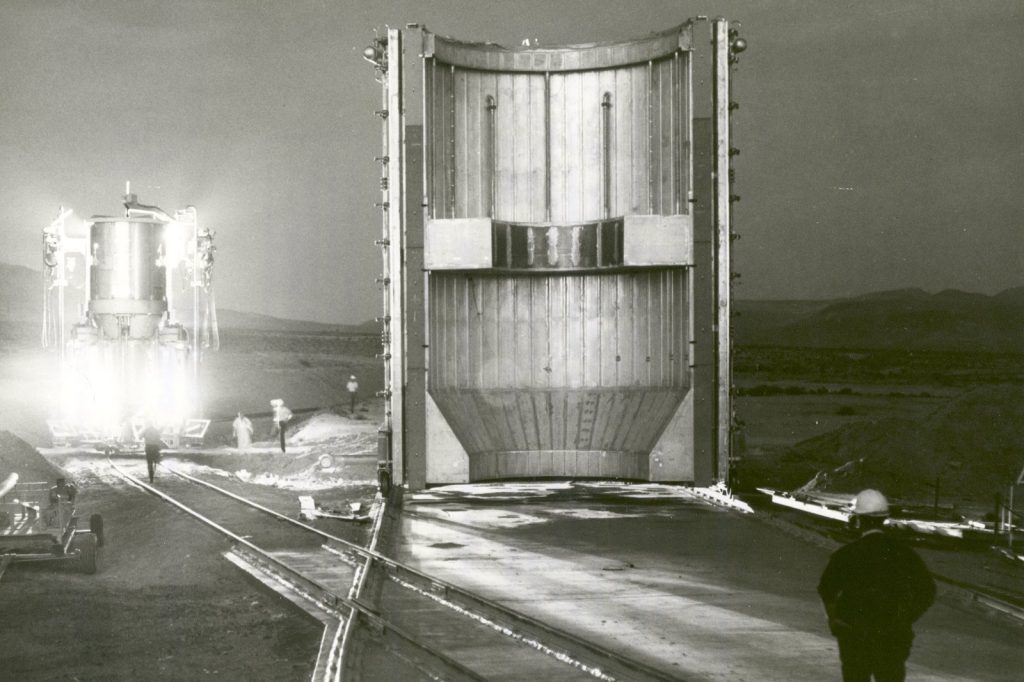
HUNTSVILLE, Ala., July 21 — The concrete and steel of Marshall Space Flight Center’s Test Stand 116 still holds the memory of fire and pressure. Earlier this year, engineers ran a non-nuclear reactor test there, a critical milestone in NASA’s push to revive nuclear thermal propulsion (NTP) for deep-space travel. But the real heat now is in Washington, where the program’s rising costs are drawing scrutiny from Congress, the GAO, and the agency’s own Inspector General.
According to a detailed Politico report, NASA’s NTP project is caught between expensive technical requirements and a tight federal budget. Under the 2024 NASA Authorization Act, the agency was required to submit a detailed cost and schedule baseline to Congress by April 2025—a deadline that has now passed.
The Government Accountability Office was expected to begin an independent review within 60 days of that submission. Separately, the Senate Appropriations Committee requested a briefing by May 1, 2025 from NASA Associate Administrator for Exploration Systems Development, Jim Free. The House Science Committee held a markup hearing on the NASA FY2026 budget in June 2025, where the NTP cost overrun was debated.
That same pool of money also funds the Mars Sample Return mission, now estimated at $8–11 billion. With both projects competing for finite dollars, NASA faces hard choices.
The agency’s Inspector General’s office is monitoring the NTP project for potential management issues.
Timeline at Risk
On the technical side, the program moves forward but under a tight clock. The non-nuclear reactor test at Marshall’s Test Stand 116 has been completed. Next comes the start of nuclear fuel fabrication at BWXT’s facility in Lynchburg, Virginia, slated for late 2026.
The most ambitious target: a full-power ground test at the Nevada National Security Site, planned for 2028. Before that can happen, the project requires a Final Environmental Impact Statement for the Nevada test site, due in 2026.
If funding is reduced, NASA may delay the flight demonstration to 2034 or scale back to a subscale test. Either option would push back the agency’s timeline for crewed missions to Mars, which depend on nuclear propulsion to cut travel time significantly.
Global Stakes
The White House Office of Science and Technology Policy has designated nuclear propulsion as a critical technology for the national space strategy. That designation signals priority, but not guaranteed funding. International collaboration talks with ESA and Japan’s JAXA on a joint nuclear propulsion demonstration are ongoing but contingent on cost control.
If the program slips, those partnerships may fray. By nightfall in Huntsville, engineers pack up another day of data analysis.
The test stand is quiet for now, but the paperwork from it—the baseline reports, the GAO findings, the environmental review—will determine whether this project fires again, or idles for years.




