
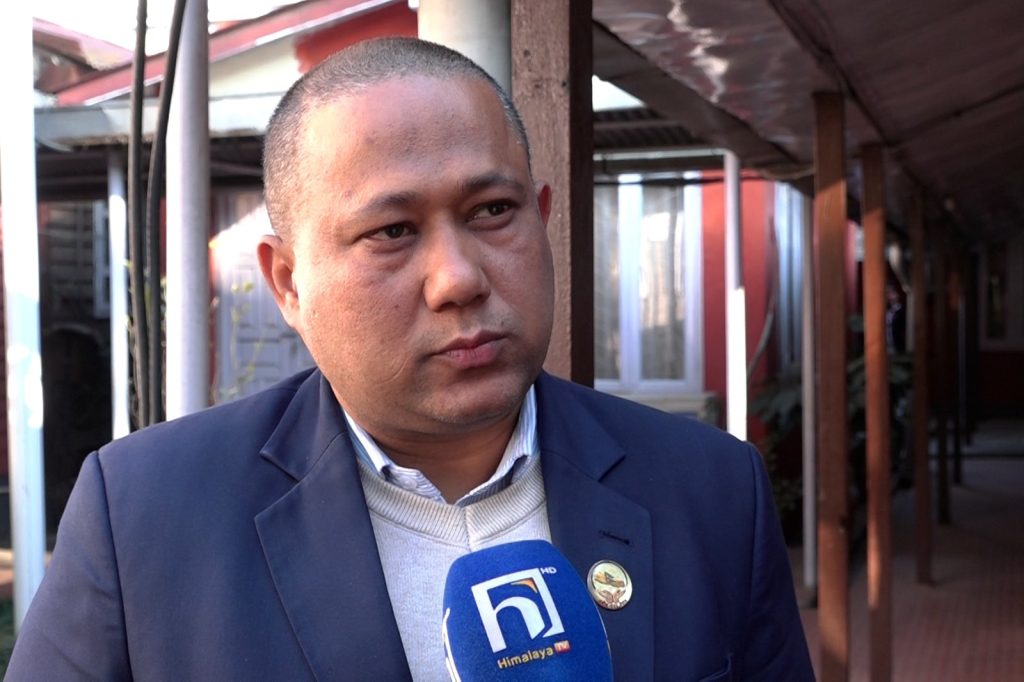
Nepal’s Foreign Minister Shishir Khanal today firmly rejected public speculation that his country’s army had entered into any arrangement with the United States Army to mine uranium in the Mustang district. Appearing before the National Assembly, Khanal described the circulating claims as baseless and untrue, and underscored that the government had not signed any agreement with any party for mining activities in that area.
Denial of Uranium Mining Agreement
“There is no truth in the matter of an agreement between the Nepali Army and the US Army for uranium mining in Mustang district,” Khanal told lawmakers. He added, “No agreement or agreement has been made with anyone regarding mining in this area.” The minister’s remarks came in response to parliamentary queries that had focused on the purported uranium deal, a topic that had gained traction in public discourse in recent weeks.
Khanal stated that the government remains fully committed to the provisions governing natural resources and their utilization as outlined in Article 289 of the Constitution of Nepal 2072 BS. That constitutional article sets stringent conditions for any exploitation of Nepal’s natural wealth, requiring that such activities align with national interests and do not compromise sovereignty.
The foreign minister further asserted that Nepal will not enter into any agreement that contravenes its longstanding non-aligned foreign policy or the principles of Panchasheel—the five principles of peaceful coexistence that have guided Nepal’s international relations since the 1950s. The minister also indicated that the Department of Mines will take all necessary procedures and steps regarding any future resource extraction. However, he offered no timeline for when that department might initiate further action or conduct studies in Mustang or elsewhere.
The absence of a schedule leaves open the possibility that the government will continue to assess the matter internally before any official moves.
Unresolved Border Disputes with India
In the same parliamentary session, Khanal addressed a separate but equally pressing issue: the long-standing border demarcation disputes with India. He explained that a bilateral technical committee between Nepal and India has successfully finalized the demarcation of many territories along the shared frontier. Yet, critical stretches remain unresolved, specifically the areas of Limpiyadhura, Lipulekh, Kalapani, and Susta. “It is a fact that the demarcation of those areas has not been done by the technical team,” Khanal said.
“But we are clear—those territories belong to Nepal. We have historical basis, evidence and maps.” The foreign minister noted that he raised the same matter during his recent meeting with his Indian counterpart, and he reiterated his government’s desire to resolve the dispute through diplomatic dialogue grounded in historical facts and evidence.
The minister’s statements on the border come as Nepal continues to assert its claims based on old treaties and cartographic records. The four contested areas have been a recurrent source of friction between the two neighbors for decades. While the bilateral technical committee has made progress on most of the border, the failure to reach agreement on these specific points means that official maps and administrative control remain contested in those regions.
No date has been set for the next meeting of the technical committee, and the Department of Mines has not indicated when it might commence its examination of resource potential in Mustang or any other district. Lawmakers’ questions in the National Assembly reflected a dual concern: the need to protect Nepal’s natural resources from any foreign entanglements that might undermine sovereignty, and the urgency of resolving territorial disputes that affect national identity and security.
Khanal’s response reaffirmed the government’s position on both fronts without offering new procedural steps or deadlines.




