
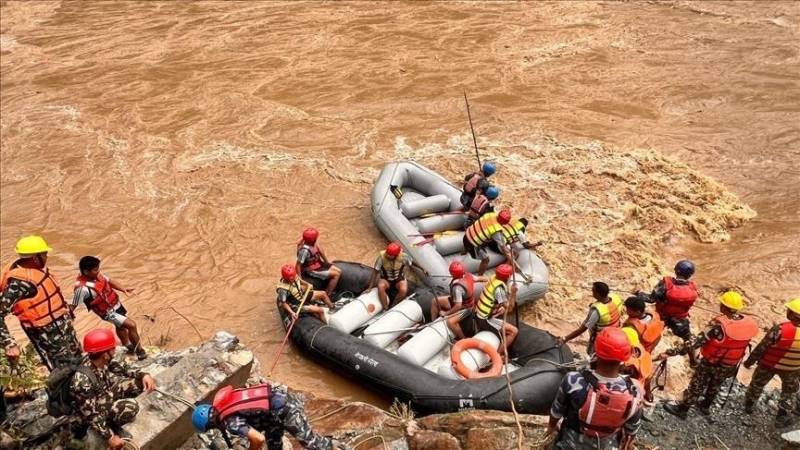
KATHMANDU, September 3 — Rescue teams are pressing ahead with search and recovery work across Nepal after catastrophic flooding devastated communities, with the known death toll climbing sharply as waters recede and more victims are found. The human cost is becoming clearer by the hour. Emergency crews have reached previously inaccessible villages where landslides and surging rivers cut off roads and communications. What they are finding is grim.
Bodies have been recovered from mud-caked homes, from fields now buried under debris, from riverbanks where the current deposited those caught in the flood’s path. The scale of displacement is enormous.
Tens of thousands of Nepalis have been driven from their homes, many with nothing but the clothes they wore when they fled. Temporary shelters have sprung up on higher ground, though aid workers warn that conditions are precarious. Clean water, food, and medical supplies are in critically short supply in the hardest-hit districts.
Helicopters have become the lifeline for communities where roads and bridges simply no longer exist. Pilots are flying in treacherous conditions, visibility poor, landing zones often nothing more than cleared patches of hillside.
Each flight carries relief supplies in and, when space allows, evacuates the most vulnerable out. The geography that makes Nepal stunning — steep Himalayan valleys, terraced hillsides, rivers cutting through narrow gorges — is what makes this disaster so lethal and so difficult to respond to. When heavy monsoon rains fall on terrain already saturated, the water has nowhere to go but down, fast, carrying everything with it.
International assistance is beginning to arrive. Neighboring India has dispatched military aircraft with relief materials.
China has pledged support, though the specifics remain limited. The United States, through its USAID arm, has announced initial emergency funding and is assessing what more will be needed. United Nations agencies are coordinating with the Nepali government on logistics and shelter.
What comes next depends heavily on weather. More rain is forecast, and with the ground already unstable, fresh landslides remain a lethal possibility.
Disease is the secondary threat that follows every major flood — contaminated water, compromised sanitation, crowded conditions in emergency shelters. The Nepali government has mobilized its armed forces for relief operations, but the demand vastly outstrips capacity. Local volunteers, many themselves affected, have been essential to early rescue efforts, forming human chains to pull survivors from mud, guiding strangers through terrain they know intimately.
Watch for whether the death count stabilizes in coming days as the full scope of missing persons becomes known, and whether international donors move from initial pledges to sustained commitment for reconstruction in a country with limited resources to rebuild alone.




