
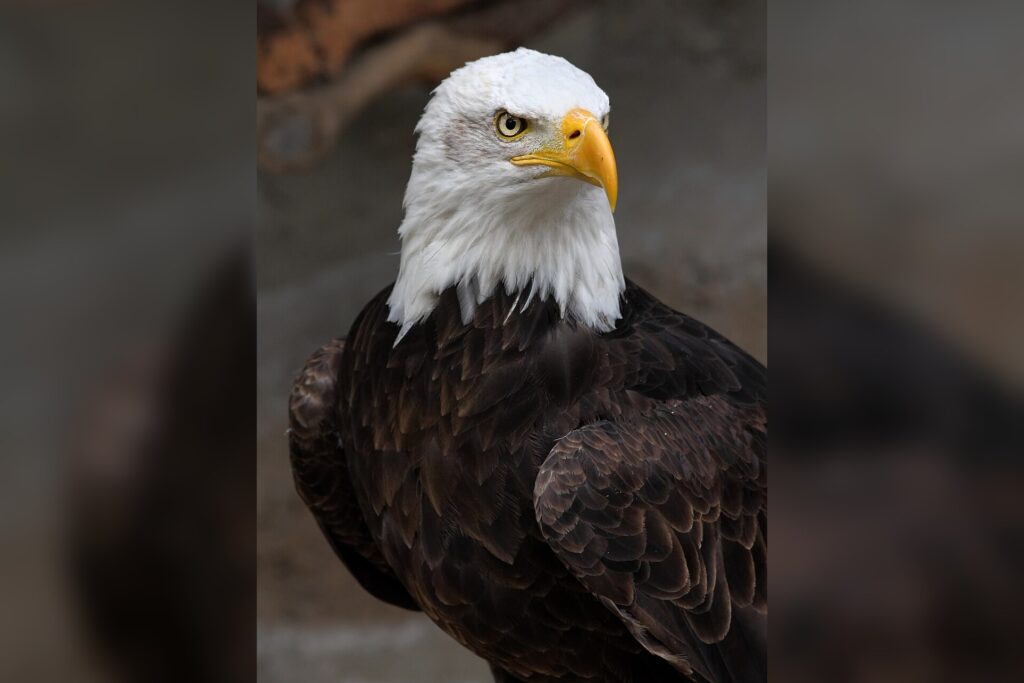
For anyone who has watched a local bald eagle pair raise chicks through a spring and summer, winter brings a quiet absence. The sky that held a familiar silhouette goes empty. It is not that the eagles have fled to Florida or Mexico.
They have simply followed the fish. A new analysis of the birds’ winter movements makes plain what researchers have pieced together through tracking technology: bald eagles do not migrate south as a matter of instinct.
They migrate to open water. Where a river or lake stays unfrozen, and where fish remain catchable, that is where eagles go. Some travel only a few dozen miles.
Others cross state lines. The destination is not fixed.
It shifts with the freeze line. The stakes here are not about the eagles themselves — the species has recovered from the brink, and its numbers are stable. The stakes are about what people lose when the birds leave.
For families, for school groups, for the retirees who sit at overlooks with binoculars, the winter disappearance breaks a connection. That connection is the real currency of conservation. A person who never sees an eagle in January is less likely to care about the river that eagle depended on in July.
Bald eagles possess specific adaptations that let them survive deep cold. Their feathers trap heat.
They can go days without eating. They can roost in sheltered stands of conifers. But all of that resilience is useless if the water freezes solid.
The birds do not abandon their territories out of dislike for snow. They abandon them because a frozen lake holds no food.
This flexibility — following the dinner table, not a calendar — is what makes the species so adaptable. It is also what makes their winter movements hard to predict. A mild January might keep eagles scattered across their nesting range.
A hard freeze concentrates them in the few places that stay open: a tailrace below a dam, a fast-moving stretch of river, a lake warmed by a power plant discharge. Those bottlenecks become critical. If the open water disappears, the eagles move again, or they starve.
Researchers now track these movements with GPS transmitters, and what the data shows is a species that treats winter as a logistics problem, not a migration. Some birds stay put year-round.
Others wander. A few make long journeys. The pattern is not a single route but a network of possibilities, each one determined by where the ice is not.
For birdwatchers, the lesson is harsh. The eagles that filled summer skies are not lost.
They are elsewhere, eating. The open water that holds them this winter may be the same stretch of river that held them last winter, or it may be a hundred miles away. There is no guarantee they return to the same nest.
There is no guarantee they come back at all, if a better food source keeps them. What this means for conservationists is that protecting eagle habitat cannot stop at protecting nest trees. It has to mean protecting the waterways that stay liquid in January.
It has to mean managing dams and river flows so that the ice does not lock every surface. It has to mean accepting that the eagles people love in July are not the same birds they will see in February — or that they may not see them at all.
That is the real weight of this finding. The birds will be fine. They have been fine for millennia.
But the people who watch them, who name them, who count them as a marker of wildness in their own backyards — those people are left staring at an empty branch, wondering where the eagles went.




