
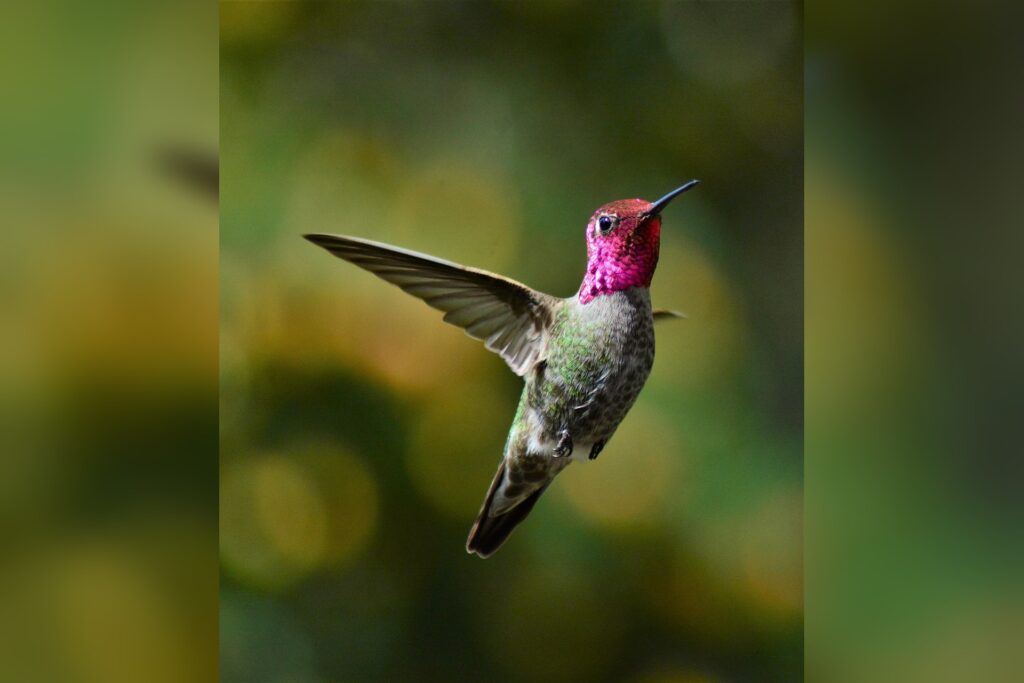
BOULDER, Colo. — The hummingbird that zips through your backyard might not be gone forever. It might just be somewhere else. That is the nuanced finding from researchers who have been tracking what birders are calling a quiet crisis at the feeder.
Dr. Elena Vance, an ornithologist at the Rocky Mountain Avian Research Center, has spent the last four field seasons mapping hummingbird populations across Colorado’s Front Range. She sees the confusion on local birding forums.
People ask where the birds went. Her answer is rarely simple. “What looks like a disappearance from one yard is often a redistribution,” Vance said.
“The birds are still out there. But their food sources have shifted.
So they shift too.” The data backs her up. According to the available research, the perceived decline is not a global collapse. It is a series of localized variations.
Those variations are driven by three interconnected pressures: habitat loss, pesticide contamination, and the erratic timing of climate change. Habitat loss is the most direct threat. Open land gets developed.
Native wildflowers get bulldozed. The nectar source vanishes.
Vance calls it the slow subtraction of fuel stations along a highway. Pesticides compound that loss in a more insidious way. They contaminate the nectar the birds drink.
They also kill the small insects and spiders that hummingbirds need to feed their chicks. Protein is not optional for a growing hummingbird.
It is essential. Without it, chicks don’t fledge. Climate change adds a layer of unpredictability that researchers call a timing trap.
Hummingbirds migrate north based on daylight length. That signal is steady. Flowers, however, respond to temperature.
Warm springs push bloom times earlier. A bird that arrives on schedule may find the flowers already spent.
The nectar is gone before the bird gets there. “That mismatch is brutal for a bird that burns energy at the rate a hummingbird does,” Vance said. “They are the tiny, high-performance sports cars of the bird world.
They need high-octane fuel on a strict schedule.” The practical consequence for the average person is that a local vanishing act is usually a localized shift. The birds have not died off.
They have moved to where the flowers are still blooming. That might be a different elevation. A different canyon.
A different neighborhood with older landscaping. Vance recommends that homeowners stop using pesticides. Plant native wildflowers that bloom at staggered times.
Keep feeders clean and filled consistently. The birds may come back.
But she warns against expecting a simple fix. “People want one answer,” she said. “There isn’t one.
It’s a web. You pull on one thread and three others tighten.” The research is ongoing.
No single study has declared a definitive global decline. What the data shows is a pattern of pressure. Each threat alone might be manageable.
Together, they form a cumulative weight that pushes hummingbirds out of familiar places. For now, the mystery of the missing hummingbird has an answer. It just isn’t a neat one.




