
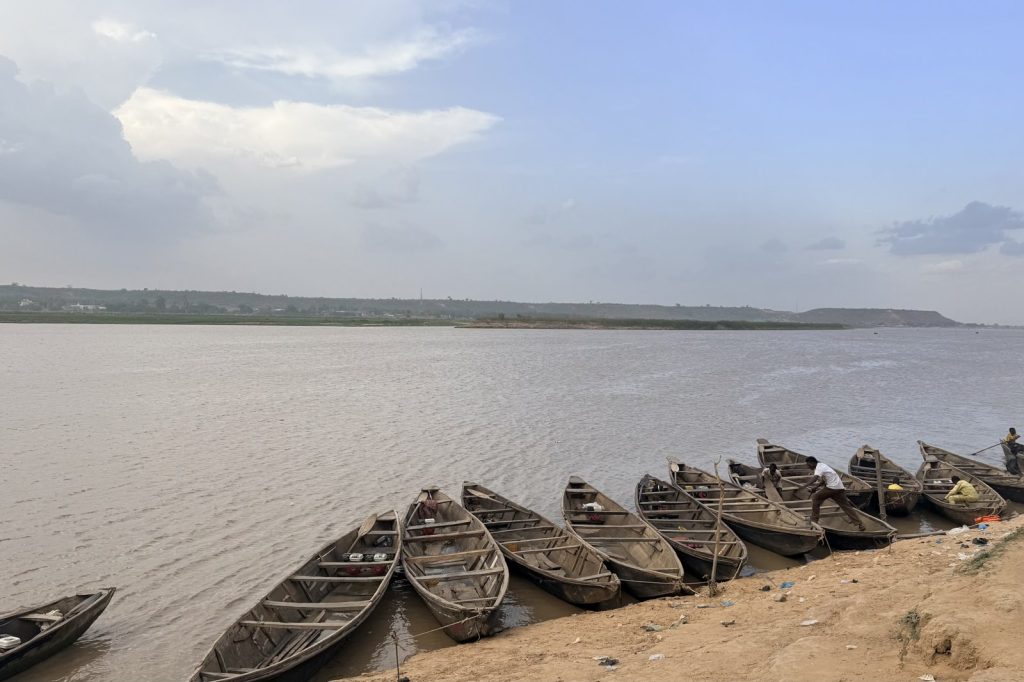
Rescue teams are still searching the Niger River near the town of Mokwa in Niger State, Nigeria, after a wooden boat carrying approximately 300 passengers sank. Sixteen bodies have been recovered so far, while at least 150 people were pulled from the water alive. However, more than 100 others—the majority of whom are reported to be women and children—remain missing.
The Niger River, which stretches 4,180 kilometers in a crescent shape from the Guinea Highlands through Mali, Niger, Benin, and into Nigeria, is a central artery for millions. Its drainage basin spans over two million square kilometers.
As the third-longest river in Africa and the 14th-longest in the world, it serves as a primary roadway for countless communities who rely on it for fishing, farming, and travel. That dependence turned deadly this week. Search operations are ongoing, but time is a critical factor.
Water rescues have narrow windows of opportunity, and the river is wide and powerful in this region. The 16 confirmed fatalities are considered a minimum, with authorities expecting the number to rise as the search continues.
Local officials are investigating the cause of the sinking, though similar investigations into past boat disasters on the Niger have historically produced little public accountability. The sheer number of passengers—300 people on a single wooden vessel—points to a deeper, systemic issue. In many riverine communities across West Africa, boats are the only available mode of transport. Roads are often in poor condition or nonexistent, and ferries are either scarce or too expensive for many residents.
As a result, people crowd onto whatever boat is available, frequently traveling at night, on overloaded vessels, and without life jackets. This tragedy is not the result of a sudden storm or a rogue wave, but rather a failure of infrastructure and regulation.
The demographic of the missing—mostly women and children—adds a layer of profound grief. Men often travel for work or trade, while women and children typically move for markets, school, or family visits. The composition of the boat’s passengers suggests a community trip, possibly a market day or a routine crossing that turned catastrophic.
Entire households may have been lost. For centuries, the Niger River has been a lifeline, moving goods and feeding families.
But when a boat is rotten, an engine fails, or a hull is overloaded beyond its limits, that same lifeline becomes a threat. This is not the first such disaster on the river, and it will not be the last without fundamental changes in waterway management and passenger transport. For now, the focus remains on the missing.
Rescue teams continue their work, and families wait on the banks. The 16 recovered bodies are a grim start, but nobody in Mokwa believes that number is final.
The river gives back what it takes, but slowly, and not always whole.




