
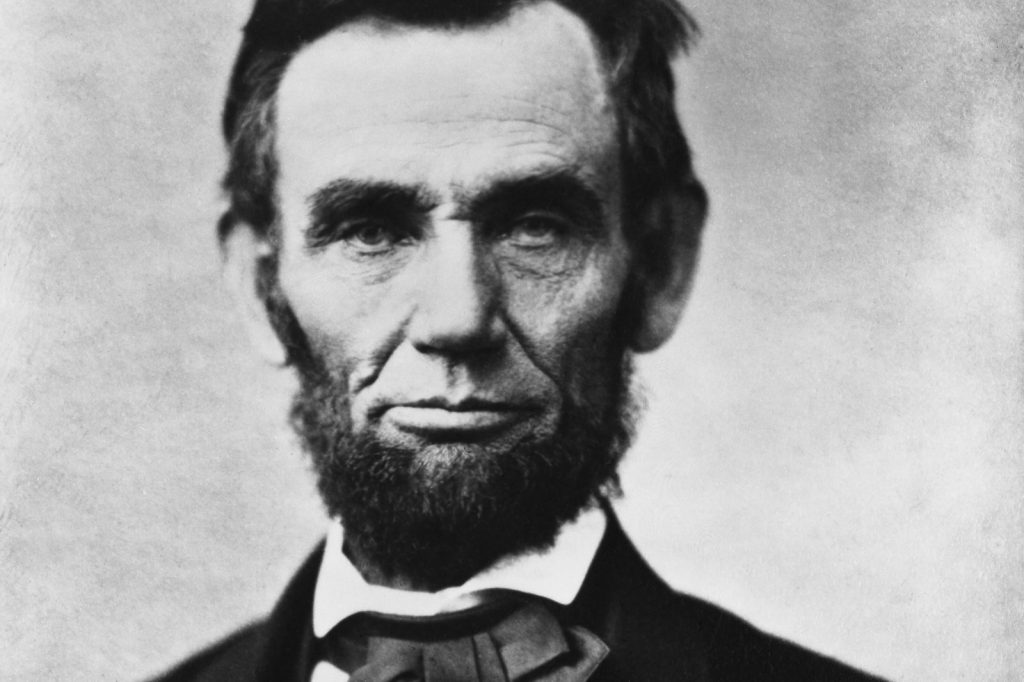
Against this backdrop of a republic at war with itself, the signature came quietly enough: on July 1, 1862, Abraham Lincoln signed the Pacific Railroad Act, calling two companies into being and setting them a task no state had attempted at such scale. The Central Pacific would work east from Sacramento through the Sierra Nevada; the Union Pacific would work west from Omaha-Council Bluffs over the Rockies; and over seven years the two would race toward each other until the rails met at Promontory in Utah on May 10, 1869. What is at stake in that single statute, for any student of how nations are built, is the question of whether a government at war can also weld a continent together.
The idea was older than the crisis. The notion of a coast-to-coast line had circulated since an 1832 pamphlet, but only in 1848, when the Mexican Cession brought California in and gold turned up near Sacramento, did it become urgent. Would-be miners crossed by wagon overland or by ship around South America’s tip, a trek of months; by 1850 the territory’s population had swollen enough to earn statehood, and the new state needed a dependable connection. Through the 1850s federal surveyors walked candidate routes across the West, and Congress argued over the eastern terminus, with southern men blocking northern routes and northern men returning the favor. Once the Civil War began in 1861 the question settled itself: the terminus would be northern, and Lincoln, who had campaigned on a promise to build the railroad, signed the act in 1862 and a successor in 1864.
The mechanism, as the acts designed it, paid for progress: land grants that scaled with miles of track, and low-interest government loans that scaled with the difficulty of the ground. Chinese laborers were already at work on the Central Pacific while the Union Pacific was still hunting hands; UP construction opened at Omaha on December 2, 1863, and the line had laid just 40 miles by the close of 1865, starved of financing, workers and materials by the war. The pace changed the next year as Irish immigrants arrived in new waves and demobilized Civil War veterans came for the wages.
The wider picture on the ground was an army in motion. At peak, nearly ten thousand people worked the line at once, surveyors first, then graders, then the bridge and tunnel men, with the tracklayers behind them; mountain-cut ties, rails from eastern foundries, food and grain for thousands of animals all had to converge at the “end of track” at the same hour. The Union Pacific’s financier and general manager was Thomas Durant, Grenville Dodge held the chief engineer’s post, Samuel B. Reed ran construction, and the track-laying fell to General John S. “Jack” Casement and to his brother Dan. The labor was backbreaking for modest pay in brutal weather, with avalanches, explosions and water-borne disease; the diet was mostly beef, bread and coffee. And the line cut through inhabited country: the road ran roughshod over the sovereignty of Native nations, the Army rode with the crews, forts rose along the right of way, and raiding came in reply; the Pawnee sided with the Army to shield the line, Major Frank North leading a uniformed battalion, 800 Pawnee men, against Sioux and Cheyenne raiders, while the Oglala Sioux, Northern Cheyenne and Southern Arapaho, squeezed by settlement and broken treaties, struck at the workers and the rails.
Where the crews went, a shadow economy followed: gamblers, saloon keepers, card sharps, prostitutes and thieves in tents and tar-paper shacks, the camps the era called “Hell on Wheels”, moved west with the graders. Some end-of-track camps simply blew away; in Wyoming, Laramie and Rawlins, Rock Springs, Green River, Evanston among them, hardened into permanent cities.
The rot, when it came, was internal. Thomas C. Durant and fellow Union Pacific executive George Francis Train set up Crédit Mobilier of America, a construction company that charged the railroad rates far above cost; building the road cost $50 million, Crédit Mobilier invoiced $94 million, and the margin went to shareholders. Part of the cash bought Washington favors, among them Representative Oakes Ames. The scheme nearly bankrupted the Union Pacific, and after a falling-out, shareholder Henry Simpson McComb leaked the compromising letters to the New York Sun, which broke the story on September 4, 1872, touching off investigations in Congress and at the Department of Justice and leaving public trust in the capital badly dented.
The golden spike went into the ground at Promontory on May 10, 1869, closing 1,776 miles of line from Omaha to the junction, and the continent had its iron spine. From a European vantage, the episode reads as statecraft of a distinctly American boldness: public land and public credit, handed to private hands, to buy a private scandal alongside a public triumph. The acts built a nation; the billing built a cautionary tale; both arrived on the same set of rails.
Sources
- Building the Union Pacific Railroad | Wyoming History Day
- Pacific Rail Way Act Essay – 598 Words | Bartleby




