
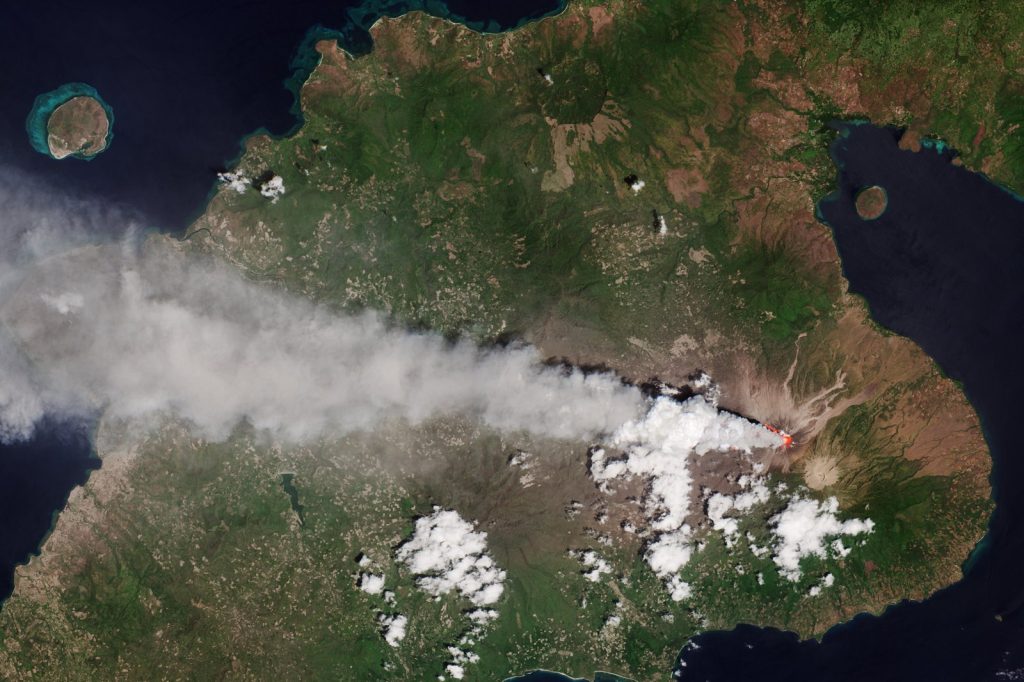
TOKYO, July 17 — The figure that matters: 90 percent of the world’s earthquakes occur along the Ring of Fire, a 40,000-kilometer tectonic belt that wraps around most of the Pacific Ocean. That makes it the planet’s most seismically active zone by a wide margin. By the numbers, the Ring of Fire contains between 750 and 915 active or dormant volcanoes — roughly two-thirds of the world’s total.
The belt stretches about 25,000 miles in length and up to about 500 miles in width. Investors will note that this geographic reality shapes insurance markets, infrastructure planning, and supply chain risk from Chile to Japan.
The Ring of Fire is not a single geological structure. It was created by the subduction of different tectonic plates at convergent boundaries around the Pacific. The subducting plates include the Antarctic, Nazca, and Cocos plates beneath the South American plate; the Pacific and Juan de Fuca plates beneath the North American plate; the Philippine plate beneath the Eurasian plate; and a complex boundary between the Pacific and Australian plate.
These interactions have formed oceanic trenches, volcanic arcs, back-arc basins, and volcanic belts. The bottom line: more than 350 of the Ring of Fire’s volcanoes have been active in historical times.
The four largest volcanic eruptions on Earth in the Holocene epoch all occurred at volcanoes within this belt.
Geology and History
Most of Earth’s active volcanoes with summits above sea level are located here. Many are stratovolcanoes — Mount St. Helens is a prime example — formed by explosive eruptions of tephra alternating with effusive lava flows. The lavas at these stratovolcanoes are mainly andesite and basaltic andesite, but dacite, rhyolite, basalt, and other rarer types also occur.
Other volcano types include subaerial shield volcanoes, such as Plosky Tolbachik, and submarine seamounts, such as Monowai. The Ring of Fire has existed for more than 35 million years, though subduction has existed much longer in some parts.
The name itself originates from ancient Greek and Roman times, when volcanoes were associated with fire based on the belief that fires burned within the Earth. By the early 19th century, scientists knew about an orogenic belt of volcanic activity around the Pacific. In 1825, volcanologist G.
P. Scrope described the chains of volcanoes in his book “Considerations on Volcanos.” Three decades later, a book about the Perry Expedition to Japan — “Narrative of the Expedition of an American Squadron to the China Seas and Japan, 1852–54” — commented on the Ring of Fire volcanoes.
An 1878 article in Scientific American titled “The Ring of Fire, and the Volcanic Peaks of the West Coast of the United States” outlined the phenomenon. Early explicit references to a “ring of fire” around the Pacific include Alexander P. Livingstone’s 1906 book “Complete Story of San Francisco’s Terrible Calamity of Earthquake and Fire.” In 1912, geologist Patrick Marshall introduced the term “Andesite Line” to mark a boundary in the southwest Pacific.
What to Watch
The inclusion of some areas — such as the Antarctic Peninsula and western Indonesia — remains disputed among geologists. That matters for risk assessment and insurance underwriting in those regions. For investors and planners, the Ring of Fire’s seismic and volcanic activity is not abstract.
It drives real costs: earthquake engineering requirements, volcano monitoring budgets, and reinsurance premiums across the Pacific Rim. The belt’s 40,000-kilometer reach means no single country bears the risk alone — but some, including Japan, Indonesia, and the U.S. West Coast, face concentrated exposure.
The four largest Holocene eruptions all originated here. That historical record, combined with the belt’s 750-plus active volcanoes, makes clear the scale of the geological forces at play.




