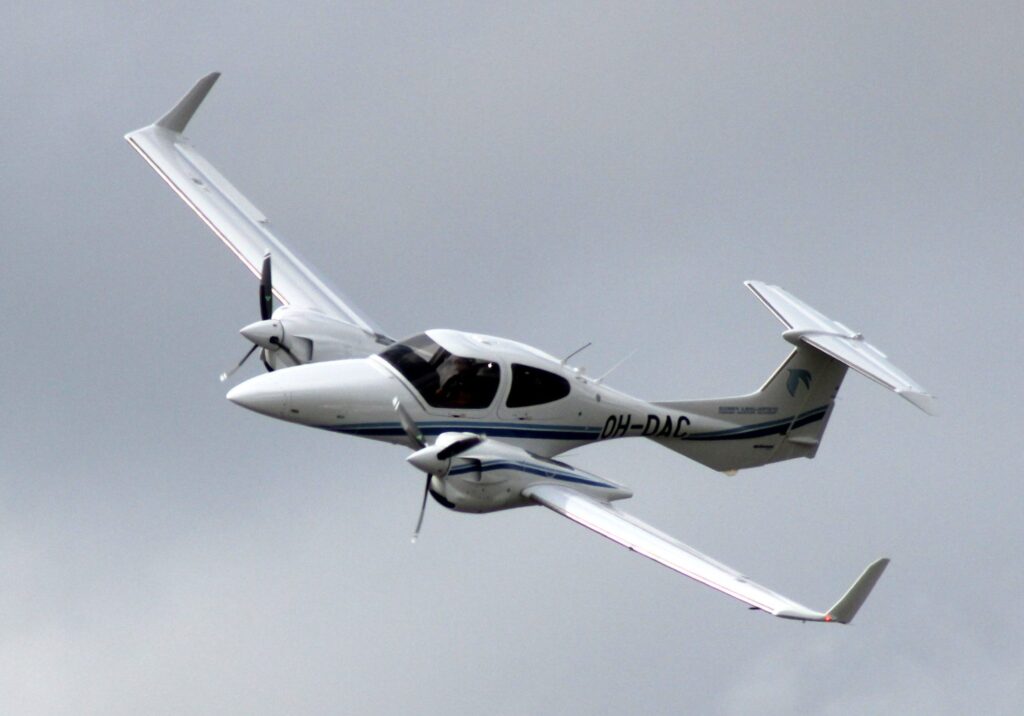
The plane got 161 feet into the air. Within a minute of taking off from Parafield Airport, north of Adelaide, on 29 April, the twin-engine Diamond DA-42 was down again, into a hangar used for maintenance, storage and classes. Flight instructor Robert Hoyle and the pilot under instruction both died. Ten people on the ground were hurt.
It was just after 2pm. The hangar held a significant amount of fuel, and the impact also took out the fire hydrant system and the sprinklers, leaving 57 firefighters short of water and fighting thick black smoke and intense flames. Students inside were helped out. Two of the five aircraft in the building were damaged.
Four of the injured went to Royal Adelaide Hospital, one of them in a life-threatening condition with serious burns. Four more were treated for smoke inhalation at Lyell McEwin hospital, and two at Modbury.
The Australian Transport Safety Bureau’s preliminary report fills in the flight’s last minute. About 27 seconds after takeoff, at 115 ft, the instructor radioed “engine failure”. No more calls came. The purpose of the flight was simulated engine failure circuits, and the aircraft’s nose landing gear stayed down while the main gear retracted.
The bureau’s chief commissioner Angus Mitchell said a fractured nose landing gear actuator rod, with fatigue cracking, is one scenario under examination, along with loss of power in one engine. The left engine, he noted, “was not showing signs of producing power on impact”. The manufacturer had issued mandatory bulletins about that rod in 2013 and 2019. A safety advisory notice has now gone to every operator of the type.
“Our family remains heartbroken by the loss of our beloved Robert and whilst we take some comfort in the confirmation that the accident appears to have been caused by mechanical error, it does not lessen our grief,” the instructor’s father, Scott Hoyle, said.
Flight Training Adelaide, which operated the aircraft, said the failed component had no defined safe-life limit and no prior fatigue warning from the manufacturer, and that it has since replaced the parts across its fleet. The final ATSB report is expected to take about 18 months.
Sources
- Nose landing gear failure could have caused fatal Parafield plane crash, preliminary ATSB report notes – ABC News
- Two dead and ten injured in small plane crash at Parafield airport north of Adelaide | South Australia | The Guardian