
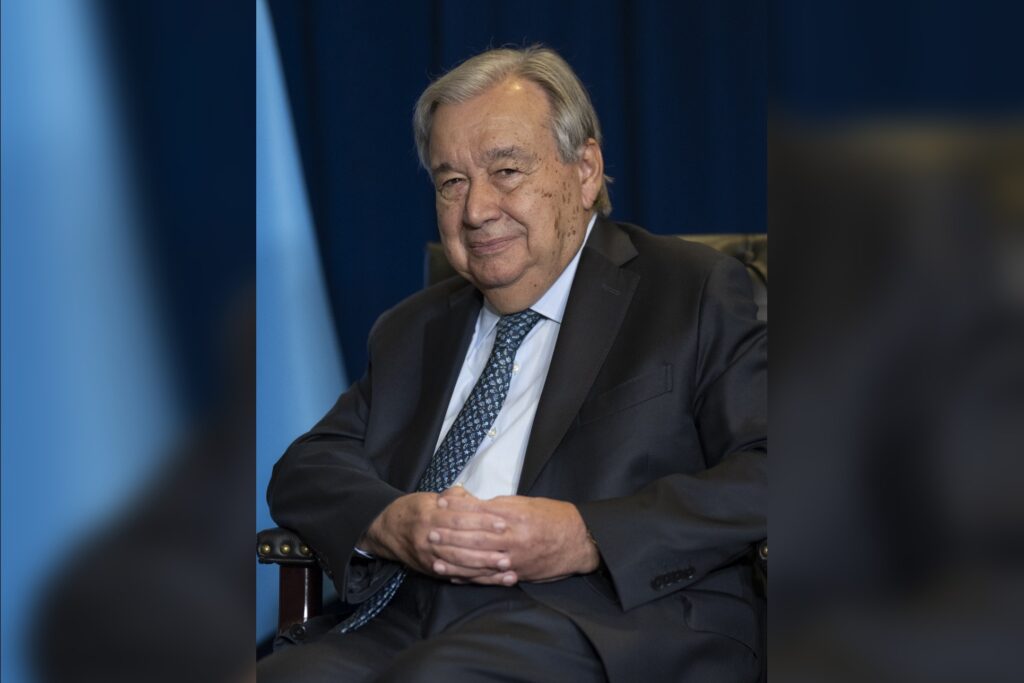
“There are no embargoes on sunlight and no blockades on the wind.” UN Secretary-General António Guterres used that line on Tuesday in London, where Europe was suffering through a deadly heatwave and he was giving the keynote at London Climate Action Week.
His argument tied two crises together. Dependence on oil, he said, is behind both climate change and an energy sovereignty squeeze, the second tied to heavy shipping disruption in the Strait of Hormuz and the war involving Iran, Israel and the United States. “These crises may seem separate but they share the same destructive origin: fossil fuels,” Guterres said. He asked for political leadership on the scale that ended leaded gasoline and the chemicals that opened a hole in the ozone layer.
Warnings on temperature
More than a decade has passed since world leaders agreed in Paris to hold warming to 1.5°C above pre-industrial levels. The agreement still stands, though the US formally withdrew for a second time in January. UN-backed scientists warn that average annual temperatures are likely to pass that threshold in the coming years.
“Every fraction of a degree matters,” Guterres said. He pointed to coral reefs that cannot survive in water that warm, ice sheets whose melt threatens to reshape coastlines and displace millions, and small island nations that could disappear. The aim, he said, is “to strictly limit the overshoot, shorten its duration and bring temperatures down below 1.5°C as fast as possible”.
He called the Middle East conflict “the mother of all energy shocks”, on a par with the oil disruption of the 1970s and the full-scale Russian invasion of Ukraine. A 60-day pause in hostilities has been arranged to allow Iranian-US talks in Switzerland, and he said any peace agreement “is welcome”. Developing countries, he added, are suffering most: “It is a debt shock, a food shock, a development shock.”
The numbers behind his case
Since 2010, he said, solar costs have fallen by almost 90 per cent, onshore wind by more than 70 per cent and battery storage by 95 per cent. Renewables avoided more than the yearly carbon dioxide emissions of the US, the EU and Japan combined, and clean energy now draws almost twice the investment that fossil fuels do.
Seven steps
Guterres set out a seven-point plan for energy independence.
First, emissions should peak immediately and reach net zero by 2050, with the G20, responsible for around 80 per cent of global emissions, in the lead. He backed a global Call to Action on Methane: “Methane pollution must be next.”
Second, public subsidies for new fossil fuel projects should end. He said the eight largest fossil fuel companies reported an extra $6.5 billion in the first quarter alone, and urged governments to tax them.
Third, major AI companies should publicly disclose the carbon, water and land footprints of their data centres and run them on renewable energy by 2030. By that year, he said, the water they use could meet the basic needs of all 1.3 billion residents of sub-Saharan Africa for a year.
Fourth, the shift should deliver jobs and development, with COP31 in Türkiye pushing it along. Fifth, adaptation needs money, and developed countries should keep their pledge to double adaptation finance with a clear path toward tripling it.
Sixth, fair finance. Many developing countries face borrowing costs two to three times higher than richer ones, and African countries receive only two per cent of global clean energy investment despite holding 60 per cent of the world’s best solar resources. He urged using the $600-800 billion in extra lending capacity at multilateral development banks, and delivery of the $300 billion pledged, on the way to $1.3 trillion a year by 2035.
Seventh, protect science, journalists and human rights defenders from climate disinformation, which he said “is spreading deliberately to delay climate action”.
Sources
Sources
- UN Chief Unveils Clean Energy Transition Blueprint | Mirage News
- UN offers science-based blueprint to tackle climate crisis… | UN News




