
Four-day weeks, mandatory work from home, curbs on air and car travel. When the Strait of Hormuz closed, Asia, the region most exposed to losing Gulf supplies, reached for emergency measures first. Some factories shut capacity because there was not enough energy to run them.
Reuters columnist Ron Bousso argues that the crisis looks a lot like 1973, and that the comparison cuts both ways. The strait reopened before global inventories fell to dangerous levels, which he says averted a calamity. But governments are now rethinking how they power their economies. Bousso writes that the episode “could ultimately mark the beginning of the end of the oil era,” though he stops well short of predicting a sudden fall in fossil fuel use.
What 1973 changed
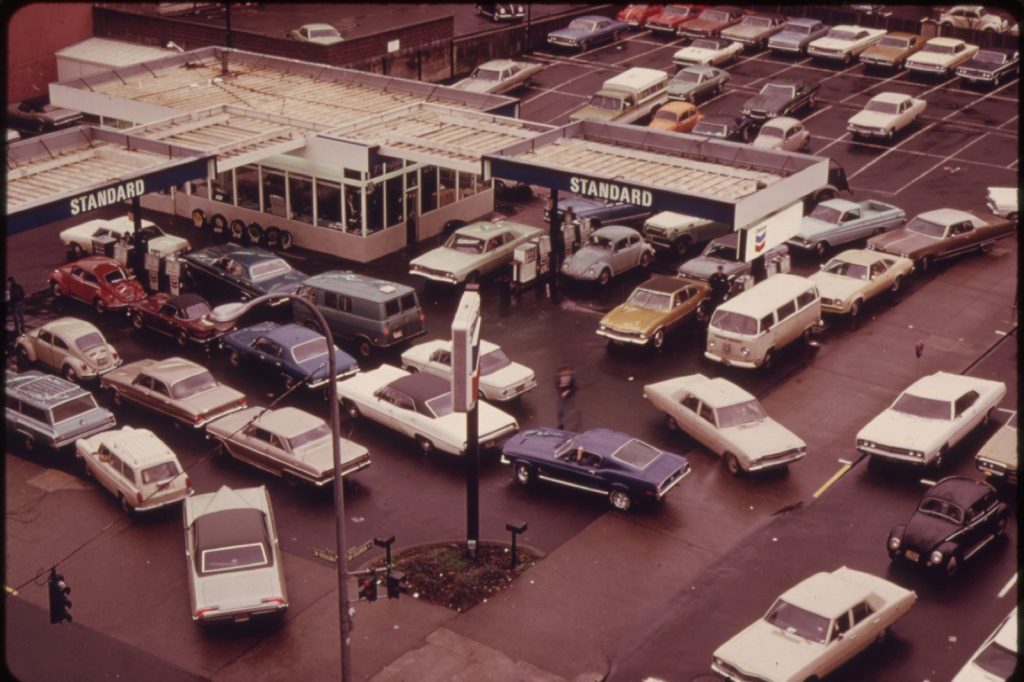
After the 1973 Yom Kippur war, Arab members of the Organization of the Petroleum Exporting Countries imposed an embargo on the United States and other Western countries backing Israel. Oil prices roughly quadrupled almost overnight, setting off a global inflation shock.
The response reshaped energy use. American drivers moved toward smaller, more efficient Japanese cars, and Washington set fuel economy standards. European carmakers pushed diesel. Heavy industry swapped fuel oil for coal and gas. Western governments also sped up development of domestic oil and gas, especially offshore, which cut import dependence and the energy intensity of their economies. In 1974 the International Energy Agency was formed to coordinate responses to major supply disruptions, including the running of newly created national strategic petroleum reserves.
Security over cost
Bousso says 2026 is different in one respect: there are now cost-competitive alternatives to fossil fuels. The emergency rules in Asia were meant to be reversed once oil flowed normally. The lasting changes are structural. Asian economies have long chased the cheapest energy to drive growth. In Bousso’s reading, the lesson of Hormuz is that “energy security trumps everything,” cost included.
India and Pakistan are expected to build up domestic oil reserves, following IEA members and China. India, Pakistan and Japan are also looking at domestic renewables, nuclear and even coal to reduce exposure. In April, South Korea’s President Lee Jae Myung called for exploring alternative supply chains, restructuring industry over the medium to long term and moving toward a “plastic-free economy.”
Europe was hit less hard this time. Still, it has now absorbed two major energy supply shocks in under five years. After Russia invaded Ukraine in 2022, gas prices soared and consumption fell as countries introduced energy-saving measures, while chemicals, glass and steel makers shrank. European gas demand dropped by over 20% between 2021 and 2023 and has recovered only modestly. Bousso expects the latest shock to speed that trend.
Where the money is going
The IEA’s World Energy Investment report expects global energy investment to reach $3.4 trillion this year, up 5% from 2025, despite the turmoil in the Middle East. Much of it is going into alternatives to oil and gas and into making systems more resilient.
Electric vehicle sales rose 30% year-on-year in Europe in the first quarter of 2026, according to the IEA, along with 75% in Latin America and 80% in Asia Pacific. Chinese solar panel exports jumped 120% to Africa and 150% to Southeast Asia. Fifteen African countries reported record solar imports of more than $400 million in the first quarter alone, against $650 million for all of 2025.
Spending on energy efficiency stands at around $350 billion per year. The IEA estimates that roughly 20 countries have announced new efficiency measures in direct response to the Hormuz crisis.
Bousso is careful about the limits. Oil is still deeply embedded in transport, agriculture and construction, and rising electricity demand from industry, air conditioning and AI data centres is reinforcing gas. The question, he writes, is direction. “For much of the last century, the direction of travel for fossil fuel use was invariably up and to the right.”




