
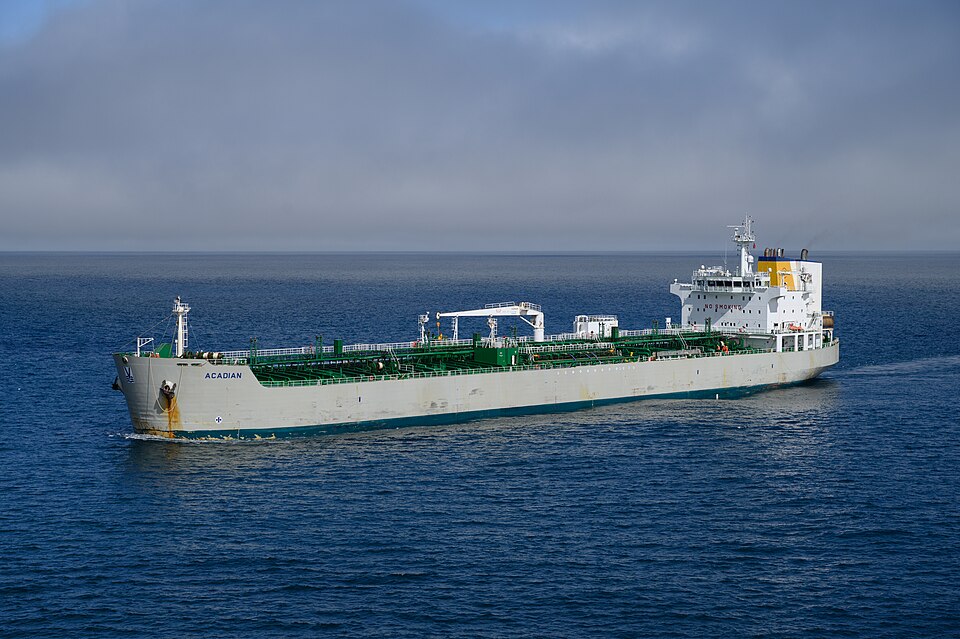
For centuries, the narrow waterway separating the Arabian Peninsula from Iran has been a vital artery for trade and military power. Ancient mariners recorded its treacherous currents in classical sailing guides, and its name may derive from Persian or Greek linguistic origins, reflecting the layers of history along its shores. Today, the Strait of Hormuz remains the sole maritime gateway from the Persian Gulf to the open ocean, a geographic pinch point where the Musandam Peninsula – part of Oman and the United Arab Emirates – meets Iran’s coastline.
Its modern significance stems directly from the rise of oil as a global commodity in the twentieth century. As Middle Eastern producers became central to world energy markets, the strait emerged as the single most critical chokepoint for seaborne crude and liquefied natural gas.
By the late 1900s, most of Europe’s imported oil and a large share of Asia’s supply passed through its waters.
A Lifeline for Global Energy Markets
According to the US Energy Information Administration, the Strait of Hormuz handles about 20 percent of the world’s petroleum, or roughly 17 million barrels per day. In 2023, oil flows through the strait averaged 16.5 million barrels per day. This volume makes the waterway a decisive factor in global energy pricing, with consequences that reach far beyond the region.
For many countries across Asia – including Japan, South Korea, India, and China – the strait is a lifeline for imported oil. Any sustained disruption would mean higher fuel costs for transport, manufacturing, and households.
The sensitivity of these markets became evident during the 2024 US-Iran tensions, when crude oil prices rose 3 percent to $85 per barrel on June 20, 2024. While the immediate spike was modest, it underscored how quickly markets react to any hint of instability near the strait. Such reactions have historical precedent. In 2019, after the United States imposed sanctions on Iran, Tehran threatened to block the strait.
Those threats, even though not carried out, sent ripples through global energy markets that eventually reached communities across Asia. The last major physical disruption came in the same year, when attacks on Saudi Aramco facilities caused oil prices to spike 15 percent.
That event demonstrated how quickly energy markets can be rattled by direct strikes on infrastructure. Threats to close or disrupt the strait have punctuated regional conflicts since the 1980s, most notably during the Iran-Iraq War when both sides targeted shipping. Iran has periodically warned it could block the strait in retaliation for sanctions or perceived aggression, though no sustained closure has occurred outside wartime scenarios.
Military Presence and Limited Alternatives
The United States stations its Fifth Fleet in Bahrain, maintaining a visible security presence in the region. The fleet’s patrols are a constant reminder of the military dimension to what is fundamentally an energy security issue.
The strait’s geography – shallow waters, narrow lanes, and proximity to Iranian territory – makes any disruption difficult to counter without risking escalation. Yet the US presence underscores how energy security and military power became intertwined in the region. Alternative routes exist but are limited in capacity.
The East-West Pipeline in Saudi Arabia has a capacity of 5 million barrels per day, but that is insufficient to replace a full closure of the strait. No single pipeline or overland route can absorb the roughly 17 million barrels that transit the waterway daily.
For the Gulf states that depend on the strait – including Qatar, Kuwait, Bahrain, and Iraq – to export oil and gas, there is no practical substitute for a waterway that has served as the essential route for centuries.
What to Watch as 2026 Unfolds
As 2026 progresses, the key question for families and businesses across Asia is whether diplomatic channels can keep the strait open. Any escalation – whether through direct threats, naval incidents, or attacks on tankers – would have immediate consequences for fuel prices and supply chains.
The Strait of Hormuz remains a narrow passage with outsized influence on the daily lives of millions. For now, the world watches and waits.




