
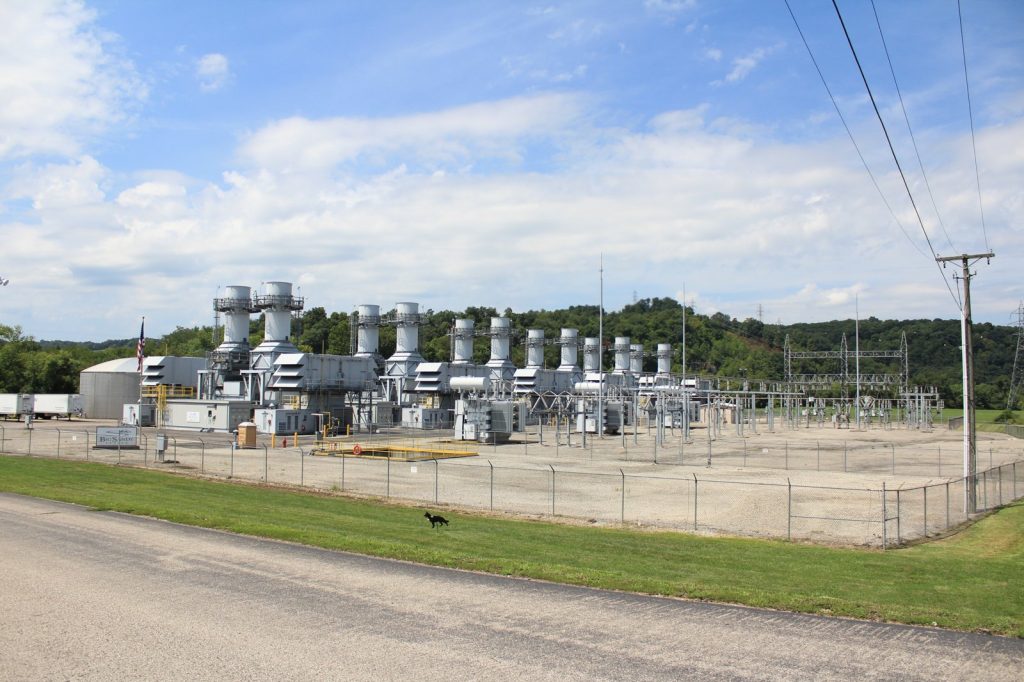
New Yorkers have paid more than $4.5 billion over the last decade to the private owners of the city’s peaker plants, just to keep them online in case they are needed. The plants run between 90 and 500 hours a year. Even at the top of that range, it is less than three weeks. A report from the PEAK Coalition, “Dirty Energy, Big Money”, put peak electricity in the city at 1300 percent above the average cost in the state.
It is an odd thing to pay billions for, a machine built to sit idle. That is the peaker business, though.
Built to sprint
A peaker plant, or “peaker”, generally runs only when demand for electricity is at its peak. It is dispatched alongside baseload plants, which supply a steady, dependable amount of power. Because peakers supply power only occasionally, the electricity commands a much higher price per kilowatt hour.
When the peak arrives depends on the climate. In temperate regions it comes in the evening, when people get home and switch on appliances. In hot ones it is late afternoon and air conditioning. In cold ones it is the morning, as heating and industry start up.
Under the hood, most are gas turbines or gas engines burning natural gas. A few run on biogas or on petroleum liquids such as diesel and jet fuel, which cost more and are mostly confined to places without a gas supply. Many keep oil on site as a backup fuel. The thermodynamic efficiency of a simple-cycle gas turbine runs from 20 to 42 percent, with 30 to 42 percent typical for a new plant.
Efficiency is not where the money goes, and the economics explain why. If a plant will run only a short or unpredictable time, it makes little sense to pay to make it as efficient as a baseload plant. Combined cycle gas plants, which run a second cycle on the first one’s waste heat, cost about the same per watt to build, but they run far longer on less fuel and so produce cheaper electricity. As of 2020, open cycle gas turbines delivered power at roughly $151 to $198 per MWh. Nuclear, coal, biomass and waste-to-energy plants are rarely if ever used as peakers, because fluctuating conditions would strain the equipment.
Who lives next door
“Peaker plants need to be able to fire up quickly,” Jennifer Rushlow of Vermont Law School has said. “They are generally inefficient and expensive to operate.” She added that they depend almost entirely on fossil fuels, usually natural gas and in some areas oil.
Siting is the sore point. Peakers often sit in neighborhoods that environmental justice advocates describe as low-income communities of color. Over 1.2 million New Yorkers live within a mile of one. Many of the facilities are 50 or more years old, lack modern pollution controls, and run at least part of the time on kerosene or oil. In the South Bronx neighborhoods of Hunts Point and Longwood, asthma hospitalization rates are nearly double the city average.
California shows the same pattern. Physicians, Scientists, and Engineers for Healthy Energy found that half of the state’s 80 gas-fired peaker plants are in communities the state itself calls disadvantaged.
Batteries move in
In some places, batteries have already replaced peakers. In Ventura County, California, 142 Tesla Megapacks providing 100 MW took the place of a gas peaker. In Lessines, Belgium, 40 Megapacks providing 50 MW replaced a turbojet generator. The New York Power Authority is looking to swap gas peakers for battery storage, and Australia’s Clean Energy Council found in April 2021 that storage can be 30 percent cheaper than gas peaker plants.
Batteries are also the fastest-responding generators there are, reacting to grid conditions in milliseconds. They do have a catch. Batteries and pumped storage consume more than they produce, since neither has an energy source of its own and some energy is lost converting to storage and back.
In California, the aging Oakland Power Plant is due to be replaced with solar and battery storage. Ontario offers a longer record. Dianne Saxe, then the province’s environmental commissioner, reported in 2018 that its electricity system went from 74 percent low-carbon generation in 2005 to 96 percent in 2017 after the coal phase-out. Saxe said Toronto went from 53 smog days in 2005 to zero.
Sources
- Peaking power plant – Wikipedia
- Our go-to weapon against heatwaves? A dirty backup power source.
- These dirty power plants cost billions and only operate in summer. Can they be replaced?




