
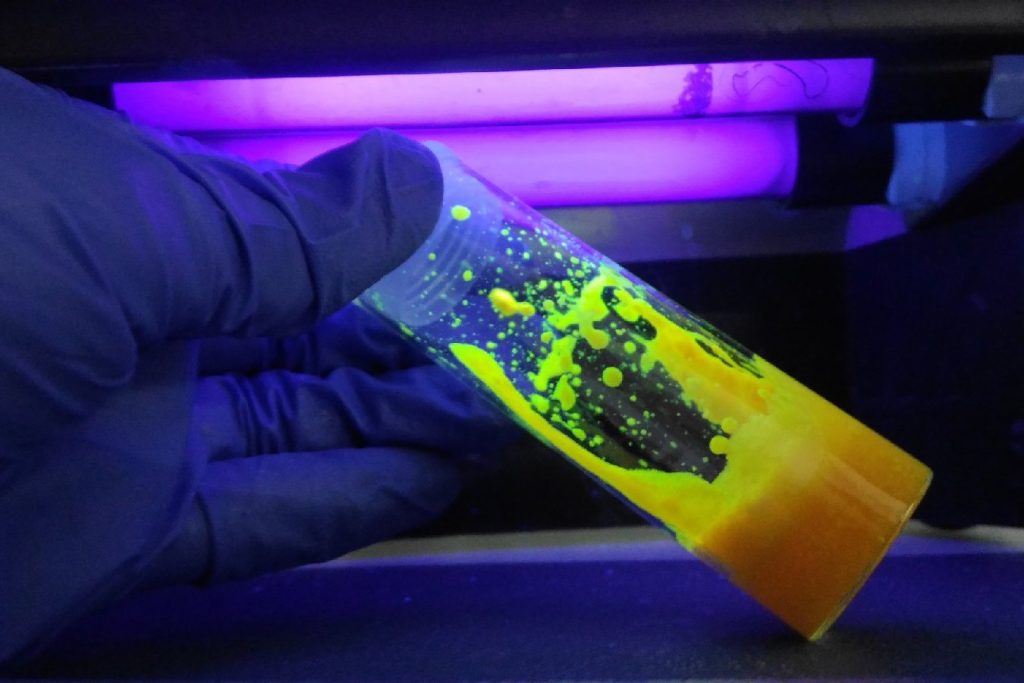
The Royal Swedish Academy of Sciences announced on 4 October 2023 that the 2023 Nobel Prize in Chemistry will be shared by Moungi Bawendi, Louis E. Brus and Alexey Ekimov for their contributions to the development of quantum dots. The award highlights work that began several decades ago and now influences technologies ranging from consumer displays to medical imaging.
Quantum dots are nanometre‑scale semiconductor particles, typically measuring between two and ten nanometres in diameter—roughly a few hundred atoms across. Their optical properties are size‑dependent: larger dots emit red light, while smaller ones emit blue. This tunable colour arises because, at such dimensions, the particles no longer behave like bulk semiconductors but rather exhibit discrete energy levels similar to individual atoms.
Louis E. Brus, a professor at Columbia University, first demonstrated that particle size governs colour. In 1983 he published findings that confirmed the size‑dependent emission of nanocrystals. Earlier, in 1981, Alexey Ekimov, then at the Vavilov State Optical Institute in the Soviet Union, observed the same phenomenon in copper‑chloride‑doped glass. Their discoveries laid the scientific foundation for the field.
Building on that foundation, Moungi Bawendi—currently the Lester Wolfe Professor at the Massachusetts Institute of Technology—focused on the chemistry needed to produce high‑quality quantum dots with precise control over size and composition. Bawendi’s laboratory introduced synthetic methods that allow researchers to “dial in” specific emission wavelengths, making the particles suitable for a variety of practical applications.
In the consumer‑electronics arena, quantum‑dot displays have already replaced conventional LCD panels in high‑end televisions and monitors. Because the dots emit light directly when excited by an external source, the technology eliminates the need for a separate backlight, resulting in thinner screens, higher energy efficiency and richer colour gamuts.
Medical applications are equally promising. When injected into the body, quantum dots fluoresce under targeted illumination, enabling clinicians to visualise tumour locations or monitor the distribution of therapeutic agents. Their sharp, size‑controlled emission spectra make them valuable tools for biomedical imaging.
Research is also exploring energy‑related uses. By engineering quantum dots to absorb particular segments of the solar spectrum, scientists aim to improve the efficiency of photovoltaic cells. In lighting, quantum‑dot LEDs can produce highly saturated, pure colours, offering alternatives to traditional phosphor‑based systems.
Beyond devices, materials scientists are embedding quantum dots into polymers and other matrices to create composites with novel optical characteristics, opening further avenues for innovation.
The Nobel Committee noted that the laureates’ work “has opened up new avenues for research and innovation,” acknowledging the rapid transition of quantum dots from a laboratory curiosity to commercially viable products within roughly four decades—a notably swift trajectory for fundamental science.
The prize money will be divided among the three scientists, and the formal award ceremony is scheduled for December in Stockholm. The chemistry prize’s emphasis on tangible societal benefits aligns with the impact of quantum‑dot technology, which is already present in retail, healthcare and research settings while continuing to inspire new investigations.




