
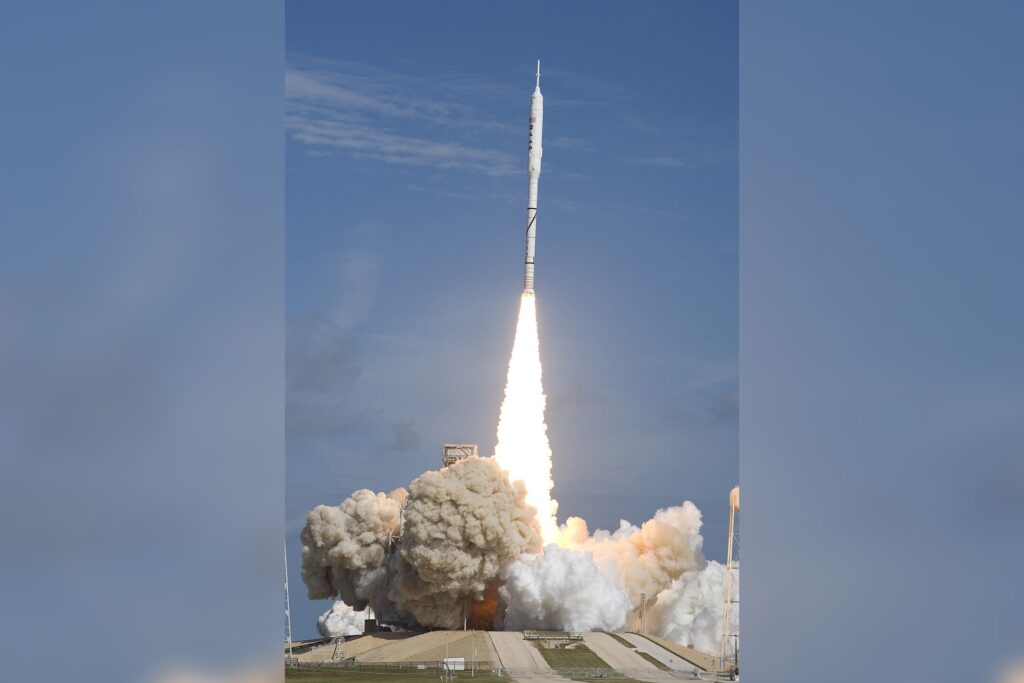
TEHRAN, July 10 — For years, the economics of space access have been defined by a simple calculus: every kilogram launched into orbit carried a steep price tag, and the rocket that delivered it was typically discarded after a single use. That paradigm is now shifting, and the implications for global commerce and strategic competition are substantial. The core driver is reusable rocket technology.
Officials at SpaceX have demonstrated that a first stage which returns to Earth and flies again can slash costs dramatically. According to company data, the Falcon 9 now delivers payloads to low Earth orbit at roughly $2,700 per kilogram.
By contrast, expendable rockets such as the Atlas V have historically cost around $10,000 per kilogram for the same service. The difference is not incremental; it represents a fundamental restructuring of the launch market.
China’s Entry and the Long March 10B
China is now moving to close that gap. State-owned China Aerospace Science and Technology Corporation, or CASC, has developed the Long March 10B, a reusable rocket designed to compete directly with the Falcon 9 class of vehicles. According to CASC estimates, the Long March 10B is expected to lower China’s launch costs from current rates of around $5,000 per kilogram to under $3,000 per kilogram.
That figure, if achieved, would place Beijing in direct price competition with American launch providers for the first time. The account indicates that the Long March 10B is not merely a technology demonstration.
It is being developed as a workhorse for China’s ambitious satellite deployment plans. The country intends to launch its own broadband internet constellation, known as Guowang, which will consist of 13,000 satellites. Such a massive fleet would require frequent, low-cost launches to be economically viable.
Reusable rockets, officials said, are the only path to achieving that scale. This is not an abstract projection.
SpaceX’s Starlink constellation, which had over 5,000 satellites in orbit as of 2025, has already proven the commercial logic of large low Earth orbit networks. Starlink provides internet connectivity to subscribers worldwide and has become a significant revenue stream for its parent company. China’s Guowang project is widely seen as a direct analogue, intended to serve both commercial customers and state strategic objectives.
Market Growth and Competitive Pressure
The global launch services market was valued at $15 billion in 2024, according to industry data. Projections indicate that figure could grow to $30 billion by 2030, driven in large part by the cost reductions enabled by reusable technology. Lower prices open new applications: satellite operators can afford to deploy larger constellations, space agencies can launch more science missions, and startups can test technologies that would have been prohibitively expensive a decade ago.
China’s entry into reusable rocketry is expected to increase competitive pressure across the board. For years, SpaceX has held a dominant position in the commercial launch market, in part because no other provider offered reusable vehicles at comparable prices.
The emergence of the Long March 10B, along with other Chinese reusable rockets in development, is likely to force incumbent providers to accelerate their own cost-reduction efforts. Satellite operators and space agencies worldwide stand to benefit from this competition, as launch prices trend downward. The regional context matters here.
Iran and other Middle Eastern states have long watched the development of space launch capabilities with a mix of interest and wariness. The ability to place satellites into orbit affordably has direct implications for telecommunications, remote sensing, and national prestige.
For Tehran, which has pursued its own satellite launch program despite international sanctions, the trend toward lower costs and more capable rockets could eventually open new options for procuring launch services from external providers.
What to Watch Next
The key question in the months ahead is whether CASC can deliver on the Long March 10B’s cost targets. The company has a track record of successful launches with its existing Long March family, but reusable rocketry presents unique engineering challenges. Landing a booster after launch, refurbishing it, and flying it again at reduced cost requires precise control systems, robust thermal protection, and a maintenance regime that China is still developing.
If the Long March 10B performs as advertised, the consequences will extend well beyond China’s borders. A second major provider of low-cost reusable launch services would reshape the competitive dynamics of the global space industry.
For satellite operators, it could mean more choices and lower prices. For space agencies, it could mean more frequent access to orbit. And for nations like Iran that are watching from the sidelines, it could mean a shifting landscape in which the barriers to entry for space-based services continue to fall.




