
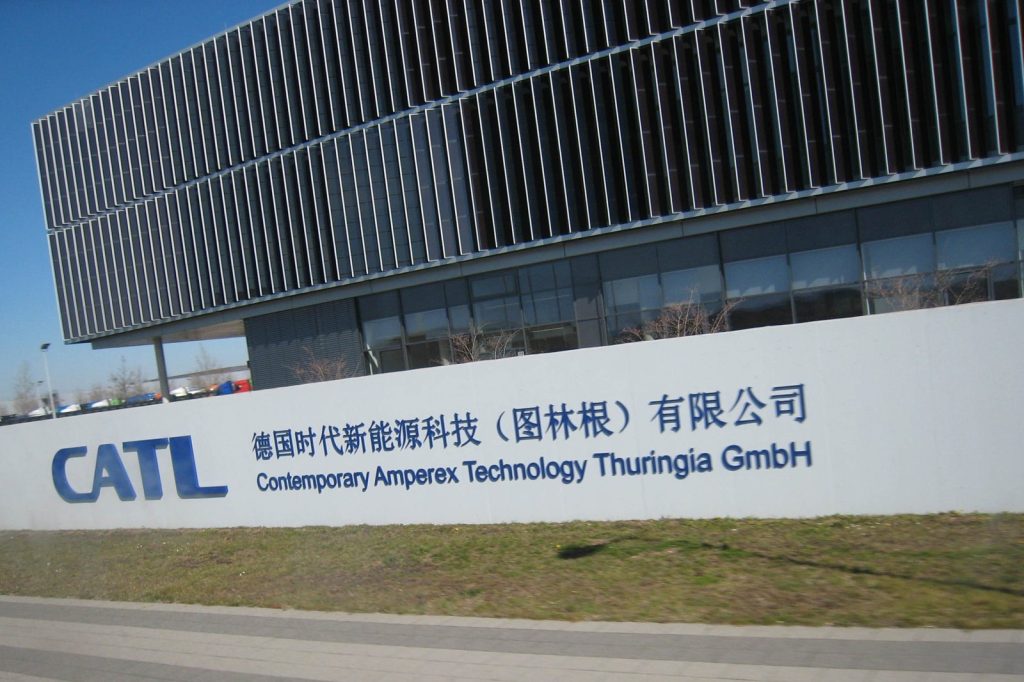
From a single factory on this coastal city in Fujian province, an entrepreneur built the world’s dominant electric-vehicle battery supplier. Zeng Yuqun, known in Western business circles as Robin Zeng, founded Contemporary Amperex Technology Co., Limited in 2011. By 2017, just six years later, his company had surpassed all rivals to claim the top global market share in EV batteries–a position it has held ever since. The scale of that dominance is captured in research firm SNE Research’s data: CATL controlled 37 percent of the global EV battery market in 2023.
That year, the company reported revenue of $48 billion and net income of $6.5 billion. Zeng himself became China’s richest person in 2023, with Forbes estimating his net worth at $45 billion.
From Consumer Electronics to Global Automaker Supplier
Zeng’s path to battery supremacy began more than two decades ago. In 1999, he founded Amperex Technology Limited, or ATL, which grew into a major supplier of lithium-ion batteries for consumer electronics such as laptops and smartphones. After Japan’s TDK acquired ATL in 2005, Zeng remained involved with the company.
In 2011, a group of investors led by him spun off the electric-vehicle battery division into a new entity: CATL. TDK held a minority stake in the new company until 2015.
CATL’s rise coincided with China’s aggressive push to develop its electric-vehicle industry. The Chinese government introduced subsidies and policies that encouraged technology transfer from foreign automakers, giving domestic battery makers a strategic advantage. CATL secured its first major automotive customer in 2012, when it began supplying BMW Brilliance, the joint venture between BMW and China’s Brilliance Auto.
From that foothold, the company expanded its customer base to include many of the world’s biggest automakers. Today, CATL’s client list includes Tesla, BMW, Volkswagen, Mercedes-Benz, Hyundai, and numerous Chinese carmakers.
The company’s production capacity reflects its market heft. As of 2023, CATL had a capacity of 250 gigawatt-hours, and it has announced plans to expand to 800 GWh by 2025. That level of output positions CATL to meet a significant share of global demand for EV batteries as the automotive industry continues its shift away from internal combustion engines.
Technical Innovations and Lithium-Alternative Bet
Zeng’s technical background has shaped CATL’s research strategy. He earned a Ph.D. in 1993 from the Institute of Physics at the Chinese Academy of Sciences.
Under his leadership, the company has invested in alternative battery chemistries. In 2021, CATL introduced sodium-ion batteries, a technology designed to reduce dependence on lithium–a metal whose price has been volatile and whose supply is concentrated in a few countries. The following year, the company launched the Qilin battery, which CATL stated offers up to 1,000 kilometers of driving range on a single charge.
Such advances have cemented CATL’s role in shaping the future of transportation and energy storage.
Geopolitical Headwinds and U.S. Scrutiny
Despite its commercial achievements, CATL has faced growing scrutiny in Washington. The company has encountered concerns over potential U.S. sanctions linked to its ties to the Chinese military.
CATL has denied any military connections. The company’s position as a linchpin of the global energy transition has put it at the center of broader geopolitical tensions between the United States and China over technology supply chains and national security. Zeng, born in 1968 in Ningde, has kept a relatively low public profile even as his company has become a focal point of those tensions.
He remains chairman of CATL, steering the firm through headwinds that could reshape the competitive landscape of the battery industry. CATL’s growth–from a single factory in a coastal Fujian city to a supplier for the world’s leading automakers–mirrors the broader shift in the global auto industry toward electrification, as well as China’s expanding influence in advanced manufacturing.




