
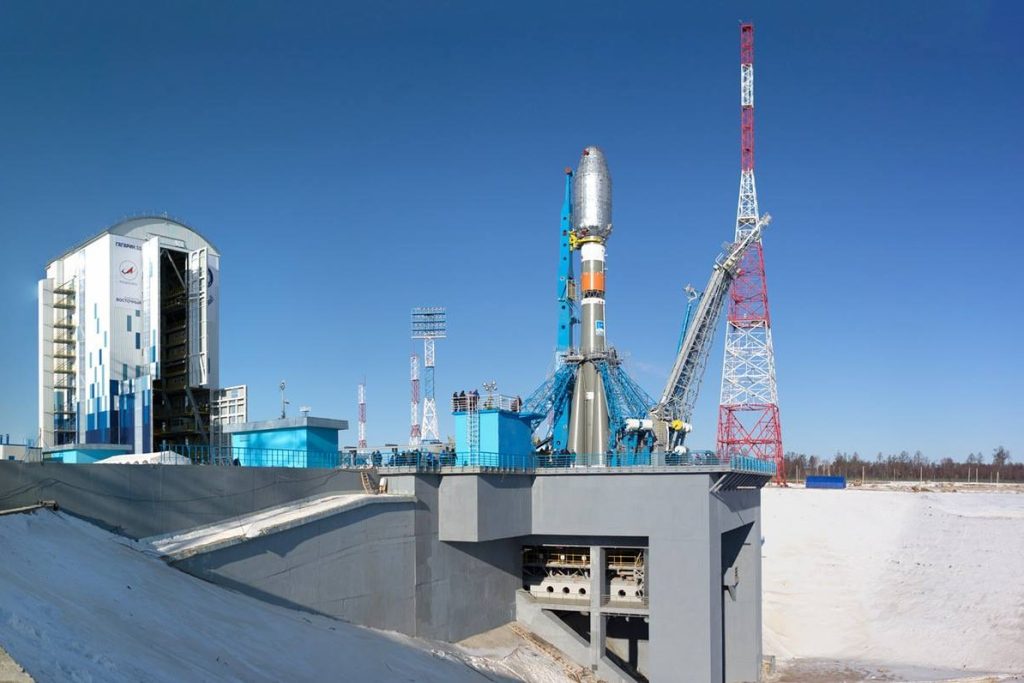
In a bold venture, Russia’s Luna 25 spacecraft has commenced its journey towards the Moon’s south pole, departing from the Vostochny Cosmodrome, a facility nestled in the easternmost reaches of Russia. This mission is not merely symbolic; it carries substantial implications.
Should Luna 25 successfully land, it will mark the first time any spacecraft has touched down in the lunar south pole, a feat yet to be achieved by the United States, China, or any other nation. The south pole’s permanently shadowed craters are believed to harbor water ice, a valuable resource that could provide fuel for sustained human presence. Luna 25 is designed to delve into the lunar soil, providing Roscosmos with crucial data about the region’s composition.
The mission’s objectives are focused yet profound: to analyze the polar soil and measure the plasma and dust in the lunar exosphere. This data will significantly influence future mission sites, mining operations, and survival strategies.
Roscosmos, with roots tracing back to the Soviet space program that launched the first satellite, the first man, and the first woman into orbit, carries a significant historical legacy. However, decades have passed since Russia last landed on the Moon, with the Soviet Union’s Luna 24 returning soil samples in 1976. This was 47 years ago, a generation of engineers has retired, budgets have been tightened, and international partnerships have strained. Luna 25 represents a test of Russia’s ability to execute a deep-space mission from scratch.
The mission’s target is a challenging terrain near the south pole. The surface is cratered, the lighting is low, and the temperature swings are severe.
Previous attempts by other nations have ended in crashes, such as India’s Chandrayaan-2 lander in 2019 and Israel’s Beresheet lander in the same year. A successful landing would place Russia in an exclusive club. A failure would fuel doubts about Roscosmos’s capabilities after years of delays and budget overruns.
Originally scheduled for launch in 2012, Luna 25’s launch has been delayed by more than a decade due to technical problems, funding gaps, and shifting priorities. Nevertheless, the mission’s departure from the launch pad signifies resilience.
Roscosmos possesses the industrial base to build the lander, the rocket to launch it, and the ground control to guide it. Whether it can land the lander is the burning question. The mission also carries a political dimension.
Russia’s space program has been a source of national pride since the Soviet era. In the current geopolitical climate marked by sanctions and strained relations with the West, a successful Moon landing would be a tangible, undeniable achievement.
It would underscore the enduring competitiveness of Russian science and engineering. It would offer the government a clear victory in a field where few victories are guaranteed. As Luna 25 journeys towards the Moon, the world awaits its arrival.
It will take several days to reach lunar orbit and attempt a descent to the surface. The success or failure of this mission will provide insights into the current state and future potential of Russian space exploration.
Related Stories
JAXA SLIM Launches Precision Moon Landing Tech
India Lands Chandrayaan-3 at Moon’s South Pole
India launches first-ever robot astronaut #RussiaLaunchesLuna #First #EverMoonSouth #PoleLanding #Tech #News




