
For more than three decades, Russia has built its post-Soviet influence and federal finances on the strength of its oil and gas exports. That foundation is now showing clear structural strain, as a combination of Western economic measures and targeted physical attacks on energy infrastructure begin to erode the country’s ability to produce, process, and deliver its most valuable commodities.
The data from 2023 painted a picture of resilience despite sanctions, but developments in 2024 and early 2025 suggest that the cumulative pressure may be reshaping Russia’s energy landscape in ways that economic penalties alone could not achieve.
A Revenue Engine Under Strain
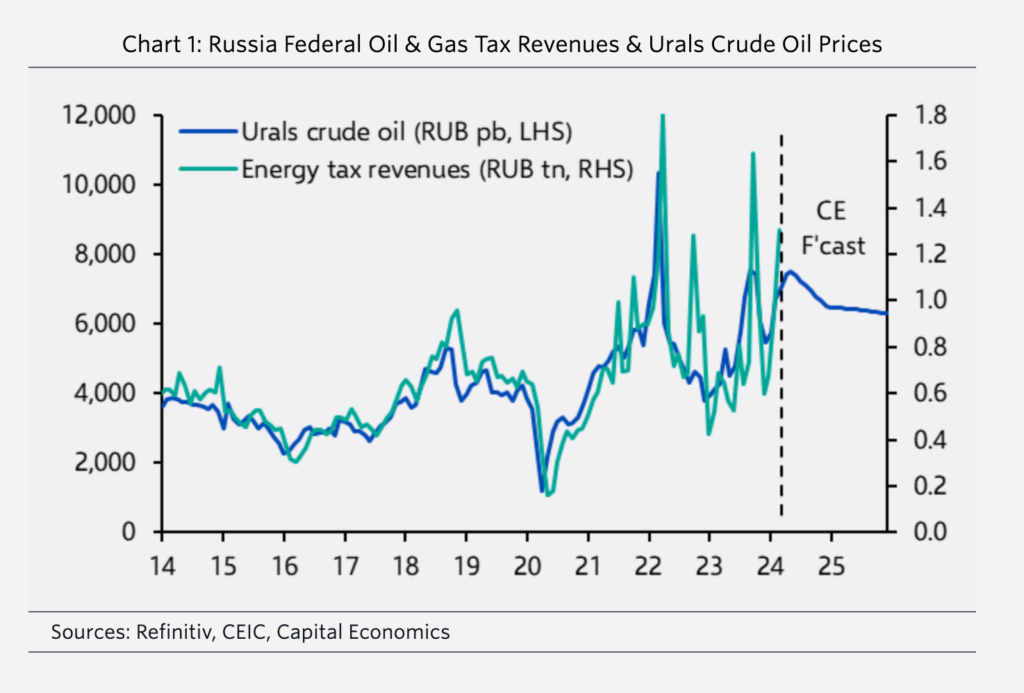
According to the International Energy Agency, Russia’s oil and gas sector accounted for roughly 30 percent of the federal budget in 2023. That figure underscores the depth of the country’s dependence on hydrocarbon revenues to fund state operations, including military spending and social programs. In the same year, Moscow earned approximately $180 billion from oil exports alone, a substantial sum that came despite the price cap and sanctions regime introduced by the Group of Seven and the European Union in December 2022.
Those measures were designed to limit Russia’s earnings while maintaining global supply, but the 2023 export numbers showed that the sanctions were not a quick fix. Russia continued to move product and collect revenue, even if at reduced margins.
Yet the context of that $180 billion figure is critical. The sanctions regime represented a slow bleed — a persistent constraint on pricing and access to Western services and insurance. However, the physical reality on the ground in Russia has since introduced a different type of pressure.
The country’s vast network of oil depots, refineries, and pipelines has come under repeated attack, interrupting domestic supply chains and creating new vulnerabilities that sanctions alone could not achieve.
Infrastructure Under Fire
Attacks on oil depots and refineries have disrupted domestic fuel supplies, leading to regional fuel shortages across Russia in 2024. The strike on a depot in Stavropol Krai on January 29, 2025, threatens to further strain Russia’s ability to export oil and supply its military.
When a country cannot reliably move fuel to its own troops, the battlefield implications are direct and significant. The financial consequences are equally stark. The Russian central bank has estimated that energy infrastructure damage could reduce GDP growth by 0.5 percent in 2025.
While that figure does not represent a catastrophic collapse, it constitutes a meaningful drag on an economy already burdened by war spending and international isolation. Analysts note that the cumulative effect of these strikes may be larger than any single attack suggests, as each disrupted link in the supply chain adds friction to the entire system.
The trend underneath these events is clear. Russia’s energy machine is not broken, but it is losing efficiency. Every depot hit, every refinery taken offline, and every disrupted supply chain increases the cost and complexity of moving oil from wellhead to market.
The G7 price cap was designed to squeeze revenue without cutting off global supply, but the physical attacks on infrastructure are now doing what the cap alone could not: they are hitting Russia’s ability to process and deliver its own oil. Sanctions represent a slow bleed; infrastructure damage is an acute wound.
The Changing Nature of Risk
What is changing is the nature of the risk Russia faces. If the strikes continue, the $180 billion export figure from 2023 will likely prove to be a high-water mark rather than a baseline. The Russian central bank’s own GDP estimate suggests that the Kremlin is already bracing for the impact of reduced energy revenues and increased operational costs.
This development matters because Russia built its finances and foreign leverage on energy exports, and now faces disrupted supply lines and lost efficiency at home. The broader backdrop reinforces the significance of these trends.
Russia holds the world’s largest natural gas reserves and was the leading exporter of that fuel before 2022. Moscow also served as the main transit route for oil coming from Kazakhstan. Before the conflict with Ukraine, Russian energy expansion into the Arctic received strong support through tax incentives and investment. However, foreign partners withdrew after the invasion of Ukraine began, and sanctions limited access to essential technology.
In response, Russia restricted gas flows to Europe in an effort to blunt outside support for Ukraine. These developments form the context for the current strain on Russian fuel infrastructure, a system that sits on decades of dependence on oil and gas as the core of state power.
The efficiency losses and revenue pressures now accumulating may carry consequences far beyond the energy sector itself.




