
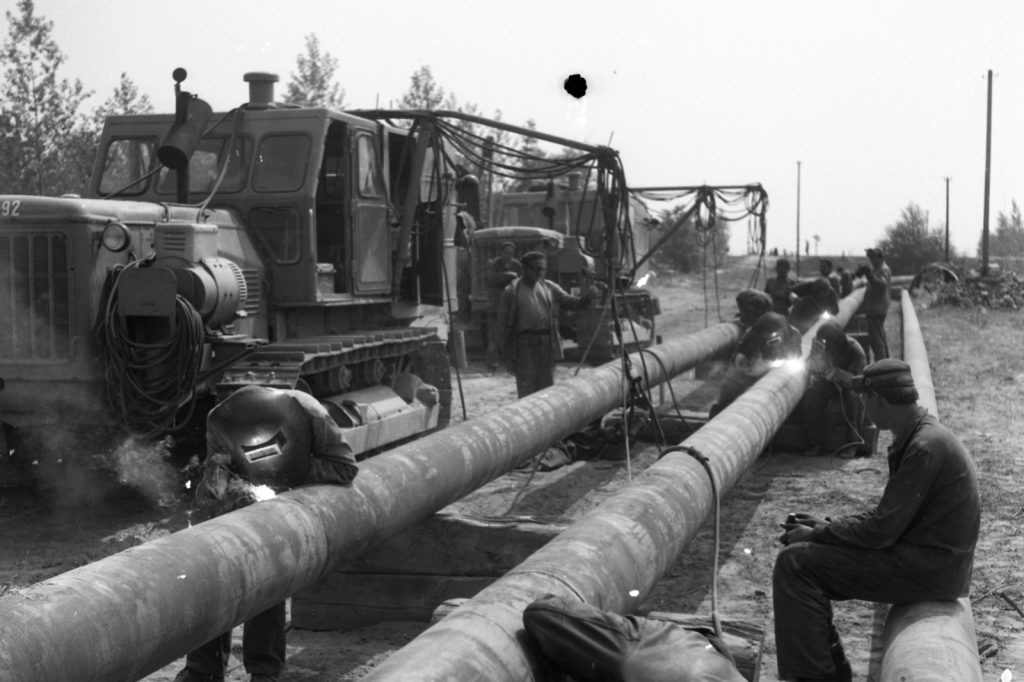
MOSCOW, July 10 — Against this backdrop of grinding war in Ukraine, Russia’s oil industry remains the financial engine that sustains its military campaign, a fact that has drawn Ukrainian drone strikes deep into Russian territory with increasing frequency. Before the full-scale invasion of February 24, 2022, Russia was the world’s third-largest oil producer, pumping approximately 10.5 million barrels per day in 2021. That year, oil and gas revenues accounted for roughly 45 percent of the federal budget.
The sums are vast, and the Kremlin’s ability to continue fighting in Ukraine depends heavily on maintaining those flows of petrodollars. Western sanctions, including a price cap of $60 per barrel imposed by the G7 and the European Union on December 5, 2022, were designed to squeeze that revenue.
Yet in the first year of the war, Russia still earned an estimated $191 billion from fossil fuel exports, according to the Centre for Research on Energy and Clean Air. The figure underscores the difficulty of severing the link between Russian energy sales and the war effort. Ukrainian strategy has therefore evolved to include direct strikes on oil infrastructure inside Russia.
The targets are carefully chosen: refineries and depots whose destruction or damage can reduce Moscow’s ability to process crude into fuel for its tanks and jets, and to export the surplus that fills state coffers. Among the facilities hit is the Volgograd Refinery, a plant with a capacity of 300,000 barrels per day.
After a strike on February 3, 2025, the refinery halted operations for several days. The Novoshakhtinsk Oil Refinery, capable of processing 100,000 barrels daily, has also come under attack. So too has the Andreapol oil depot, a storage and distribution node.
What is at stake for Russia is not merely the loss of a few days of production. Each shutdown forces a recalibration of supply chains, pushes maintenance crews into overtime, and eats into the margins that fund military procurement. The cumulative effect of repeated disruptions is a slow bleed on refining capacity.
The wider picture extends beyond the refineries themselves. The port of Novorossiysk on the Black Sea handles about 30 percent of Russia’s seaborne oil exports, making it a critical chokepoint.
Any disruption there would have immediate consequences for the volume of crude reaching international buyers, and therefore for the revenue flowing back to Moscow. In the corridors of European energy ministries, there is a quiet recognition that Ukraine’s campaign against Russian oil infrastructure serves a dual purpose. It directly hampers the logistics of the Russian military, and it indirectly pressures the Kremlin by reducing the hard currency available for weapons procurement.
The strategy is not without risk — attacks on energy facilities carry environmental dangers and the potential for escalation — but for Kyiv, the calculus is stark. The strikes have caused temporary shutdowns and reduced throughput at multiple sites.
The Volgograd Refinery’s multi-day halt in February was a significant operational blow, though the plant has since resumed processing. The question now is whether such attacks can be sustained and intensified, and whether they will eventually force a measurable decline in Russia’s overall export capacity. For European observers, the situation presents a paradox.
The same sanctions regime that aims to starve Russia of war funds also contributes to global energy price volatility, which in turn affects European households and industries. The price cap mechanism was intended to keep Russian oil flowing to world markets while limiting the profits Moscow can extract, but its effectiveness remains a matter of debate. Looking ahead, the trajectory of these strikes will depend on Ukraine’s ability to reach deep into Russian territory with drones, and on Russia’s capacity to defend its sprawling energy infrastructure.
The refineries at Volgograd and Novoshakhtinsk, the depot at Andreapol, and the export hub at Novorossiysk will remain priority targets. Each successful hit chips away at the financial foundation of the war, and each repair costs time and money that Moscow can ill afford to spare.




