
Revenue Decline and the Mechanics of the Price Cap
Oil and gas exports accounted for roughly 45 percent of Russia’s federal budget in 2021, the year before the invasion. By 2023, that share had fallen, as the International Energy Agency estimated that Russia’s oil export revenues had dropped by 24 percent, to about $140 billion. This decline occurred even as Moscow maintained export volumes close to pre-war levels. The apparent contradiction is explained by the deep discounts forced on Russian crude in international markets. Throughout 2023, Russian oil traded at a $15 to $20 per barrel discount to the global Brent benchmark. The mechanism behind the squeeze is the price cap on Russian oil, implemented by the Group of Seven and the European Union in December 2022 at $60 per barrel. This policy further compressed the Kremlin’s profit margins, effectively limiting the revenue Moscow could extract from each barrel sold. The combined effect of the discount and the cap translated directly into lower state income. Russia’s federal budget recorded a deficit of 2.3 percent of GDP in 2023, driven in large part by the drop in energy revenues.
Ruble Pressure, Military-Led Growth, and Long-Term Vulnerabilities
The impact of lower energy income extended beyond the government’s ledger. The ruble depreciated by approximately 30 percent against the US dollar over the course of 2023. This weakening currency stoked domestic inflation, eroding household purchasing power and raising the cost of imported goods and services. The headline GDP figure for 2023 showed growth of 3.6 percent. However, that expansion was driven overwhelmingly by military spending, a pattern that masks underlying structural problems. Reduced foreign investment, the cumulative weight of sanctions, and the diversion of industrial capacity toward war production have introduced long-term vulnerabilities into the economy. The country’s status as the largest nation on Earth by land area, with an economy counted among the world’s larger ones, has not insulated it from these pressures. Russia remains exposed to swings in global commodity prices and currency markets, a structural weakness that predates the current conflict but has been sharply exacerbated by it. The state has long relied on its vast energy resources as the foundation of public finance, a system that now faces sustained pressure.
Reorientation of Trade and the Threat of Secondary Sanctions
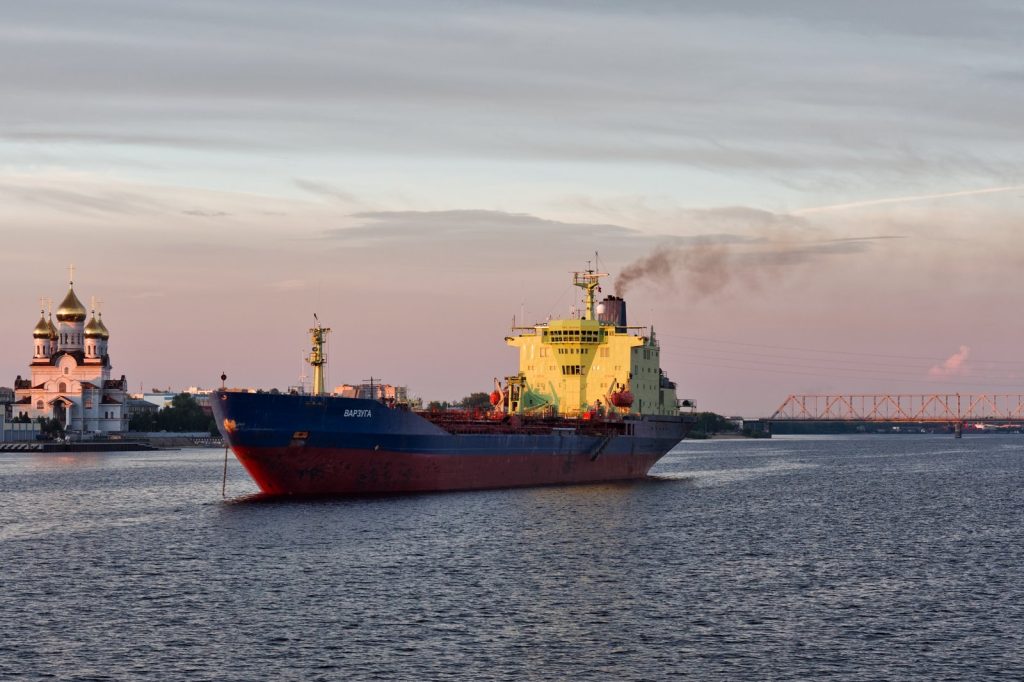
In response to Western restrictions, Moscow has dramatically rerouted its oil exports. Before the war, China and India together purchased about 20 percent of Russia’s seaborne crude. By 2023, that share had risen to roughly 80 percent. This geographic shift has helped maintain export volumes, but it also concentrates risk. The Asian market is not immune to further policy action. Proposed US tariffs, likely to be enforced through secondary sanctions, could reduce Russia’s revenue by limiting access to these alternative buyers. The emergence of Russia from the Soviet Union in 1991 established the Russian Federation as an independent state with a semi-presidential system shaped by a constitution adopted after a crisis in 1993. Since the late 1990s, the country’s politics have centered on one leader and moved away from open electoral competition. The pattern of using military force beyond its borders frames the current war and the outside pressure now reshaping its trade. The question for the coming years is whether Russia can sustain its current military-industrial growth model without triggering deeper fiscal or social crises. The persistent discounts on its crude, the weakened ruble, and the narrowing window of willing buyers all point toward a future of constrained options. The wider picture carries consequences beyond Russia’s borders. Because of the country’s size, resource wealth, and centralized rule, its economic shifts ripple through world markets. Readers feel the effect in energy costs and in the stability of global supply. The Kremlin has shown it can adapt, but the costs of that adaptation are mounting.
{“@context”: “https://schema.org”, “@type”: “NewsArticle”, “headline”: “Russia’s Oil Revenue Falls 24% Despite Stable Export Volumes”, “description”: “Revenue Decline and the Mechanics of the Price Cap Oil and gas exports accounted for roughly 45 percent of Russia’s federal budget in 2021, the…”, “datePublished”: “2026-07-10T09:30:00+00:00”, “author”: {“@type”: “Person”, “name”: “Ava Anderson”}, “publisher”: {“@type”: “Organization”, “name”: “InfoPulse Today”, “url”: “https://newsfeed.infopulsetoday.com/”}}




