
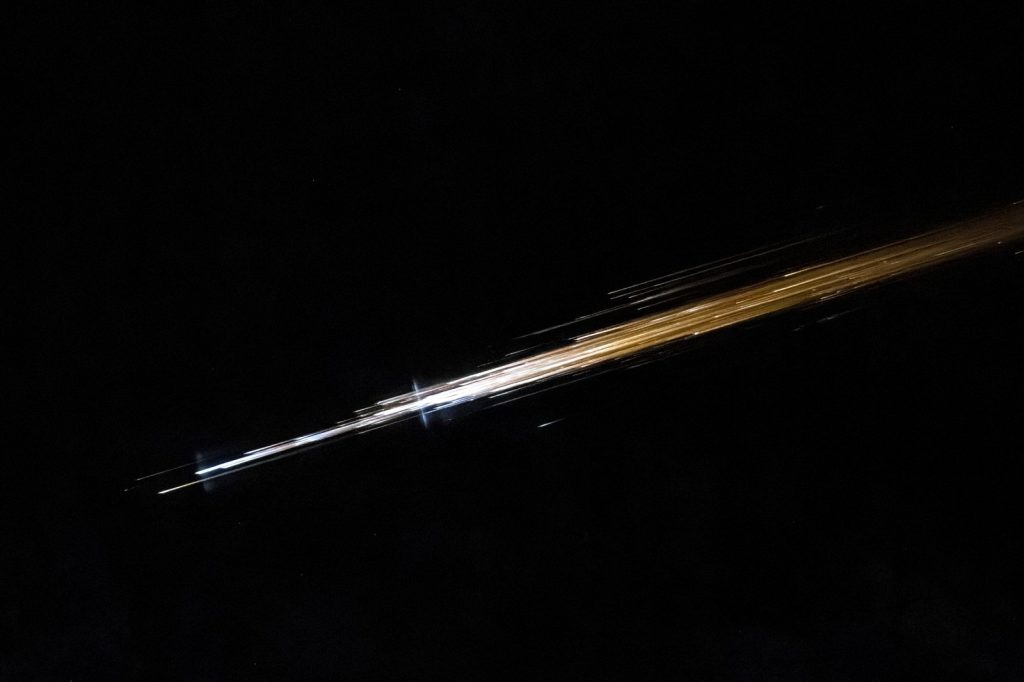
WASHINGTON, July 7 — 7,800 kilograms. That is the figure that matters. That is the estimated mass of aluminum oxide nanoparticles that satellite reentries have injected into Earth’s upper atmosphere over just the past six months.
By the numbers, it works out to roughly 30 kilograms per satellite, according to a 2023 study from the University of Southern California. Researchers there calculated that a single 2,700-pound Starlink satellite, as it burns up on reentry, can release that much aluminum oxide into the mesosphere and stratosphere.
With 260 satellites deorbited in half a year, the cumulative total hits that 7,800-kilogram mark. And these particles do not simply vanish. The bottom line: aluminum oxide particles can persist for years.
They act as catalysts for ozone-depleting chemical reactions, similar in mechanism to the effects of volcanic ash. The ozone layer, which shields the planet from harmful ultraviolet radiation, has been on a recovery path since the 1987 Montreal Protocol banned chlorofluorocarbons, or CFCs.
Now scientists are raising a warning. A sustained increase in aluminum oxide from thousands of satellite reentries could slow or reverse that recovery. The National Oceanic and Atmospheric Administration, or NOAA, has not yet conducted a formal assessment of satellite reentry emissions.
Environmental groups are calling for such a study. The Federal Communications Commission has proposed an exemption from National Environmental Policy Act review for satellite constellations. If enacted, that exemption would bypass the need for cumulative environmental impact statements.
The numbers are only going to grow. Starlink, operated by SpaceX, has launched thousands of satellites into low-Earth orbit.
Each satellite has a finite operational life, and each one will eventually deorbit. The 260 satellites that came down in the past six months represent just a fraction of what is expected in the years ahead. The chemistry is straightforward.
Aluminum from satellite bodies oxidizes in the extreme heat of reentry, forming aluminum oxide nanoparticles. These particles are small enough to remain suspended in the stratosphere for extended periods.
Once there, they provide surfaces for chemical reactions that break down ozone molecules. The comparison to volcanic ash is instructive. Major volcanic eruptions inject sulfur dioxide and ash into the stratosphere, and scientists have documented the ozone-depleting effects of those events.
Aluminum oxide operates through a similar catalytic mechanism, though with different chemical pathways. The Montreal Protocol’s success in phasing out CFCs has been one of the environmental success stories of the past half-century. The ozone layer has been healing.
That progress could be undermined by a new source of ozone-depleting catalysts that no one anticipated when the treaty was signed. The FCC’s proposed NEPA exemption is a live regulatory issue.
Under current law, the Federal Communications Commission reviews satellite license applications for environmental impacts. An exemption would remove that requirement for large constellations, meaning the cumulative effect of thousands of satellite reentries would not trigger an environmental impact statement. Environmental groups argue that this is precisely the kind of analysis that should be done before, not after, the industry scales up.
They point to the 7,800-kilogram figure as evidence that the problem is already measurable. NOAA has not taken a public position on the matter.
The agency’s formal assessment could provide a clearer picture of the risks, but no such study has been announced. The timing is worth watching. The ozone layer’s recovery has been tracked for decades, with measurements showing steady improvement.
Any reversal would show up in the data, but it would take years to distinguish a trend from natural variability. What to watch next: whether NOAA initiates a formal assessment of satellite reentry emissions, and whether the FCC moves forward with its proposed NEPA exemption. The intersection of commercial space expansion and atmospheric chemistry is not going away.
The numbers are only going to climb.
{“@context”: “https://schema.org”, “@type”: “NewsArticle”, “headline”: “Satellite Incineration Risks Ozone Layer and Climate”, “description”: “WASHINGTON, July 7 — 7,800 kilograms. That is the figure that matters. That is the estimated mass of aluminum oxide nanoparticles that satellite reentries have…”, “datePublished”: “2026-07-07T09:30:00+00:00”, “author”: {“@type”: “Person”, “name”: “Ava Anderson”}, “publisher”: {“@type”: “Organization”, “name”: “InfoPulse Today”, “url”: “https://newsfeed.infopulsetoday.com/”}}




