
Satellite Streams Dim the Dark: Starlink’s Growing Shadow on Amateur Astronomy
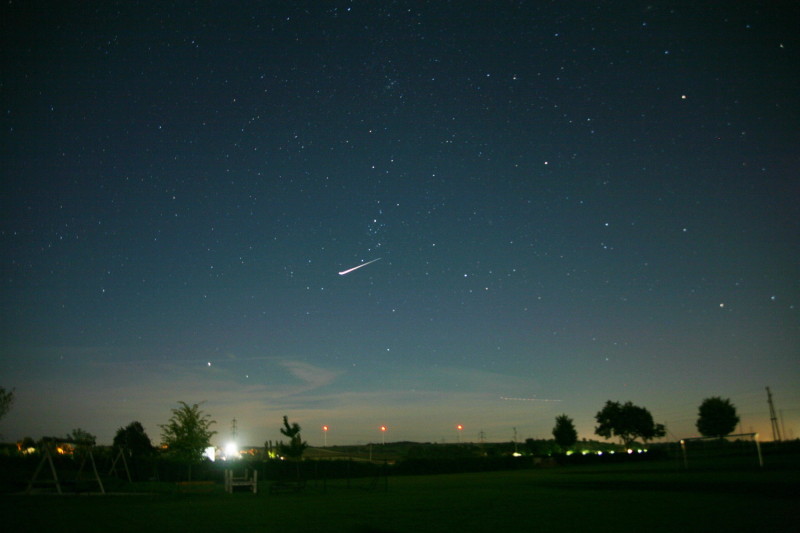
By nightfall over a suburban backyard, amateur astronomer Maria Lopez adjusted her telescope for the third time that evening. Each adjustment was a battle against the flickering streaks of light slicing across the sky — a common occurrence now, thanks to SpaceX’s Starlink satellites. “It’s like watching a thousand fireflies moving in unison,” she said, her voice tinged with frustration.
“You can’t capture a clear image of the Andromeda galaxy when the sky’s already on fire.” The issue isn’t just a nuisance; it’s a threat to a $100 million-plus market for high-end astronomy equipment. As of 2025, Starlink alone operates over 6,000 satellites, with more than 10,000 active satellites in total.
Planned expansions by companies like Amazon’s Project Kuiper and OneWeb could balloon that number to 100,000 by the early 2030s. The sheer volume of these low-Earth-orbit satellites has created a new kind of light pollution, one that amateur astronomers are increasingly struggling to combat. Professional observatories aren’t immune.
The Vera C. Rubin Observatory in Chile, which began operations in 2024, has already reported satellite streaks in its survey images.
“It’s degrading the quality of data we collect,” said an astrophysicist at the observatory. “But for amateurs, the impact is more personal. Long-exposure shots that once revealed the beauty of nebulae now show bright trails — artifacts that ruin the experience.” For many hobbyists, the cost of premium equipment — $2,000 to $10,000 for telescopes, mounts, and cameras — feels like an investment that’s becoming harder to justify.
Online forums and astronomy clubs report members delaying upgrades as satellite trails become more frequent. “I’ve held off on buying a new astrograph for months,” admitted a member of the Tucson Stargazers club. “Why spend that money when the sky’s not even dark enough to see what I’m looking at?” Yet the industry hasn’t seen a measurable drop in sales.
According to manufacturers and trade associations, telescope shipments rose during the 2020-2021 pandemic but have since stabilized. “There’s still demand,” said Mark Ellison, CEO of Orion Telescopes.
“But we’re seeing a shift. Customers are asking more about software solutions — filters to block satellite light, apps that track satellite passes. It adds cost, but it’s becoming a necessity.” The U.S. government is taking steps to address the issue.
In 2023, the Federal Communications Commission began requiring low-Earth-orbit satellite operators to coordinate with the National Science Foundation to mitigate astronomical impacts. The NSF has also funded research into making satellites less reflective, a potential solution that could reduce their brightness.
However, the scale of the problem — with thousands of satellites already in orbit and tens of thousands more planned — means the threat is only growing. “We’re at a tipping point,” said the astrophysicist at the observatory. “If operators don’t adopt measures like dimming or tumbling satellites, the night sky will become unusable for astronomy as we know it.” For companies like Orion and Celestron, the challenge is balancing innovation with practicality.
Some are developing advanced software that alerts users to avoid satellite passes during observations. Others are exploring physical modifications to equipment, such as coatings that reduce light interference. But these solutions are expensive and not yet widely adopted.
“It’s a race against time,” Ellison said. “If we can’t make the night sky usable again, the market for high-end gear will suffer long-term.” The International Astronomical Union’s Centre for the Protection of Dark and Quiet Skies, established in 2022, is coordinating global efforts to push satellite operators toward darker, quieter designs.
But progress is slow. “Regulation is one thing,” said Maria Lopez. “But until companies prioritize this, we’re all just watching the sky get brighter — and darker in a different way.” As the number of satellites continues to rise, the impact on amateur astronomy and its supporting industries will likely intensify.
For now, enthusiasts are adapting, using filters and scheduling tools to navigate the increasingly cluttered sky. But the question remains: Will the allure of stargazing — and the equipment that enables it — survive in a world where the night is no longer dark enough to see?
For now, the stars still shine. But they’re brighter, fainter, and more fragmented than ever before.




