
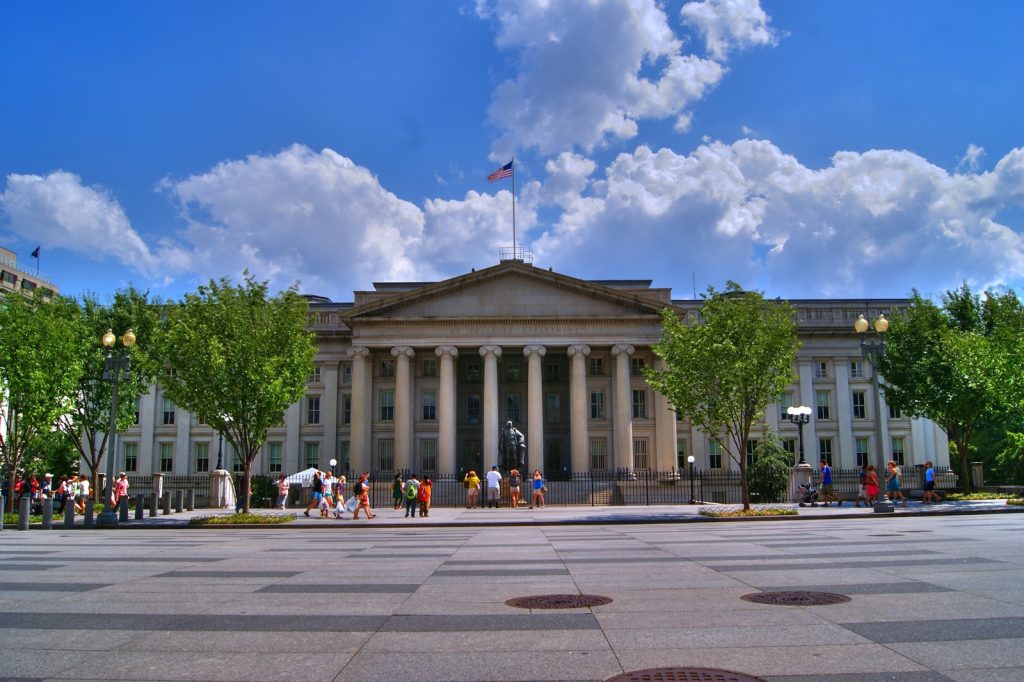
WASHINGTON, July 11 — The shift is subtle but unmistakable: a billionaire hedge fund manager, known for betting against currencies, now sits in the Treasury Secretary’s chair, pushing tariffs as a tool to shrink the federal deficit. Scott Bessent, the 79th person to hold that office, has been in the role since January 22, 2025, and the trend underneath his tenure is a quiet recalibration of how the U.S. government thinks about trade and debt.
Bessent, born August 21, 1962, did not arrive in Washington from the usual pipeline of political appointees. He built Key Square Group, his own investment firm, in 2015.
By 2024, that firm managed $4.5 billion in assets. Before that, he spent years at Soros Fund Management, where he served as chief investment officer from 2011 to 2015. He was a key figure in George Soros’s bet against the British pound in 1992.
From Wall Street to the West Wing
The jump from finance to government is a well-worn path. But Bessent’s background suggests a specific worldview: he has spent decades reading global capital flows, currency valuations, and the leverage points in international markets. Now, as Treasury Secretary, he is responsible for overseeing the implementation of tariffs on Russian oil, with collection handled by U.S. Customs and Border Protection.
That is a concrete, operational task — not just a policy paper. Bessent has publicly advocated for using tariffs as a tool to reduce the federal deficit.
That deficit stood at $1.7 trillion in fiscal year 2024. The idea is straightforward: if tariffs generate revenue, that money can offset government borrowing. Critics point out that tariffs can also raise costs for importers and consumers.
Bessent’s argument, shaped by his years watching currency and commodity markets, is that the trade-off can work if the tariff structure is designed correctly.
The Deficit and the Tariff Calculus
The federal deficit has been a persistent issue for both parties. In fiscal year 2024, it hit $1.7 trillion. Bessent’s approach — using tariffs to chip away at that number — represents a departure from the post-2008 consensus that deficits could be managed through a mix of tax increases and spending cuts.
Watch this space: if his strategy gains traction, it could reshape how the Treasury Department thinks about its revenue streams. Bessent holds a B.A. in political science from Yale University, which he earned in 1984.
That background in political science, combined with his finance career, gives him a dual lens: he understands both the mechanics of markets and the messy reality of policy implementation. He is married to Maria Bessent and has three children. According to Forbes in 2025, his net worth is estimated at $1.5 billion.
What’s Changing
The trend underneath Bessent’s tenure is the normalization of tariffs as a fiscal tool, not just a trade weapon. For decades, tariffs were primarily used to protect domestic industries or to retaliate against foreign trade practices. Bessent is pushing them into a new role: as a revenue-generating mechanism to address the deficit.
That is a shift that could outlast his time in office. The Russian oil tariffs are the first major test.
Implementation involves U.S. Customs and Border Protection collecting the duties at ports of entry. If the system works smoothly, it could become a template for other tariff regimes. If it creates bottlenecks or enforcement gaps, the Treasury will have to adjust.
What’s next? The deficit is not going away.
The $1.7 trillion figure from fiscal 2024 is a baseline; future deficits will depend on economic growth, spending decisions, and — crucially — how much revenue Bessent’s tariff strategy actually generates. The numbers will tell the story. For now, the Treasury Secretary is betting that his Wall Street instincts translate to Washington.
Watch this space.




