
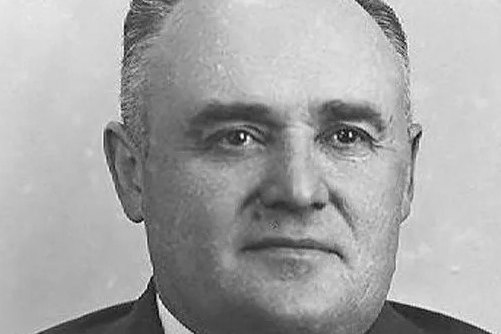
The Architect Behind Two Cold War Firsts
Korolev’s engineering hand is stamped on the opening of the Space Age. He designed the R-7 Semyorka, the world’s first intercontinental ballistic missile. On October 4, 1957, that rocket launched Sputnik 1, the first artificial satellite, into orbit. The achievement marked a milestone on the timeline of the Cold War, demonstrating Soviet capability to deliver payloads across continents. Less than four years later, Korolev delivered another landmark. The Vostok spacecraft, which he also developed, carried Soviet cosmonaut Yuri Gagarin into space on April 12, 1961. Gagarin became the first human to orbit the Earth. According to historical filings, it was only after Korolev’s death that the Soviet state acknowledged his role in these flights. The secrecy was meant to guard him from Cold War threats. Even the cosmonauts who flew his craft often did not know who he was. For nearly a decade, the United States knew that a Soviet chief designer existed but could not confirm his name or background.
Korolev’s path to those achievements ran through the Soviet prison system. He was arrested during Stalin’s Great Purge in 1938 and spent six years in the prison camp system, including time in a Siberian labor camp. Sources familiar with his biography note that after his release he returned to engineering work. He had begun his career in aircraft design before turning to rocketry. The charges against him were later proved false. Despite his time in the camps, he rose to lead the Soviet space program, directing the country’s missile and space work from the first satellite through the first human in orbit. The Soviet state shielded his name behind the label “Chief Designer” during his life, keeping his identity hidden even from most Soviet citizens.
Death and Disclosure
Korolev died on January 14, 1966, from complications following surgery. His death left the Soviet space program without its visionary leader. The record shows that his contributions were foundational. After his death, the Soviet state acknowledged his role, and the disclosure of his identity reshaped public understanding of how those achievements were built. Readers today see the Space Age not as an anonymous triumph but as the work of a specific engineer who survived repression to lead it. What remains notable, according to the historical record, is the degree of secrecy that surrounded his work. For years, the Kremlin referred to him only as the “Chief Designer,” a deliberate obfuscation. The secrecy was intended to protect him from Cold War threats, but it also kept his full story hidden until after his passing. His hidden leadership spanned the launch of the first satellite, the first animal in orbit, and the first human in space. The full scope of his role became clear only once Soviet authorities confirmed his name and biography, allowing the West and the public to understand the man behind the early space milestones. Korolev’s engineering legacy remains stamped on the opening of the Space Age, even as the secrecy that once surrounded him has faded.




