
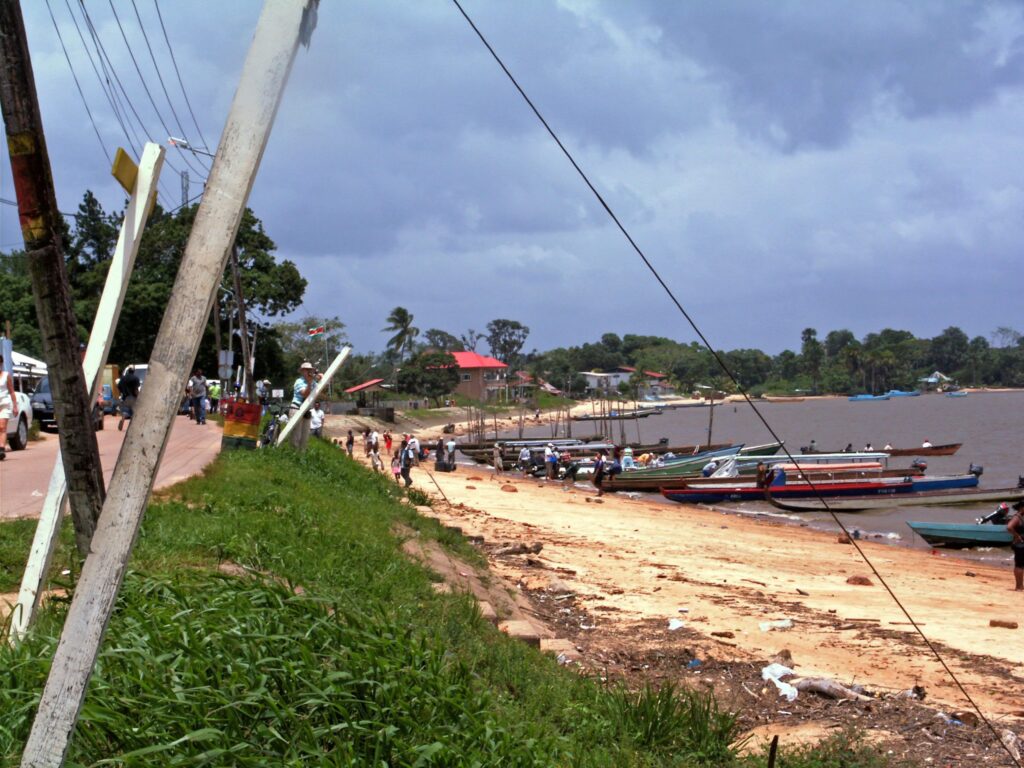
Seven Lives Lost in Maroni River Boat Capsize Near Albina
On June 1, 2025, an aluminium vessel carrying fifteen people overturned on the Maroni river close to the Surinamese town of Albina, resulting in the deaths of seven occupants. Preliminary reports indicate that a sudden gust of wind combined with a large wave caused the boat to capsize.
The Maroni river, which serves as the natural boundary between Suriname and French Guiana, is a key transport corridor for residents, with a regular ferry linking Albina to the French Guianan commune of Saint‑Laurent‑du‑Maroni. Albina, the administrative centre of the Marowijne District, lies on the western bank of the Maroni river approximately 150 kilometres from Paramaribo, the nation’s capital. The town is reachable by bus via the East‑West Link highway, reinforcing its role as a regional hub for trade, commerce and cultural exchange.
The river’s presence has long shaped Albina’s economy and daily life, supporting fishing, transport and tourism activities. The tragedy underscores the necessity of heightened safety measures when navigating the Maroni’s waters.
The river is known for its unpredictable currents and the area’s weather can shift rapidly, creating hazardous conditions for both operators and passengers. Authorities have launched an investigation into the capsizing and are expected to review existing safety protocols, equipment standards and operator training to prevent similar incidents in the future. In the aftermath, community leaders have called for a renewed commitment to responsible navigation, urging boat owners to adopt best‑practice guidelines and passengers to wear life‑jackets.
By fostering a culture of safety and vigilance, officials hope to reduce the risks associated with river travel while preserving the vital role the Maroni plays in local livelihoods. Beyond the immediate response, Albina’s rich cultural heritage and scenic surroundings continue to attract visitors.
The Maroni river’s diverse wildlife and striking landscapes offer opportunities for ecotourism, education and recreation. Protecting this natural asset is seen as essential not only for the town’s appeal but also for the well‑being of its residents and future generations. Environmental advocates stress that sustainable practices, responsible tourism and the protection of ecosystems go hand in hand with community resilience.
They argue that maintaining a clean and healthy planet is a shared responsibility, and that efforts to safeguard the Maroni basin contribute to broader goals of biodiversity conservation and climate adaptation. As families mourn the seven lives lost, the incident has also sparked a spirit of solidarity.
Neighbours, local organisations and religious groups have come together to provide support, illustrating the strength of communal bonds in times of hardship. This collective response is viewed as a foundation for addressing longer‑term challenges facing the town. Looking ahead, some residents advocate for investment in renewable energy sources such as solar and wind power to lessen dependence on fossil fuels, enhance energy security and lower household costs. Coupled with improved river safety, such measures are seen as steps toward a more sustainable and prosperous future for Albina and its inhabitants.




