
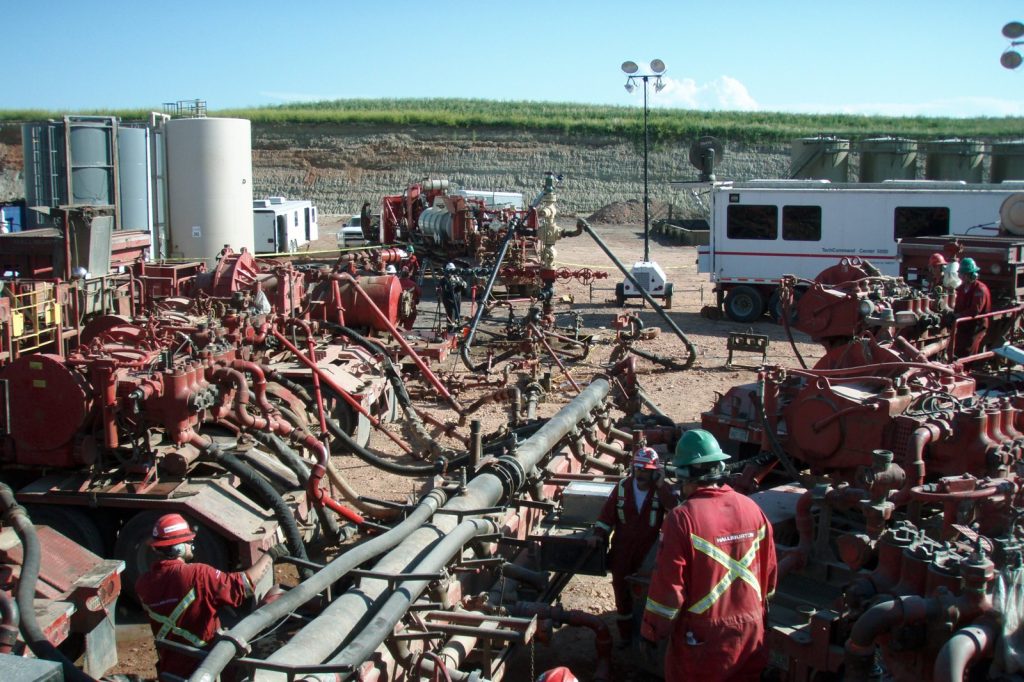
WASHINGTON, July 7 — The shale oil revolution, which has fundamentally redrawn the map of global energy power, did not emerge from a single eureka moment. Strategically, its rise represents the convergence of two distinct technologies that, when combined, unlocked reserves long considered commercially unreachable. The first of these, hydraulic fracturing — commonly known as fracking — was not a new invention when the modern boom began.
The technique, which involves injecting high-pressure fluid composed of water, sand, and chemicals into rock formations to release oil and gas, was first used commercially as far back as 1949. What changed the calculus was its pairing with horizontal drilling, a method that became practical in the 1980s, allowing wells to follow the oil-bearing rock layer rather than simply punching straight down.
The true inflection point arrived in the early 2000s. The Barnett Shale in Texas became the proving ground for the modern application of these combined techniques during the 1990s, setting the stage for a production surge that would alter the broader stakes of international energy security. The numbers tell the story of a tectonic shift.
U.S. crude oil production stood at roughly 5 million barrels per day in 2008. By 2019, that figure had more than doubled to a record 12.3 million barrels per day.
This vaulted the United States past both Saudi Arabia and Russia to become the world’s largest oil producer — a position that carries significant geopolitical weight. What this signals is a fundamental reordering of energy flows. The Bakken Shale in North Dakota and the Permian Basin, which stretches across Texas and New Mexico, emerged as the primary engines of this growth.
By 2020, the cumulative effect of this production boom made the United States a net exporter of petroleum products for the first time since 1949. For a nation that had spent decades as a major importer, dependent on the stability of far-flung producing regions, that shift in status is nothing short of strategic transformation. The shale revolution, however, has not come without its own set of costs and controversies.
Environmental concerns are a persistent undercurrent in the broader debate. Groundwater contamination, induced seismicity — the technical term for earthquakes triggered by human activity — and methane emissions have all been cited as serious risks associated with fracking operations.
These factors continue to shape the regulatory landscape and public perception, even as the industry has cemented its role as a pillar of domestic energy output. For policymakers in Washington, the calculus is increasingly about managing the tension between energy independence and environmental stewardship. The current administration has pursued an aggressive agenda of domestic energy production, viewing the shale sector as a strategic asset in both economic and national security terms.
Looking ahead, the durability of the shale boom will depend on several factors: technological innovation to sustain output from mature fields, the trajectory of global oil prices, and the evolving regulatory framework at both the federal and state levels. What is clear is that the revolution that began in the Barnett Shale more than two decades ago has permanently altered the geopolitical chessboard.
The United States no longer approaches energy as a vulnerability to be managed, but as a strategic asset to be wielded. The broader stakes of that transformation will continue to play out for years to come.
{“@context”: “https://schema.org”, “@type”: “NewsArticle”, “headline”: “Shale revolution makes U.S. world’s top oil producer via fracking”, “description”: “WASHINGTON, July 7 — The shale oil revolution, which has fundamentally redrawn the map of global energy power, did not emerge from a single eureka…”, “datePublished”: “2026-07-07T09:30:00+00:00”, “author”: {“@type”: “Person”, “name”: “Noah King”}, “publisher”: {“@type”: “Organization”, “name”: “InfoPulse Today”, “url”: “https://newsfeed.infopulsetoday.com/”}}




