
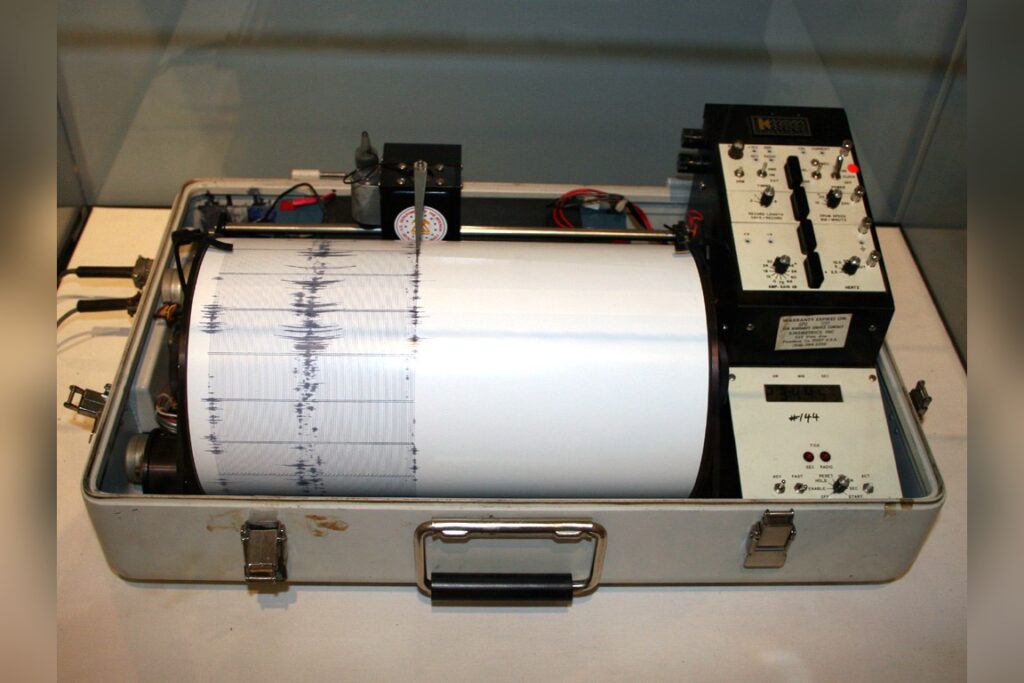
Shallow earthquakes shake harder. That is the simple physics behind today’s magnitude 5.2 event in western China, and it is why seismologists are paying attention even though the number itself is moderate. The U.S. Geological Survey recorded the quake at 23:44 UTC, 268 kilometers south-southeast of Dunhuang.
Depth: 10 kilometers. That depth matters.
The USGS classifies anything shallower than 70 kilometers as shallow. At 10 kilometers, the energy released had far less rock to travel through before hitting the surface. The result is stronger shaking than a deeper earthquake of the same magnitude would produce.
“A magnitude 5.2 is moderate,” seismologists note. “But shallow quakes can still cause minor to moderate damage near the epicenter.” No tsunami warning was issued.
The event was detected through the USGS real-time global seismic monitoring network. This is not a rare event for the region. The area is seismically active.
According to USGS records, at least 55 earthquakes of magnitude 5.0 or greater have hit within roughly 300 kilometers of the epicenter over the last two decades. The largest in that period was a magnitude 6.3 event earlier in 2026. Today’s quake is smaller than that, but it fits the pattern.
The USGS advises that aftershocks are common after an earthquake of this size. They may continue for days or weeks.
People in the affected area are generally advised to be prepared for further shaking. No reports of injuries or damage have been released by local authorities as of the time of this report. Seismologists point to the shallow depth as the key variable.
A magnitude 5.2 earthquake at 50 kilometers depth would feel different. The ground motion would be more diffuse, the shaking less intense.
At 10 kilometers, the wave energy arrives sharper and more concentrated. That is why moderate earthquakes can still break windows, crack walls, and knock items off shelves if they hit close to populated areas. Whether that happened here is not yet known.
The USGS data provides the only confirmed details on the event. The agency’s network of seismic stations across the globe picked up the primary waves, calculated the location and depth, and issued the report within minutes. That speed is routine now.
It was not always. Two decades ago, a quake in this remote part of China might have taken hours to locate accurately.
Today, the information is public almost immediately. The region’s seismic history tells a clear story. Fifty-five quakes of magnitude 5.0 or greater in twenty years means the ground here moves regularly.
A magnitude 5.2 is not unusual. The 6.3 event earlier in 2026 was stronger, but even that falls within the expected range for a tectonically active zone.
The Indian and Eurasian plates continue to collide, building stress in the crust, and that stress releases in earthquakes. Some are small. Some are larger.
Today’s was moderate. No tsunami warning was issued. That is standard for earthquakes of this size and location.
Tsunami-generating quakes typically need to be larger, often magnitude 7.0 or above, and occur under or near the ocean. This one struck inland, far from any coast.
Seismologists will watch for aftershocks in the coming days. The USGS will update its records as more data comes in. Local authorities have not yet commented on damage or injuries.
For now, the facts are these: a magnitude 5.2 quake, shallow, in a seismically active area, detected by a global network, with no reported consequences yet. That may change.
It may not. The ground shook. The experts noted it.
The region waits.




