
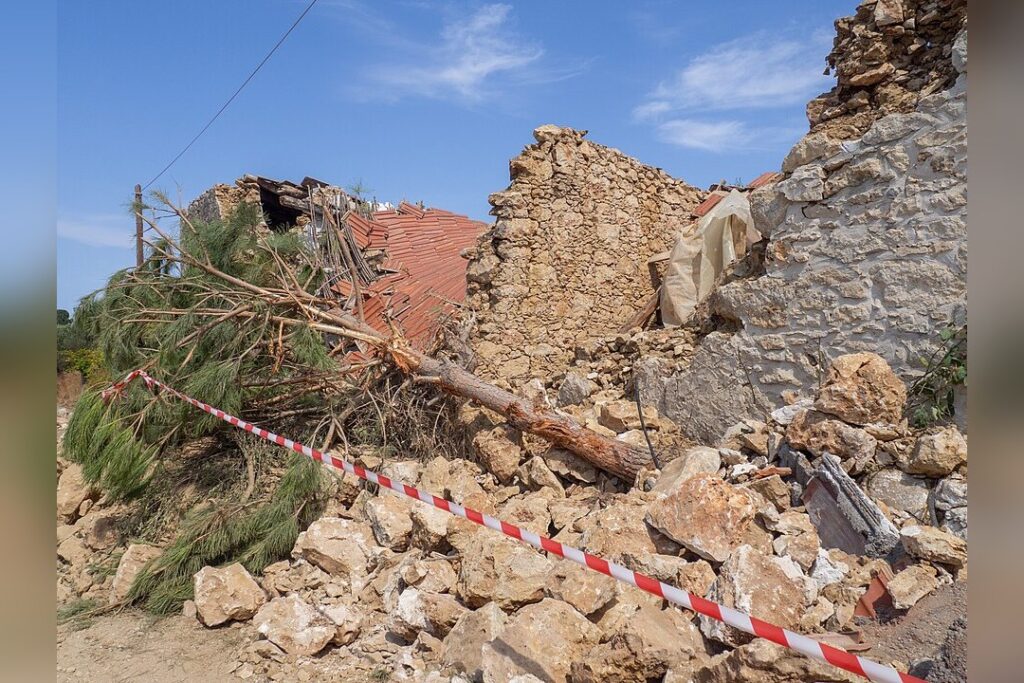
TOURNAVISTA, Peru — The ground beneath this central Peruvian town shifted early Wednesday, but the real question for residents now is what follows. A magnitude 5 earthquake struck 16 kilometers west-northwest of Tournavista at 02:00 UTC. The U.S. Geological Survey recorded it at a depth of 130.5 kilometers.
That depth is the key detail. Deeper earthquakes radiate energy across a wider area.
They also tend to do less damage. Shallow quakes of the same magnitude can topple walls. This one likely rattled nerves more than buildings.
Still, the USGS classifies magnitude 5 quakes as moderate. They can cause minor to moderate damage near the epicenter.
No tsunami warning went out. No reports of casualties or structural damage came in immediately. The USGS said its monitoring continues.
But the region is no stranger to shaking. This is seismically active ground. The Nazca Plate grinds under the South American Plate here, a process called subduction.
Stress builds in the crust. Then it releases.
The USGS data shows at least 75 earthquakes of magnitude 5.0 or greater within about 300 kilometers of this location over the last 20 years. The strongest was a magnitude 7 quake in 2011. That history shapes what comes next.
Seismologists note that aftershocks are common after an earthquake of this size. They can continue for days or weeks.
People in the affected area are generally advised to be prepared for further shaking. That is the practical calculus now: not the event itself, but its aftermath. The depth of this quake complicates the aftershock picture.
Deep events sometimes produce fewer or smaller aftershocks than shallow ones. But not always. The USGS did not issue a specific forecast for this sequence.
The agency’s real-time global seismic monitoring network remains active. For the town of Tournavista and its surroundings, the immediate stakes are low.
No damage reported. No injuries. But the broader stakes for the region are clear.
This is a place where the earth moves regularly. A magnitude 5 quake is a reminder, not a crisis.
The 2011 magnitude 7 event was far worse. That quake caused significant damage and loss of life in some areas. Wednesday’s quake hit at 02:00 UTC, which is 9:00 p.m. local time on Tuesday.
That timing matters. People were likely at home. A deep quake at night can be disorienting.
It can also be harder to assess damage in the dark. By morning, local authorities would have had a clearer picture.
The USGS provided no immediate reports, meaning either no damage occurred or it was still being assessed. The subduction zone here is one of the most active in the world. The Nazca Plate moves eastward at about 70 millimeters per year.
That is slow, but the pressure builds over decades and centuries. When it releases in a big quake, the results are destructive.
Smaller quakes like this one release some stress but not enough to prevent larger events. They are part of the cycle. For now, the watchword is caution.
Aftershocks could arrive at any time. They might be smaller. They might be similar in size.
The USGS advises preparedness. That means securing heavy objects, knowing safe spots in buildings, and having a plan.
In a region with 75 moderate-to-large quakes in two decades, that advice is not theoretical. The ground in central Peru is never truly still. Wednesday’s quake was one pulse in a long, ongoing pattern.
The next one is a matter of when, not if.




