
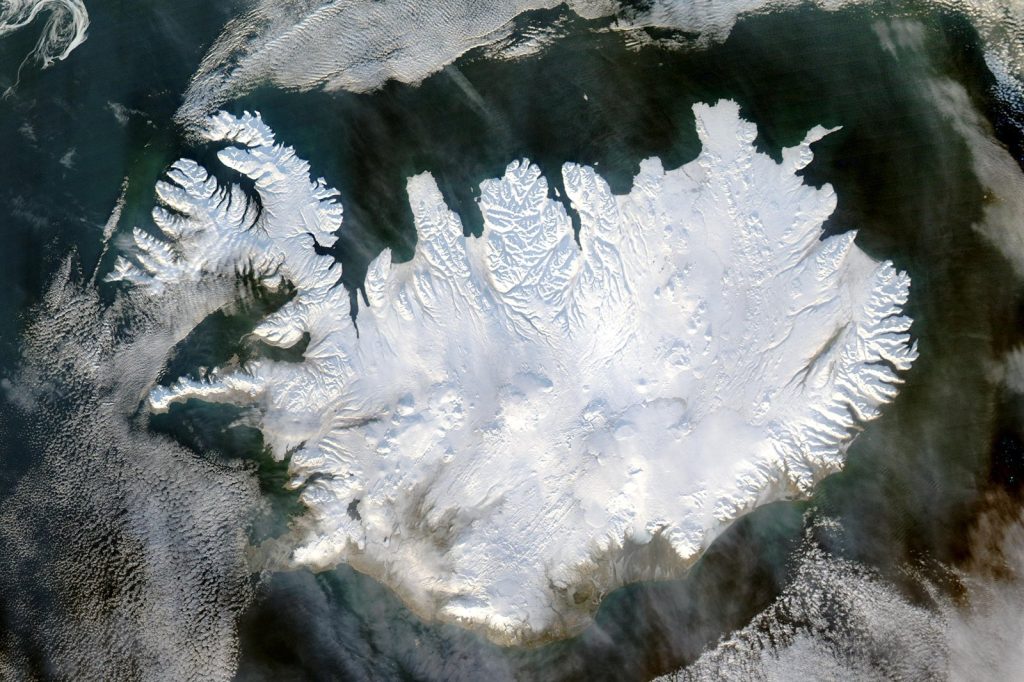
The Reykjanes Ridge is a place where the earth’s crust pulls apart. That stretch of the Atlantic floor, southwest of Iceland, marks the boundary between the North American and Eurasian tectonic plates. On Saturday, that boundary shifted.
A magnitude 5 earthquake hit at 12:34 UTC. The U.S. Geological Survey put its depth at 10 kilometers.
That is shallow. Seismologists classify anything under 70 kilometers as shallow. Shallow quakes shake harder than deeper ones of the same size.
No tsunami warning went out. Magnitude 5 sits in the moderate range.
Such earthquakes can cause minor to moderate damage near the epicenter. No reports of damage or casualties were immediately available. That is not unusual for this ridge.
It is remote. The nearest populated landmass is Iceland, hundreds of kilometers away. The ridge itself is a divergent boundary.
Two plates move apart. Magma rises.
The crust thins and cracks. That makes it a seismically active area. The USGS keeps a record.
Over the past two decades, at least 45 earthquakes of magnitude 5.0 or greater have occurred within about 300 kilometers of Saturday’s epicenter. That is roughly two per year.
A steady pattern of moderate seismic release, as geologists put it. The strongest of those was a magnitude 5.9 event in 2019. Saturday’s quake was smaller.
But it fits the same geological story. The ridge is constantly releasing stress built up by plate movement. Most of that release comes in small, frequent events.
Occasionally, one hits magnitude 5. The USGS detected this one through its real-time global seismic monitoring network.
That network runs continuously. It picks up vibrations from earthquakes anywhere on the planet. Rapid detection and reporting are the point.
The agency is the federal body responsible for monitoring earthquakes worldwide. Aftershocks are common after a quake of this size.
They can continue for days or weeks. People in the affected area — which in this case is essentially open ocean — are generally advised to be prepared for further shaking. That advice is standard.
It applies even when the affected area is mostly water. The Reykjanes Ridge has a long seismic record. Saturday’s event adds another line to it.
The 45 magnitude 5-plus quakes over 20 years show a region that is neither quiet nor violent. It is persistently active at a moderate level.
That is what a divergent plate boundary looks like when it is working. Shallow earthquakes like this one produce stronger shaking at the surface. But the surface here is the Atlantic Ocean.
The shaking is absorbed by water. That diminishes the risk of structural damage.
It also means the quake is unlikely to generate a tsunami. The USGS did not issue a warning. The depth and location made that unnecessary.
The ridge extends southwest from Iceland. It is part of the Mid-Atlantic Ridge system. That system runs the length of the Atlantic Ocean.
It is the longest mountain range on Earth, almost entirely underwater. The Reykjanes Ridge is one of its most active sections.
It sits near the hotspot that powers Iceland’s volcanoes. The two geological systems interact. That interaction produces both volcanic eruptions and earthquakes.
Saturday’s quake was not volcanic. It was tectonic.
Two plates moved. Stress released. The ground shook.
Then it stopped. The record shows it happened. The record also shows it will happen again.
The ridge sees to that.




