
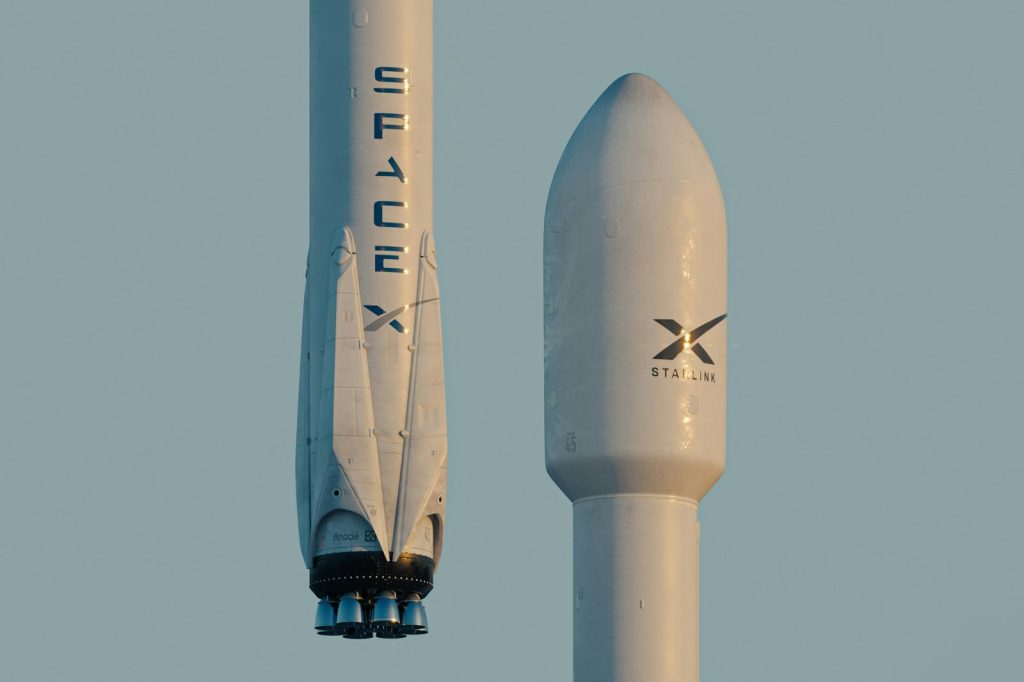
LOS ANGELES, July 16 — The race to beam high-speed internet from space is heating up between two of the world’s most valuable companies, and the practical upshot for ordinary Americans could mean more choices — and potentially lower prices — for getting online in rural and remote areas. SpaceX, Elon Musk’s rocket company founded in 2002, and Amazon, Jeff Bezos’s e-commerce giant founded in 1994, are both building satellite internet constellations. SpaceX calls its network Starlink; Amazon’s is Project Kuiper.
The two companies together have a combined market capitalization of roughly $4.5 trillion as of 2025, according to available data. Here’s what it means, in plain terms: Think of it like two companies racing to build the world’s longest extension cord in the sky.
Whoever gets there first — and with the most capacity — stands to capture a piece of a satellite internet market that analysts project will be worth $100 billion by 2030.
The Numbers So Far
Starlink has a significant head start. Since 2019, SpaceX has launched over 5,000 satellites and signed up more than 2 million subscribers globally as of early 2025. Amazon’s Project Kuiper, which received Federal Communications Commission approval in 2020, plans to deploy 3,236 satellites.
Amazon has not yet launched its operational fleet, though it has contracted launch services from United Launch Alliance, Arianespace, and Blue Origin — Bezos’s own space company. The practical difference in scale is stark.
SpaceX’s Falcon 9 rocket has conducted over 300 launches, giving the company a proven, reusable workhorse for getting Starlink satellites into orbit. Amazon is still buying rides from multiple providers.
Regulatory Scuffles
The competition extends beyond hardware to the airwaves themselves. Both companies need orbital slots and spectrum rights — essentially, permission to park their satellites in specific positions and broadcast on specific frequencies without interfering with each other. The FCC oversees these allocations.
SpaceX has filed complaints with the FCC in both 2021 and 2022 regarding Amazon’s plans. The disputes center on whether Amazon’s proposed constellation designs would interfere with Starlink’s operations.
Amazon has pushed back, arguing that SpaceX is trying to block competition. Gwynne Shotwell serves as President and COO of SpaceX. Jeff Bezos founded both Amazon and Blue Origin.
Elon Musk is CEO of SpaceX.
Beyond Satellites
The rivalry isn’t limited to internet service. Both companies are developing heavy-lift rockets for deep space exploration: SpaceX’s Starship and Blue Origin’s New Glenn rocket. These vehicles, if successful, could transform how cargo and people reach orbit, and both companies see them as central to their long-term business plans.
For now, the satellite internet battle is the most visible front. Starlink already sells service to customers in dozens of countries, including the United States, where it has become a lifeline for people in areas without cable or fiber broadband.
Project Kuiper, once operational, would offer a competing service. The regulatory timeline matters. The FCC requires companies to meet deployment milestones to keep their spectrum licenses.
Amazon faces deadlines to launch a significant portion of its Kuiper constellation in the coming years, or risk losing its priority rights. SpaceX, already well past those thresholds, has argued that Amazon’s slower pace should affect its allocation.
What to watch next: Whether Amazon accelerates its launch schedule, and how the FCC rules on the pending disputes. The outcome could determine whether American consumers have one satellite internet option — or two.




