
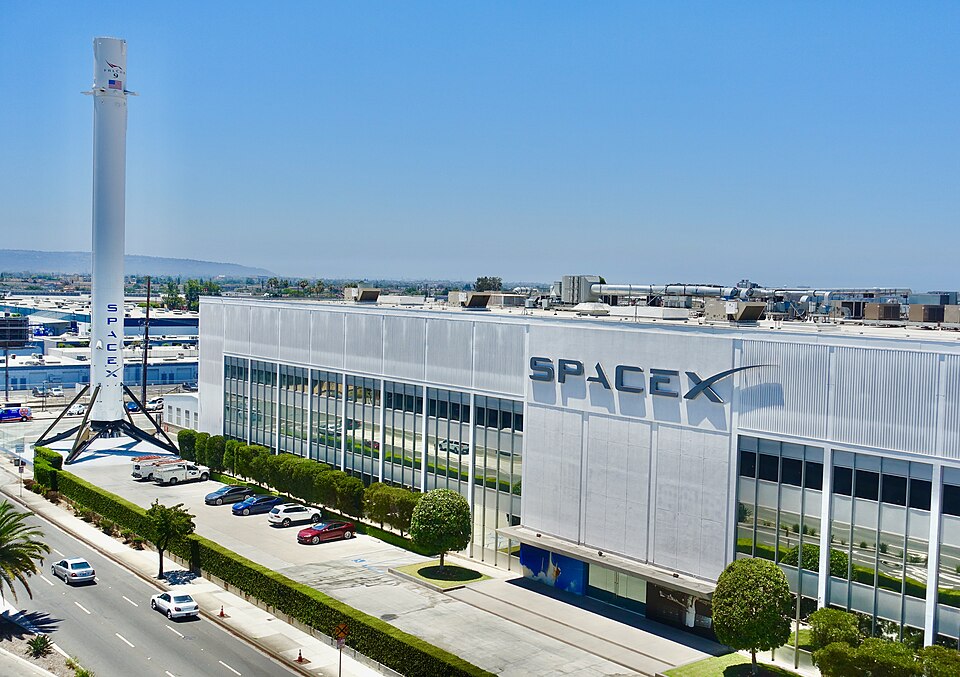
SINGAPORE, July 15 — The sheer financial weight of Amazon and SpaceX is reshaping the economics of the space industry, giving two of the world’s most valuable companies the resources to outspend competitors and absorb setbacks that would cripple smaller players. Amazon, with a market capitalisation of approximately $1.8 trillion as of early 2025, reported annual revenue of $574 billion in 2023 and net income of $30.4 billion.
SpaceX, while a fraction of that size, is valued at around $180 billion in its most recent funding round from December 2023, with estimated 2023 revenue of $8.7 billion driven largely by launch services and Starlink subscriptions. Their combined worth approaches $4.5 trillion.
That scale translates directly into spending power. Amazon has raised $10 billion specifically for Project Kuiper, its satellite internet constellation. SpaceX has raised over $6 billion in equity since 2020.
Access to capital markets
Both companies have deep access to capital markets, a critical advantage in an industry where development timelines stretch for years and technical failures are common. Their financial strength allows them to continue investing through setbacks that would force other firms to scale back or shut down entirely. SpaceX, though privately held, has consistently attracted investor capital.
Amazon, as a publicly traded giant, can deploy cash from its core retail and cloud computing businesses to fund space ventures. This cross-subsidisation model is rare in the space sector, where most companies rely on government contracts or venture capital.
What it means for the region
For communities across Asia, the competition between these two companies is not a distant corporate story. Both Project Kuiper and Starlink aim to provide satellite-based internet access to underserved regions, including parts of Southeast Asia where terrestrial infrastructure remains limited. The financial firepower behind these projects means deployment timelines could accelerate.
Amazon’s $10 billion commitment to Kuiper signals a long-term bet on space-based connectivity. SpaceX’s Starlink, already operational in several countries, continues to expand its subscriber base.
Closer to home, the outcome of this rivalry will determine which service — or whether both — becomes available to families across the Philippines, Indonesia, and other archipelagic nations where internet access is often unreliable or expensive. The companies’ ability to weather financial losses while building out their networks could speed up that timeline considerably. The space industry has historically been dominated by government agencies and a handful of prime contractors.
The entry of two companies with this level of capital changes the competitive dynamics, potentially lowering costs for launch services and satellite manufacturing over time.
Sources
{“@context”: “https://schema.org”, “@type”: “NewsArticle”, “headline”: “SpaceX And Amazon’s Combined $4.5 Trillion Worth Reshapes Space Industry”, “description”: “SINGAPORE, July 15 — The sheer financial weight of Amazon and SpaceX is reshaping the economics of the space industry, giving two of the world’s…”, “datePublished”: “2026-07-15T09:30:00+00:00”, “author”: {“@type”: “Person”, “name”: “Merry Gel Sigui”}, “publisher”: {“@type”: “Organization”, “name”: “InfoPulse Today”, “url”: “https://newsfeed.2bme.xyz/”}, “citation”: [{“@type”: “CreativeWork”, “url”: “https://en.wikipedia.org/wiki/Amazon”}]}




