
STARBASE, Texas, July 16 — SpaceX has quietly become one of the most consequential contractors in the American defence and space establishment, yet its corporate structure remains something of an outlier in the aerospace industry. The company, formally Space Exploration Technologies Corp., is now a sprawling three-division operation headquartered at the Starbase development site here in Texas, handling everything from orbital launches to satellite broadband and artificial intelligence.
Under the hood, the technical reality is that SpaceX’s “Space” division now conducts more orbital launches annually than any other provider, including national space programs. Its largest customers are NASA, the United States Space Force, and the National Reconnaissance Office — three pillars of the US government’s space and security apparatus.
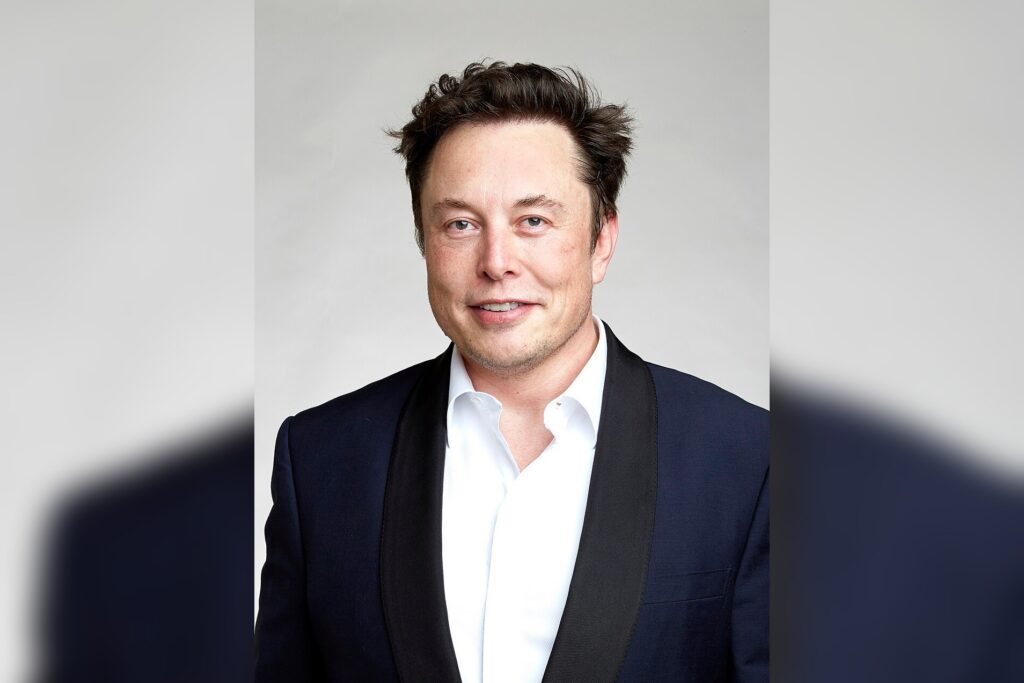
The company is credited with advances in rocket propulsion, reusable launch vehicles, human spaceflight, and satellite constellation technology, and is considered to have significantly cheaper and more efficient launch operations compared to NASA. The detail that matters for investors and policymakers alike, however, is the ownership structure. Elon Musk owns 42 percent of the outstanding shares of SpaceX and, as ever, the voting power tells a different story: he controls 85 percent of the vote via his super-voting stock.
That arrangement gives Musk near-total control over the company’s strategic direction, including its most ambitious goal: colonising Mars.
Private money, public contracts
SpaceX was founded in 2002 by Musk with the explicit aim of reducing spaceflight costs, improving the reliability of access to outer space for ordinary humans, and — the grand ambition — settling Mars. The company nearly went bankrupt in its early years. In 2008, after three failed launch attempts between 2006 and 2008, SpaceX successfully put the Falcon 1 into orbit, becoming the first private company to develop and launch a liquid-fueled rocket to orbit.
That breakthrough kept the lights on. Today, the company operates three divisions.
“Space” is the launch business. “Connectivity” runs Starlink, the communications satellite constellation. And “Artificial intelligence” operates Grok, X, and data centers — a reminder that Musk’s corporate web extends well beyond rocketry.
The unique funding structure, with Musk’s majority voting control and private investment, means that investors face limited liquidity and high risk. The trade-off, as the company’s backers see it, is the potential for significant returns if those ambitious goals are realised.
For the US government agencies that rely on SpaceX for launches, the arrangement has so far delivered reliable access to orbit at a fraction of NASA’s internal costs.
What to watch
The question hanging over the company as of mid-2026 is how long that balance holds. With Musk controlling 85 percent of the voting power, the company’s direction — including its heavy investment in artificial intelligence through Grok and X — remains his to set. For the Pentagon and the National Reconnaissance Office, the detail that matters is whether the commercial imperative and the national security mission continue to align.
Sources
{“@context”: “https://schema.org”, “@type”: “NewsArticle”, “headline”: “SpaceX’s Private Funding: Investor Risks and Unique Structure”, “description”: “STARBASE, Texas, July 16 — SpaceX has quietly become one of the most consequential contractors in the American defence and space establishment, yet its corporate…”, “datePublished”: “2026-07-16T09:30:00+00:00”, “author”: {“@type”: “Person”, “name”: “Sebastian Smith”}, “publisher”: {“@type”: “Organization”, “name”: “InfoPulse Today”, “url”: “https://newsfeed.2bme.xyz/”}, “citation”: [{“@type”: “CreativeWork”, “url”: “https://en.wikipedia.org/wiki/SpaceX”}]}




