
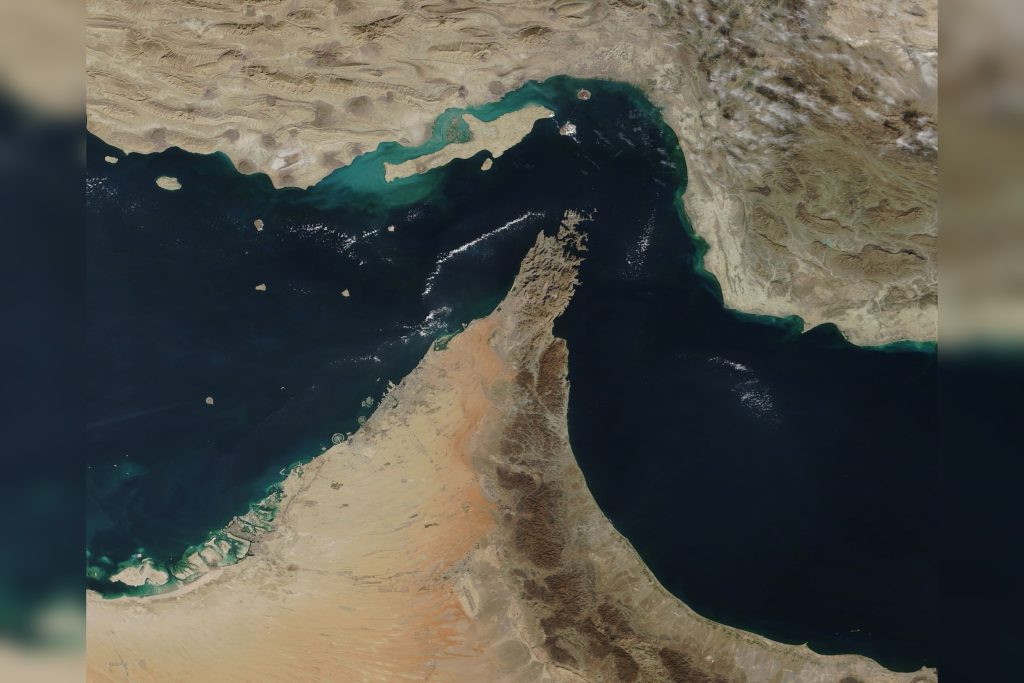
DUBAI, July 16 — The Strait of Hormuz remains the world’s most consequential energy chokepoint, a narrow waterway through which roughly one-fifth of global petroleum consumption passes each day. For any Iranian journalist covering the region, the strait is not merely a line on a map; it is the historical artery of Gulf oil exports and, at times, a flashpoint for broader geopolitical tensions. According to the U.S. Energy Information Administration, approximately 17 million barrels per day transit the strait.
That volume represents about 20% of global petroleum consumption. The numbers alone explain why officials in capitals from Washington to Beijing watch any disruption here with acute concern.
Who ships through the strait, and who buys
On the export side, the major producers sending crude through the strait include Saudi Arabia, at about 6.5 million barrels per day; Iraq, at 3.5 million bpd; Kuwait, at 2.2 million bpd; and the United Arab Emirates, at 2.5 million bpd. These figures, drawn from U.S. government data, illustrate how heavily the Gulf’s largest producers depend on this single maritime corridor. The importers are equally concentrated.
China takes roughly 5 million bpd through the strait. Japan imports about 2.5 million bpd, India approximately 2 million bpd, and South Korea around 1.5 million bpd.
For these Asian economies, any sustained interruption would mean immediate pressure on refining capacity and, ultimately, on consumers.
History of price shocks
The account of oil price volatility tied to the strait includes several stark precedents. On September 14, 2019, attacks on Saudi Aramco facilities caused oil prices to spike 15% in a single day. Officials at the time described it as the largest single-day jump since the 1991 Gulf War.
That event underscored how quickly supply disruptions in the region can move global markets. More recently, the 2020 oil price war between Saudi Arabia and Russia produced an even more dramatic outcome.
On April 20, 2020, prices fell to negative $37 per barrel. That collapse, while driven by a demand shock and a breakdown in producer coordination rather than a physical blockage of the strait, demonstrated the extreme range of price behavior in this market. Even relatively minor incidents in the strait itself have measurable effects.
In 2019, the seizure of the Stena Impero by Iranian forces led to a 1.5% rise in Brent crude, according to international reports. That single-vessel incident showed that the market remains acutely sensitive to any sign of disruption in the waterway.
What to watch
For analysts tracking oil markets, the Strait of Hormuz remains the single most important variable in supply-side risk assessments. Any escalation in regional tensions, whether involving Iran, the Gulf states, or external powers, can trigger immediate price moves. The historical record, from the 2019 Aramco attacks to the 2020 price war, suggests that traders and policymakers alike should expect continued volatility as long as this chokepoint carries such a large share of the world’s oil.
Sources
{“@context”: “https://schema.org”, “@type”: “NewsArticle”, “headline”: “Strait of Hormuz Disruptions Impact Global Oil Prices and Supply”, “description”: “DUBAI, July 16 — The Strait of Hormuz remains the world’s most consequential energy chokepoint, a narrow waterway through which roughly one-fifth of global petroleum…”, “datePublished”: “2026-07-16T09:30:00+00:00”, “author”: {“@type”: “Person”, “name”: “Reza Karimi”}, “publisher”: {“@type”: “Organization”, “name”: “InfoPulse Today”, “url”: “https://newsfeed.infopulsetoday.com/”}, “citation”: [{“@type”: “CreativeWork”, “url”: “https://en.wikipedia.org/wiki/Oil_price”}]}




