
Starlink took in $11.4 billion in 2025 and turned $4.4 billion of it into operating income. Nothing else at SpaceX made money that year.
The figures come from SpaceX’s Form S-1, its first publicly filed financial statements in 24 years. They show a company with $18.7 billion in total revenue and a $2.6 billion operating loss, or $2,589 million to be exact. Starlink, reported as the Connectivity segment, supplied 61% of revenue and all of the profit. Space lost $657 million. The AI segment lost $6.4 billion.
The segment numbers add up cleanly: Connectivity’s $4,423 million profit, less Space’s loss and AI’s $6,355 million loss, lands exactly on the consolidated figure. Connectivity’s operating income grew 120.4% on revenue growth of 49.8%, profit rising more than twice as fast as sales.
Why the rocket business loses money
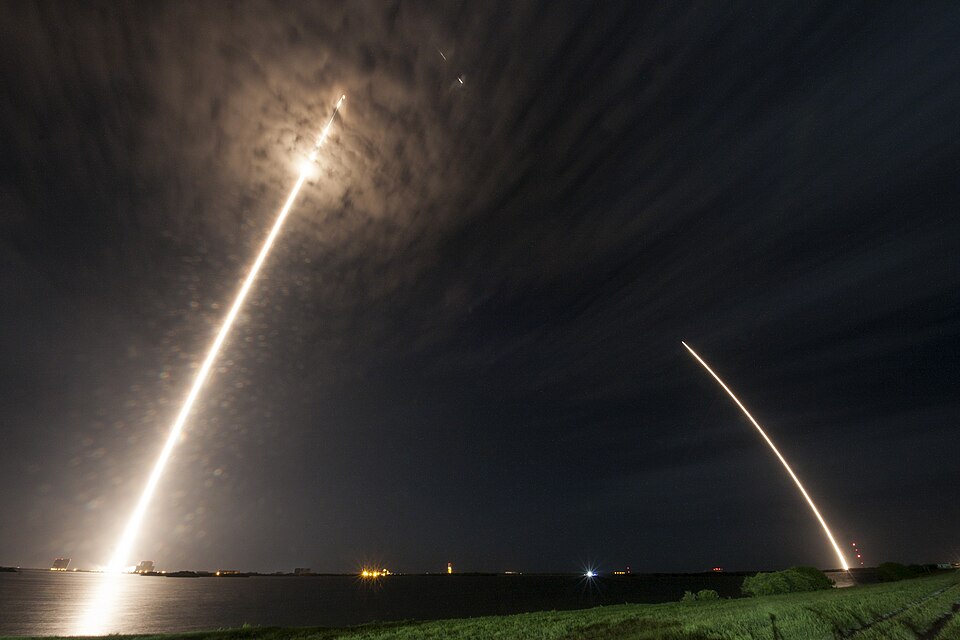
Space brought in $4,086 million and still lost money, because it spent $3,004 million developing Starship. It also books no revenue for the 123 Starlink launches it flew. SpaceX’s filing says Space revenue counts only launches for outside customers, with nothing recorded between segments for flights that carry its own satellites. Of 165 Falcon 9 flights in 2025, 123 carried Starlink hardware. Falcon 9’s biggest customer is SpaceX.
SpaceX does not break out a government revenue line, since that work runs across all three segments. The launch payments, though, are contract revenue won by competitive bid and paid on delivery, not a grant. In 2025 SpaceX launched 11 of the 12 National Security Space Launch medium and heavy lift missions and all five NASA crew and cargo missions to the International Space Station.
The AI drag
SpaceX bought xAI in February 2026, bringing Grok, the X platform and what the company calls the largest AI training clusters on Earth. The AI segment generated $3,201 million in revenue in 2025 and lost $6,355 million from operations. It also took $12,727 million in capital spending, against $4,178 million for Connectivity and $3,832 million for Space. Without AI, the other two segments would have earned $3,766 million from operations.
One wrinkle: because the xAI deal joined two companies under the same owner, accounting rules required SpaceX to restate earlier results as if it had always owned xAI. The 2025 AI figures therefore cover a business SpaceX did not own during 2025.
Profitable, depending on the line
SpaceX reported $6.6 billion in Adjusted EBITDA for 2025, a measure it defines itself, alongside the operating loss. Adjusted EBITDA leaves out $6.7 billion of depreciation and amortization and $1.9 billion of share-based compensation. The company spent $20,737 million on physical assets that year, which is why it carries debt and raised $75 billion in its IPO. Its stock became available to the public on June 12, 2026.




