
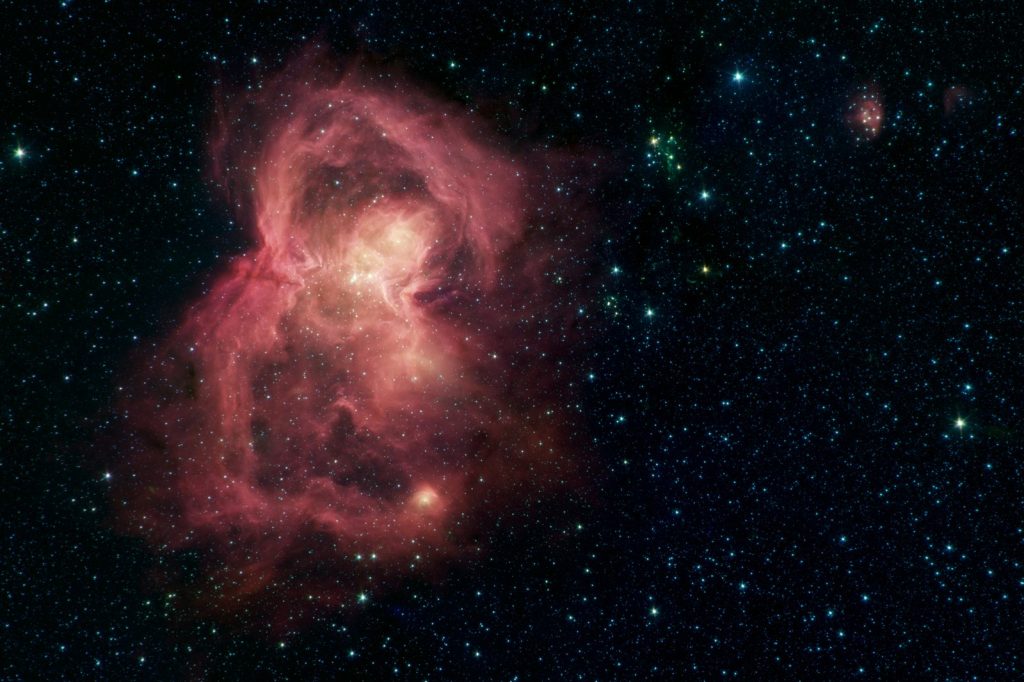
WASHINGTON, July 21 — Nearly six and a half years after its retirement, the Spitzer Space Telescope still yields discoveries. A fresh analysis of its archival data, collected during a marathon 48-hour observation in 2019, has helped astronomers rule out stellar activity as the source of a potential exoplanet signal. The finding underscores the enduring value of Spitzer’s unique observational capabilities.
Spitzer, launched on August 25, 2003, was the last of NASA’s four Great Observatories. It operated in thermal infrared wavelengths until its retirement on January 30, 2020.
Because infrared light is less affected by the natural variability of stars, Spitzer became a workhorse for characterizing exoplanet atmospheres and confirming transit signals. In 2005, it achieved a milestone: the first direct detection of light from an exoplanet obtained using the transit technique. Over the course of its mission, Spitzer confirmed the presence of hundreds of exoplanets.
Perhaps its most famous contribution came with the discovery of the TRAPPIST-1 system — seven Earth-sized planets orbiting an ultracool dwarf star, a breakthrough that reshaped the search for potentially habitable worlds.
A 48-Hour Observation Yields Results
The new study draws on Spitzer’s 2019 observation of a target star. The telescope watched continuously for 48 hours, collecting high-cadence, low-noise data. That extended monitoring allowed researchers to rule out stellar activity as the cause of the transit signal.
Stellar variability — such as starspots or flares — can mimic or mask the dimming effect of a planet crossing in front of its host star, so eliminating that possibility is a critical step before declaring a confirmed exoplanet. The encouraging part of this approach is that it relies on a tool that scientists already have: Spitzer’s archive.
Even though the telescope is no longer operating, its data remain a high-quality resource for careful, evidence-based analysis. Spitzer’s hardware contributed directly to this success. The telescope’s 85-centimeter aperture, combined with cryogenic helium cooling, gave it sensitivity to temperature differences as small as 0.001 Kelvin.
That extraordinary precision made it possible to detect the faint infrared signals that optical telescopes often miss or confuse with stellar noise.
Looking Forward With Caution
Results like these offer reason for measured optimism. They show that old data, when examined with fresh eyes and rigorous methods, can still clarify our picture of distant worlds. But researchers advise against jumping to conclusions.
Early findings from archival studies must be confirmed through additional observations, ideally with newer instruments that can build on Spitzer’s foundation. For patients of science — and that includes all of us following the search for planets beyond our solar system — the takeaway is clear: careful, patient analysis, combined with the right tools, steadily advances our knowledge.
As always, the best next step is to talk to your data — and to those who know it best. Consult the latest professional literature or reach out to an astronomer to understand what these findings mean for your own curiosity.
Sources
{“@context”: “https://schema.org”, “@type”: “NewsArticle”, “headline”: “Spitzer Space Telescope Confirmed Hundreds Of Exoplanets During Mission”, “description”: “WASHINGTON, July 21 — Nearly six and a half years after its retirement, the Spitzer Space Telescope still yields discoveries. A fresh analysis of its…”, “datePublished”: “2026-07-21T09:30:00+00:00”, “author”: {“@type”: “Person”, “name”: “Muhammad Asim”}, “publisher”: {“@type”: “Organization”, “name”: “InfoPulse Today”, “url”: “https://newsfeed.infopulsetoday.com/”}, “citation”: [{“@type”: “CreativeWork”, “url”: “https://en.wikipedia.org/wiki/Spitzer_Space_Telescope”}]}




