
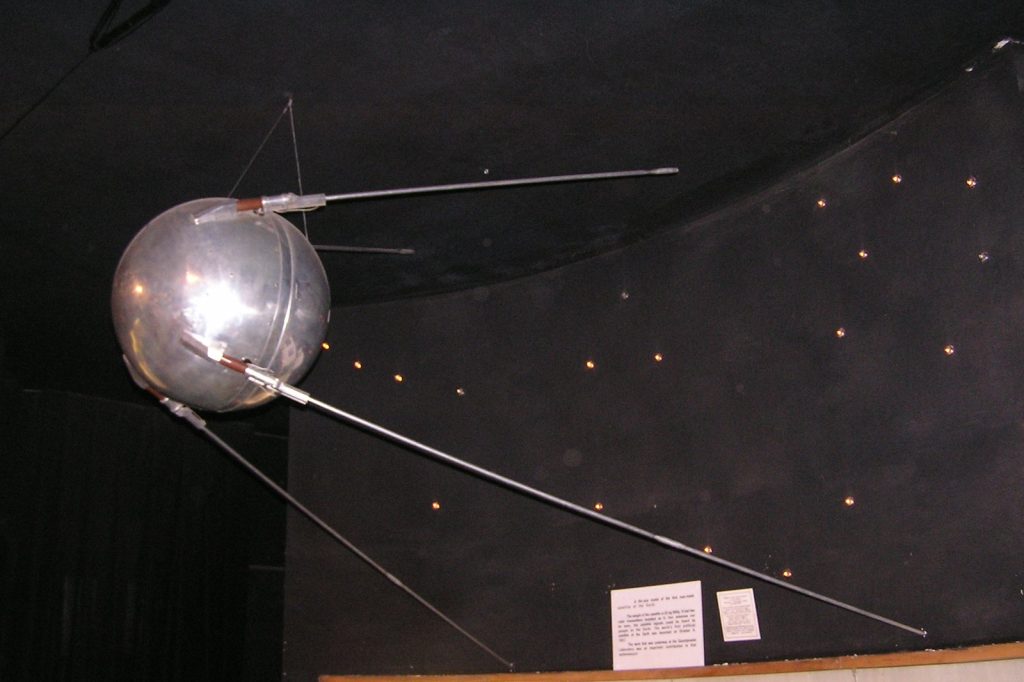
MOSCOW, July 8 — It was a beep. A simple, rhythmic beep from the sky that shattered America’s post-war confidence. On the ground in Washington, the Sputnik crisis was immediate and visceral.
By nightfall on October 4, 1957, the Soviet Union had launched Sputnik 1, the first artificial satellite, and the world changed. The satellite itself was modest by today’s standards.
Weighing 83.6 kilograms — 184 pounds — it orbited Earth every 98 minutes. But its success was a shockwave. For the United States, the Sputnik crisis was immediate and visceral.
It sparked a crisis of confidence that rippled through the Pentagon, the White House, and into classrooms from coast to coast. The American response was swift and structural.
On February 7, 1958, the U.S. created the Advanced Research Projects Agency — ARPA, later known as DARPA. Then, on July 29, 1958, Congress established the National Aeronautics and Space Administration, NASA. These were not symbolic gestures.
They were institutional overhauls, designed to compete directly with Soviet technological advances. But perhaps the most profound change came in education. On September 2, 1958, President Eisenhower signed the National Defense Education Act, or NDEA.
The legislation provided $1 billion over four years for student loans, grants, and improvements in science, mathematics, and foreign language education. It was a direct, government-funded response to the Soviet challenge — a recognition that national security now depended on brainpower.
The NDEA reshaped the U.S. education system. It established the model for government-university research partnerships that still defines American science policy today. Federal funding for scientific research and education increased massively.
The crisis of confidence had produced a crisis of action.
American Science Strikes Back
The U.S. did not simply reorganize its institutions. It launched its own satellite. On January 31, 1958, Explorer 1 became America’s first successful satellite.
It carried a Geiger counter designed by James Van Allen, and it made an immediate discovery: the Van Allen radiation belts, two zones of charged particles trapped by Earth’s magnetic field. That discovery was a triumph.
It proved that American science could not only compete but also contribute original knowledge. The Van Allen belts became a foundation of space physics. Explorer 1, though launched after Sputnik, gave the U.S. a scientific victory in a race that was just beginning.
The entire episode — from the beep of Sputnik to the creation of NASA and the passage of the NDEA — reshaped the relationship between the federal government and American universities. It was a partnership forged in crisis, and it endured.
The model of government-funded, university-based research became a pillar of Cold War strategy.
What to Watch Next
The legacy of Sputnik is not merely historical. The institutions it created — NASA, DARPA, the NDEA’s loan and grant programs — remain active today. As the U.S. faces new technological competition, the question is whether the same sense of urgency can be summoned.
The Sputnik crisis was a moment of national reckoning. The response was massive, coordinated, and effective.
Whether that model can be repeated in a different era remains an open question.
{“@context”: “https://schema.org”, “@type”: “NewsArticle”, “headline”: “Sputnik Launch Sparks U.S. Science Education Overhaul”, “description”: “MOSCOW, July 8 — It was a beep. A simple, rhythmic beep from the sky that shattered America’s post-war confidence. On the ground in Washington,…”, “datePublished”: “2026-07-08T09:30:00+00:00”, “author”: {“@type”: “Person”, “name”: “Isabella Moore”}, “publisher”: {“@type”: “Organization”, “name”: “InfoPulse Today”, “url”: “https://newsfeed.infopulsetoday.com/”}}




