
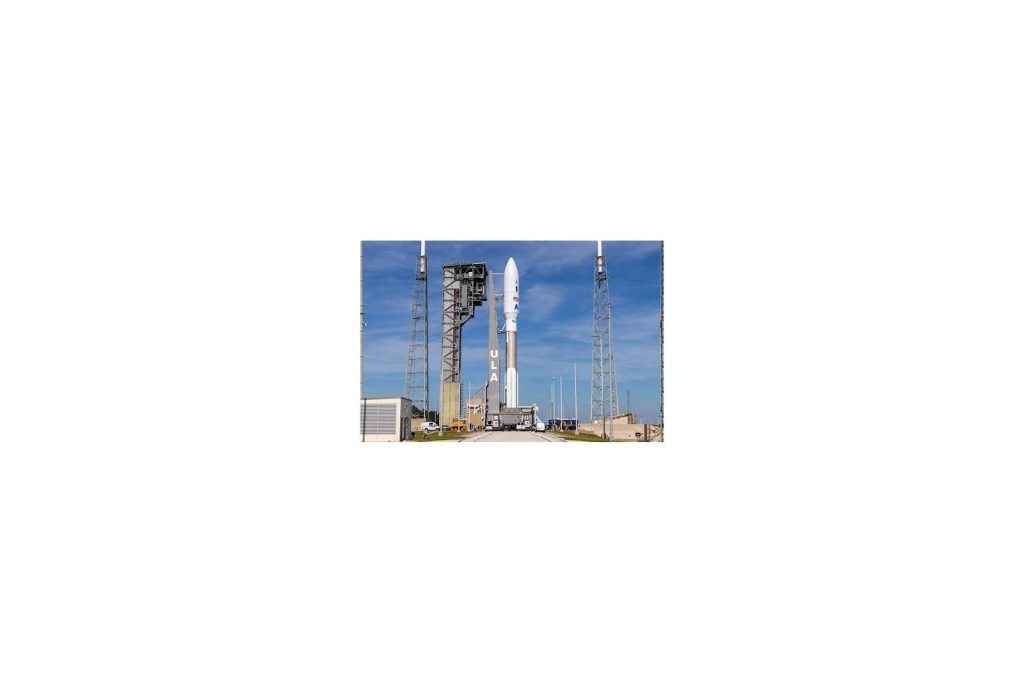
SEATTLE, July 16 — When Amazon first sketched out its vision for Project Kuiper, the promise was about connecting people who have been left offline. Now, with a critical FCC deadline bearing down, that human ambition is colliding with the hard realities of rocket science and a crowded sky. The clock is the central character in this story.
Under the terms of its FCC license, Amazon must have 1,618 satellites deployed by July 2026. That is a tight window.
SpaceX’s Starlink, the dominant player in low-Earth orbit, had launched over 5,000 satellites as of early 2025 and has authorization from regulators to eventually operate up to 30,000. Amazon is racing to catch up, and it is betting on a diverse stable of rockets to get there. The company has signed contracts for 38 launches with United Launch Alliance, using both the Atlas V and the Vulcan Centaur.
Another 18 launches are booked with Arianespace on the Ariane 6 rocket, and 12 more with Blue Origin on the New Glenn. It is a hedging strategy that spreads risk across three providers, each with its own development timelines and track records.
The first two prototype Kuiper satellites actually flew in October 2023, riding an Atlas V into orbit. That test gave Amazon real data. But the path from two prototypes to a constellation of over 1,600 is steep.
Blue Origin’s New Glenn, which has been under development since 2012, is still aiming for its first launch in 2025. That rocket is central to Amazon’s long-term deployment plans, but it has not flown yet.
Two visions for the orbital highway
The contrast between Amazon’s approach and SpaceX’s is stark, and it reflects different philosophies about how to build a business in space. Starlink is already a revenue-generating operation with tens of thousands of active users. Its parent company, SpaceX, has been iterating on its own launch technology for years.
The company’s Starship vehicle, which completed its first orbital test in April 2023 and followed with a successful test in March 2024, is designed to carry larger batches of Starlink satellites to orbit more efficiently. Amazon does not have that luxury.
It is relying on partners to get its hardware into space, and those partners are still proving their own vehicles. The Vulcan Centaur, the Ariane 6, and the New Glenn are all rockets that have yet to establish a steady flight cadence. For Amazon, every delay at the launch pad means a tighter squeeze on the FCC deadline.
Spectrum and space junk
Technical hurdles extend beyond just getting the satellites up there. Both Project Kuiper and Starlink are operating in a finite resource: the radio frequency spectrum that allows satellites to communicate with ground terminals. Coordinating that spectrum to avoid interference is a complex regulatory challenge that involves international bodies and national regulators.
The FCC has already been active in managing this space, and the stakes are high for both companies. Then there is the growing problem of space debris.
Every new satellite adds to the traffic in low-Earth orbit. Both Amazon and SpaceX have submitted debris-mitigation plans to regulators, but the sheer scale of these constellations—thousands of satellites each—has drawn scrutiny from astronomers and other satellite operators concerned about collisions and light pollution. For the families and communities who live in rural or remote areas with no reliable internet, these regulatory and engineering debates are not abstract.
They are the difference between a child being able to do homework online, a farmer accessing market prices, or a patient consulting a doctor via telehealth. That is the human side of the race.
Behind the breakthrough in launch contracts and orbital mechanics is a simple question: who gets connected first, and how reliably? What to watch next is the first flight of the New Glenn and the Ariane 6, both of which will determine whether Amazon can hit its deployment milestones. The FCC deadline is fixed.
The rockets are not.




